Author: lanapeterson

  • Buzz Math

    Buzz Math

    On March 12, 2014 I listened in on a presentation from Jean-Phillippe Choinière of Buzz Math. Buzz Math is a proprietary website that leads middle-school students through a series of Common Core aligned math challenges. Students can sign up through their school or through their family and whatever adult is working with them can see their progress through a dashboard.

    Etherpad Presentation

    Call Recording

    Jean-Phillippe’s Slides

    Many things intrigued me about this site, one is that is was a for-profit site using Open Badges. I hadn’t yet seen an example of that and although it does have and education focus it is not free. Two is that it is up and running; I say this because a lot of presentations I have seen are about future plans or theoretical conversations around badges and it was interesting to see a site that had a lot of momentum. Thirdly, and what has really stuck with me is the look and organization of the site.

    Screen Shot 2014-05-02 at 9.13.10 PM


    via Buzz Math

    As soon as you visit Buzz Math you are welcomed with vibrant but clearly branded colors. There are cartoon figures keeping it fun and representing a diverse group of people. The page that inspired me the most was the badge overview page that listed all of the badges that are possible to earn. They broke all of their badges into three categories: content knowledge, process knowledge, and achievement. While the computer can calculate content knowledge and achievement the teacher or adult facilitator gives out the process knowledge badges.

    Screen Shot 2014-05-02 at 9.16.03 PM

    via Buzz Math

    The design of the badges is sleek, branded, and progressive. By progressive I mean the badge changes as you earn more within the same area. For instance some badges have a number that changes as you reach certain milestones or some badges begin as bronze then move to silver, gold or even platinum! That way you can push your users to higher engagement or more math knowledge if that is your focus.

    When you click on any of the badges in the badge overview section you are able to see the description of the badge, how many people have earned that badge, what a user needs to do to earn that badge, and if applicable, what Common Core Standard it represents. I would love to do a similar library keeping in mind that I would like some of the badges we want to offer to be a secret. Similar to playing a video game and you win a bonus or an extra life you didn’t even know was there.

    Screen Shot 2014-05-02 at 9.18.06 PM

    As Buzz Math members earn their badges they sit on a literal virtual shelf on the member’s profile. Each shelf is labeled content knowledge, process knowledge, or achievement, which is an interesting idea. I am not exactly sure how I could label different categories of badges, I have categories but I am not sure if it would be keen to share that information with my members.

    Another thing to note would be that Buzz Math does not just award badges but stars. The stars acknowledge smaller achievements and often lead to badges but can also let a student know how far through the challenge they are.

    What this means for my work

    I believe I shared this in the following paragraphs but to reiterate I will include a badge library where members can learn more about all the badges offered. Each badge will have a clear description of what needs to be done to earn that badge, a description, and some information about how many people have earned that badge. Many of our badges are progressive and will hopefully encourage members not to just participate or contribute once but continue to engage within the com
  • Equity and Digital Badges

    Equity and Digital Badges

    In my last blog I shared about two calls that happen weekly that are moderated by Mozilla. I have been participating in these calls sporadically for the past few months. They are recorded, which is convenient because attending the live call is not always possible. On February 26th, Ugochi Acholonu a postdoctoral research at DePaul University shared work that her and Dan Hickey, a professor at the University of Indiana on the difference between equity and access. This call is prime example that there are many, many layers that need to be considered and researched related to badge design, program design, and evaluation.

    Etherpad notes and Call Recording

    Acholonu gave an overview of the 2013 Chicago Summer of Learning, which is a program that promotes both summer learning. Some youth participated independently online, and other youth as a part pre-existing youth programming and education both online, hybrid, and in-person. Digital badges were used to document and acknowledge participation across the spectrum and across the city.

    The researchers on the project were able to identify four different groups of participants and their findings show that those who were “self-directed” or students who joined on their own and not a part of a larger program stopped engaging with the program quickly.

    See slide 10

    This finding is what drove Acholonu and Hickey to think about the difference between access and equity. All the students both working independently or within a larger program had the access to earn the digital badges but their pathway to those badges were not necessarily equitable because some had better structure and adult mentors to support them. Students from different backgrounds also bring a different perspective and interest to the topics that need to be explored in order to earn badges.

    For next year the researchers recommend increased online mentorship and recommendations for students who are participating independently. Also, thinking more holistically about the organizations that the Summer of Learning outreaches to.

    Questions for Ugochi Acholonu (the questions listed below are copied from the etherpad, her answers are summarized by me):

    Yet it seems that ‘access’ is limited to “access to learning.” How about access to recognition of what the person already is (past) and dreams (future).- Serge Ravet

    Answer synopsis: If there is a badge that is offered and the youth already had experience in that area and could prove it through some sort of evidence then a badge was issued. My side note: For instance, if it was a video editing badge and a young person already knew how to edit videos, they would just upload their video to earn the badge.

    Is it true that students have access to the same resources? What if they don’t have technology access?  How do they get access to the resources? – Karen Jeffrey

    Answer synopsis: Acknowledged the access is an issue as well as budget to address the issue. Drop in sites especially libraries were offered but transportation to those locations can also be an issue. “I don’t think access comes before equity, I think you have to talk about access and equity at the same time”. In the design of the program organizers chose free programs for the badge challenges as to not create barriers for students.

    Carla Casilli (Mozilla call organizer) reminded the group that badges do not necessarily need to be digital badges.

    What does this mean for my work?

    Service-Learning is most prominent in schools that are more affluent, including private schools. As a pedagogy service-learning has proven to be effective with high risk populations because it creates an engaging educational environment. Our organization is making a concerted effort to focus our programming on high-risk and minority populations.

    As we start to use badges across our programming, how are we ensuring access to the Generator School Network? Are we creating an equitable incentive system if students are unable to sign on regularly? This issue might be best addressed by working on a plan with the schools we work with closely. It seems it would also be keen of us to adopt the strategy that Acholonu shared about tailoring badge design to appeal to the populations we are looking to engage.

    That is one of my biggest struggles is that the GSN serves a very broad range of people based on age, location, education affiliation (K12, Higher ED, out of school time, etc.), background, experience with service-learning, etc. Once the badging system is underway our organization should look to see who is reacting (if anyone) positively to the badging system and who we may need to outreach to.

    It is not surprising that the students who were working independently dropped off quickly. Whether you are an adult or young person independent learning can be very difficult and takes a lot of passion and/or a skill set for time management and resourcefulness. Online we could offer more pathways to learning so that the process is not so overwhelming.

  • Where are my badge people?

    Where are my badge people?

    Where are my badge people?

    Discussing (in depth) digital badges is something that not something everyone can or is interested in doing. Especially as the development and research around this ED tech movement gets more complicated and advanced. I felt like I was on an island working in isolation without anyone to really discuss the implications for my organization’s website and the broader use.

    After a bit of searching I came upon HASTAC

    Screen Shot 2014-04-29 at 7.41.08 AM

    HASTAC is an alliance of more than 13,000 humanists, artists, social scientists, scientists and technologists working together to transform the future of learning.

    via HASTAC

    Essentially it is an online community of graduate students and professors (and others) from around the field interested in talking about the latest movements and innovations in education and technology- WHAT? That is me. One of the most robust topics on HASTAC was about digital badging and helped me see some of the conflict on the topic.

    Because the community and some of this research is well underway you could spend weeks reading the blog posts of field leaders such as Daniel Hickey, Cathy Davidson, and Sheryl Grant. Grant curates a lot of the badge information on the site including this bibliography, which I found particularly helpful when creating my research proposal.

    I reached out to Grant to find out more about digital badges, share some ideas I had around my research paper, and find out more about her role at HASTAC. It wasn’t a formal interview so I won’t quote her but I found her very helpful and she recommended a lot of resources and people to read. She shared that there is two weekly calls hosted by Mozilla, one more research/system design focused and the other a community call. While I prefer to be on the live call, they do record all of the activity within their Etherpad.

    These calls have been essential for my growth in CI5190 and for my job at NYLC. My first call was in January, Neil Price of the Boys and Girls Clubs of Canada giving a presentation on Badges in the Afterschool Space. Hearing someone explain his design process in relation to his programming made me want to jump out of my chair with excitement. I am not alone! And there are people willing to share ideas, challenge each other with thoughtful questions, and move the practice forward.

    The calls have stretched my understanding of digital badges and the multitude of research topics around them: assessment, motivation, social currency, program design, access and equity, etc. This list truly goes on an on, now my challenge is how I can get more involved.


  • Digital Badges?

    Digital Badges?

    Now that I have shared about the website I work on, and our impetus for integrating digital badges. I want to ensure all my readers know what I mean by digital badges. There is a lot of media and reports on digital badges, below are some of my favorite resources. That being said, what I have shared in previous posts and what I hope is clearly illustrated below is that there is still a lot we do not know about digital badges.

    Definition:

    “A badge is a symbol or indicator of an accomplishment, skill, quality or interest. From the Boy and Girl Scouts, to PADI diving instruction, to the more recently popular geo-location game, Foursquare, badges have been successfully used to set goals, motivate behaviors, represent achievements and communicate success in many contexts. A “digital badge” is an online record of achievements, tracking the recipient’s communities of interaction that issued the badge and the work completed to get it. Digital badges can support connected learning environments by motivating learning and signaling achievement both within particular communities as well as across communities and institutions. (Source: Erin Knight White Paper)”

    From: https://wiki.mozilla.org/Badges

    To follow that definition, I would like to share a video I created in the fall semester of 2013 in CI 5331, Introductions to Learning Technologies taught by Aaron Doering. This was an issue paper assignment and the Youtube was the oral presentation of the research paper.

    In my video I outlined research being the key issue for digital badges. There is some research being done and thankfully funded by some great foundations. But we still have a lot to learn about the design and use of digital badges.

    The next video is the announcement of the 4th Annual Launch of the MacArthur Foundation Digital Media and Learning Competition. This iteration of the competition specifically focuses on digital badges. You may not be interested in watching the whole video; I found this video while reading Secretary of Education, Arne Duncan’s remarks. It was nice to see his speech in the broader context of the event. His remarks are at 22:20 but can be read on the U.S. Department of Education’s website.

    This video, was posted on September 16, 2011 and I shared it because I believe it encapsulates the hopes that government, for-profit, foundations, non-profits, and schools have in digital badges.

    Quote from Secretary Duncan:

    “We’re excited that, this year, this competition will serve as a catalyst to advance the potential of digital badges. Badges can help engage students in learning, and broaden the avenues for learners of all ages to acquire and demonstrate – as well as document and display – their skills.

    Badges can help speed the shift from credentials that simply measure seat time, to ones that more accurately measure competency. We must accelerate that transition. And, badges can help account for formal and informal learning in a variety of settings.”

    And while I share in that excitement of the potential digital badges (3 years later) have on education in a wide variety of contexts. I cannot help but understand where some of the skeptics were coming from. Sheryl Grant of HASTAC outlines some of the badge supporters as well as skeptics in her post Badges are Made of People: The Social Psychological Motivations of Badges.

    How does badging work?

    Here is an infographic created by Mozilla OpenBadges, a free software that can be used by anyone. Mark Surman Mozilla Foundation introduced the OpenBadges software development at 14:30 in the video above but there has been quite a bit of progress since then. Mozilla Open Badges is not the only way to distribute badges but again it is the free and widely used non-proprietary software. Here is how it works:

    800px-Open_Badges_napkin_sketch

    From: https://wiki.mozilla.org/Badges

    Additional Badge Resources:

    Alliance for Excellent Education’s report Expanding Education and Workforce Opportunities Through Digital Badges.

    HASTAC.org’s collection of digital badge related blog posts and resources.

  • Winter Wonderland with Dr. Elisabeth Soep

    Winter Wonderland with Dr. Elisabeth Soep

    http://www.mprnews.org/story/2014/02/20/snowstorm

    February 21st, 2014 was a rough day for Minnesota, there was a lot of snow and it was very cold; school was canceled and a lot of employers told their staff to stay home. This winter, we were used to it and while working from home sounded WONDERFUL… it was Dr. Elisabeth Soep’s presentation was at the U of M that morning. Titled Youth Productions in Digital-age Civics, there was truly no way I could miss that as it combines my love for technology and service-learning.

    So after getting my car stuck, getting it pushed back in by the garbage men, learning the bus schedule real quick, I was there! I am so glad I didn’t let the bad weather stop me from going to the presentation. After an inspiring or knowledgeable speaker, meaningful experience, or life-changing event do you ever physically feel your perspective shift? Your mind starts racing with new ideas and you feel like your blinders have at least been opened up a bit more? That is how I felt after listening to Dr. Soep.

    DSC_0892

    To listen to her full presentation, visit the LT Media Lab’s Livestream. For me what I particularly appreciated about Dr. Soep’s presentation is that she can speak from both a current practitioner and researcher’s perspective. I think sometimes the barrier between these two areas can cause progress to be stifled. Seeing that Dr. Soep has grounding in both areas makes her work very authentic and interesting.

    As a practitioner, Dr. Soep is the Senior Producer for Youth Radio, “an award-winning media production company that trains diverse young people in digital media and technology”. If you listen to NPR you most likely have heard of Youth Radio as they serve as NPR’s official youth news desk. In this role she supports young people in creating and telling their news stories. She also worked with a young person to co-found the App Lab. As an evaluator, Dr. Soep is the Research Director for Youth Radio, “we are a youth driven organization with a research agenda”. Her 20+ years of research experience studying ‘what works’ in supporting young people through media creation and participatory politics is a resource to us all.

    Throughout the presentation Dr. Soep shares mistakes and successes she has had in both of her roles and then shares concrete tactics based on research around participatory politics. As a practitioner, I found her the tactics helpful in bringing best practices to life in our programming at NYLC. After the presentation she published, Participatory Politics: Next-Generation Tactics to Remake Public SpheresAfter hearing her presentation, I started reading publications and watching webinars from the Youth Participatory Politics Research Network. It is a goldmine of resources for youth workers and youth organizations whose goal is to support their youth in being active citizens.

    What does this mean for my work?

    The research coming from the YPP Research Network, such as Dr. Soep’s will be essential for designing and defining my organization’s programming at a national level. Educational technology and project-based learning are on the mind’s of educators and administrators everywhere. Dr. Soep’s tactics clearly explain what that can actually look like in practice and what are some of the risks.

    It is our programming that defines what will we offer badges for in both face-to-face and online settings. That being said, using Dr. Soep’s and other researchers framework for designing our online network will ideally create an environment and supporting activities that allow young people create and share meaningful media. Meaningful media that is connected to real world issues that young people feel passionate about to educate and mobilize others. There are a lot of opportunities to teach digital literacies in both youth and adults so that media is not abused and calls to action are just.

    As a professional in the service-learning field this research needs to be more broadly shared and I hope to bring it to our National Service-Learning Conference in April, 2014- stay tuned on a update on that.

  • And we’re back…

    And we’re back…

    Small bump in the road and lesson learned. But now the GSN is back, better than ever. We updated the Ruby on Rails platform the site is built on, it has a new fresh look, and we uploaded 2,000+ resources that we acquired from a federal program that is no longer funded. To ensure that the content is discoverable we opened up half of the site so that search engines can locate resources.

    Before I get too far into my project, this might be the perfect time to give you a tour of the space.

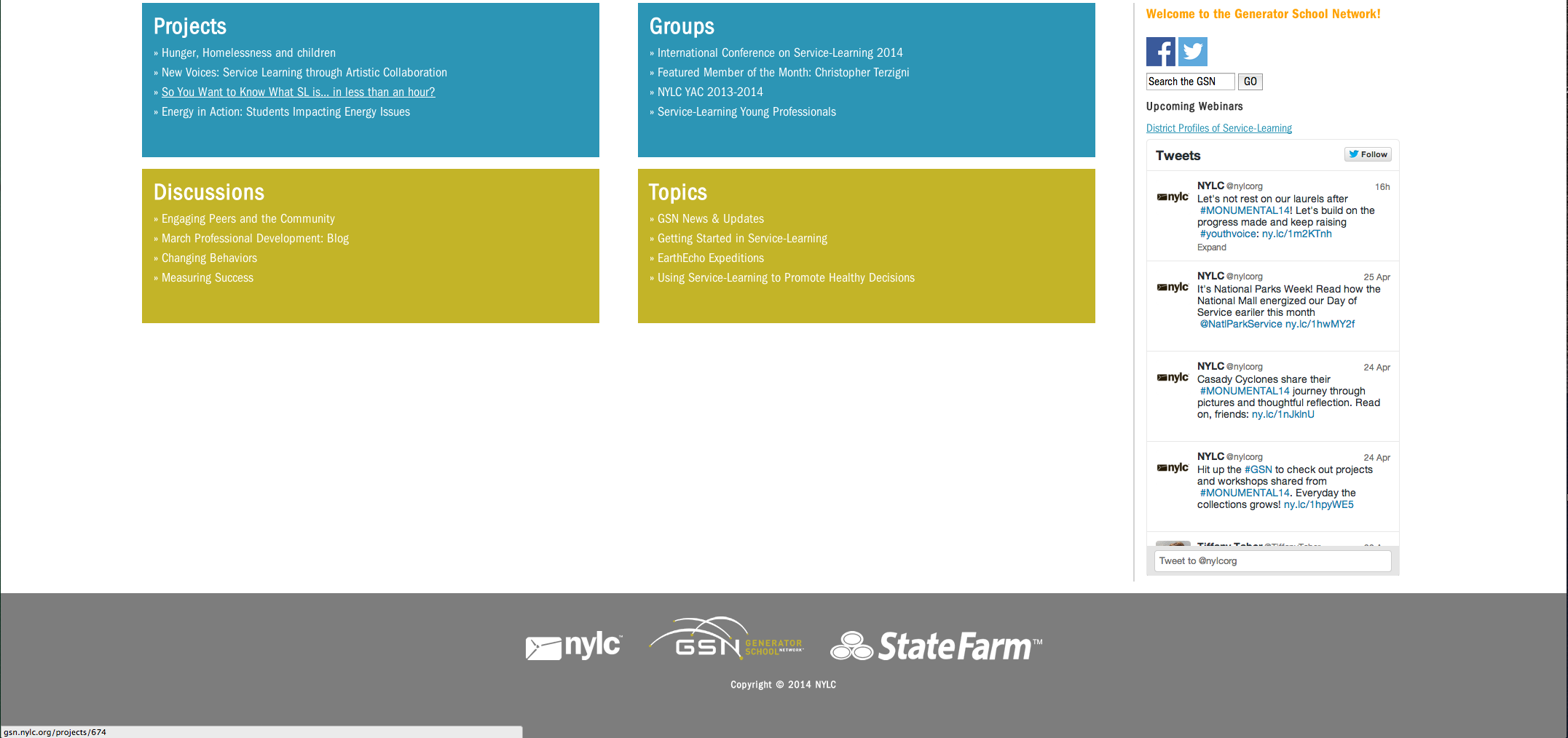
    The GSN is a 3,600+ member (and growing) online community comprised of young people and adults ages 13+. The dashboard gives an overview of the latest happenings on the website, a scrolling banner of the latest information, and a feed of upcoming webinars and the latest tweets.

    www.gsn.nylc.org


    Screen Shot 2014-04-29 at 7.06.55 AM

    Screen Shot 2014-04-29 at 7.07.34 AM

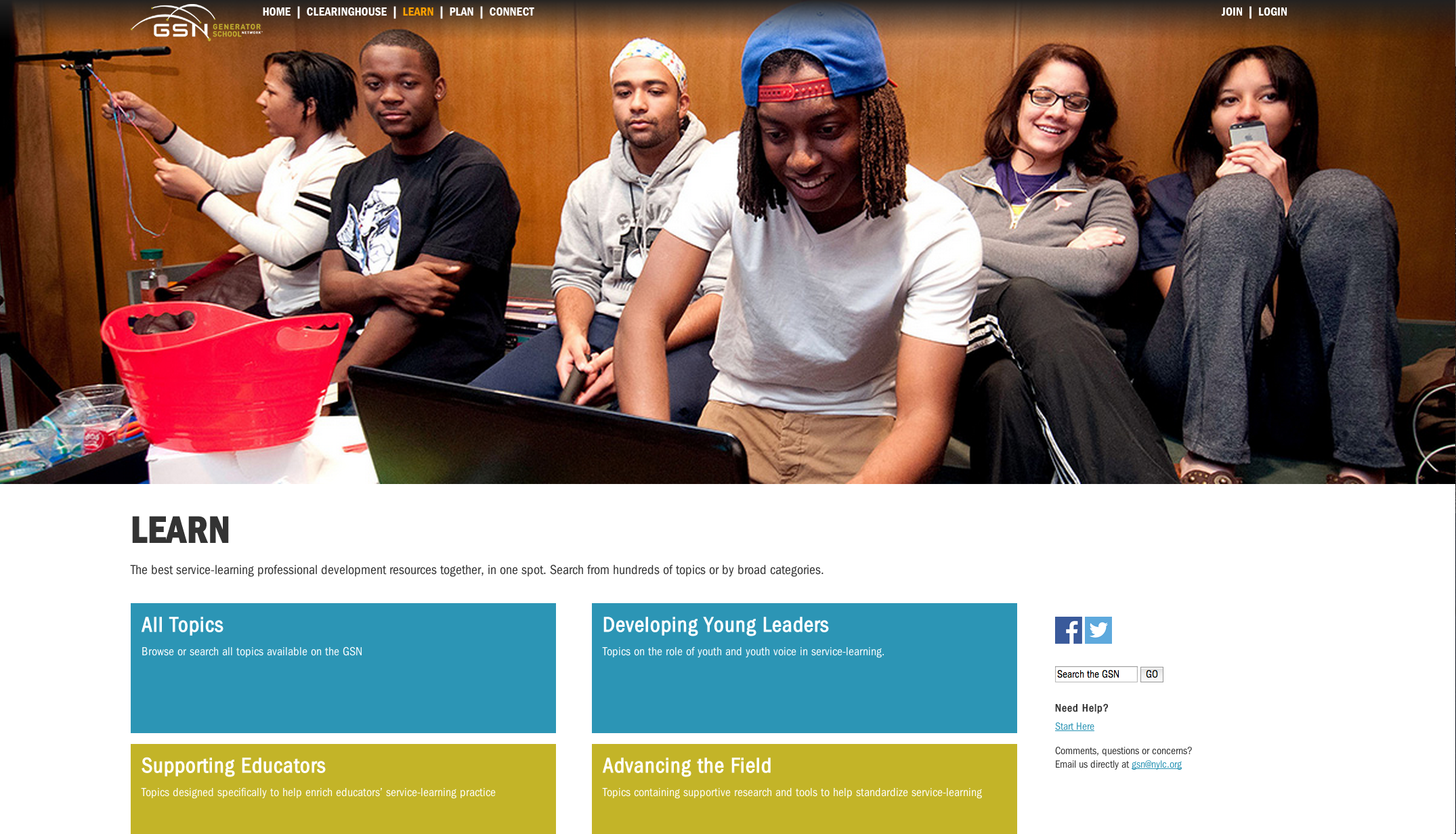
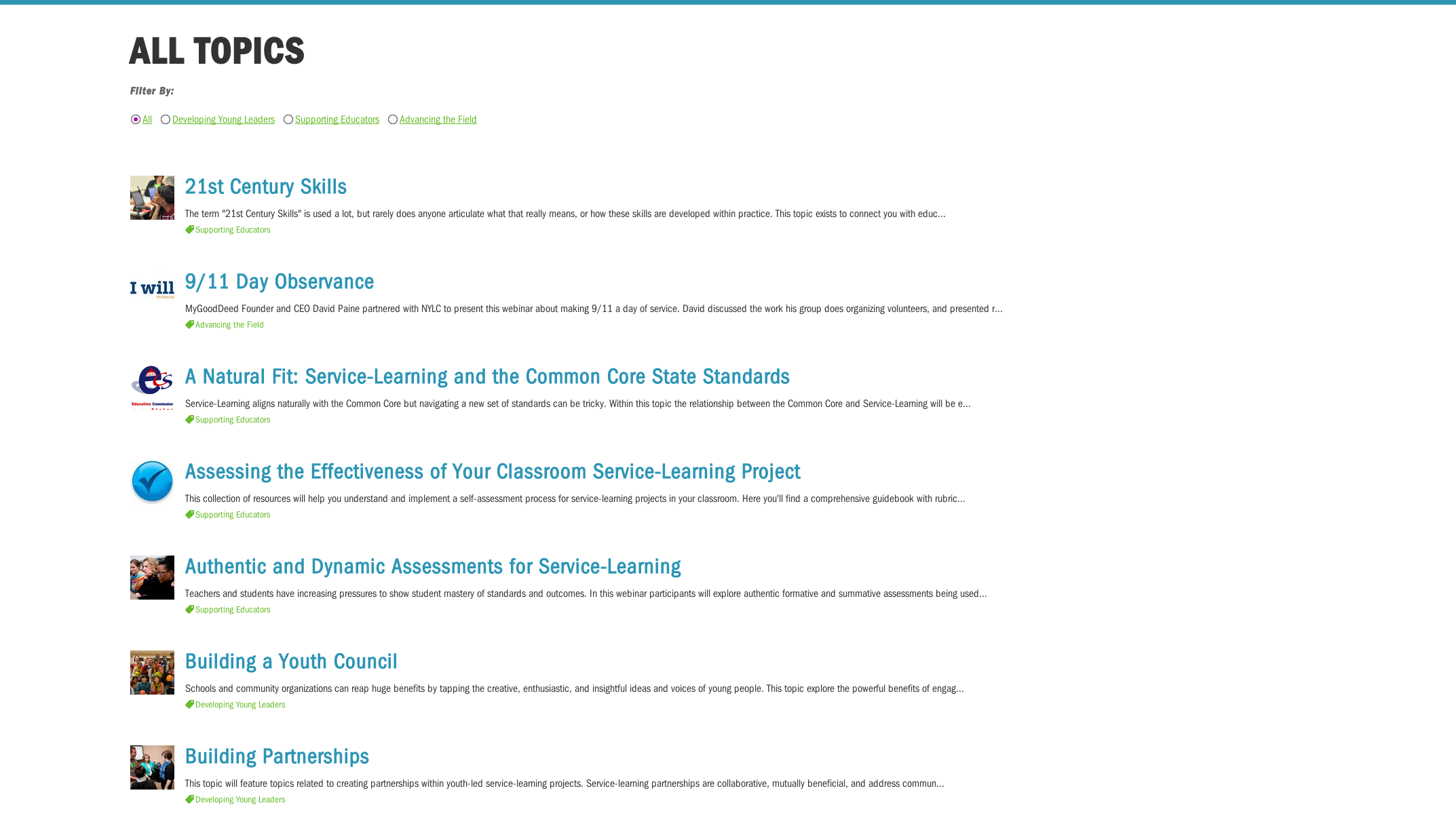
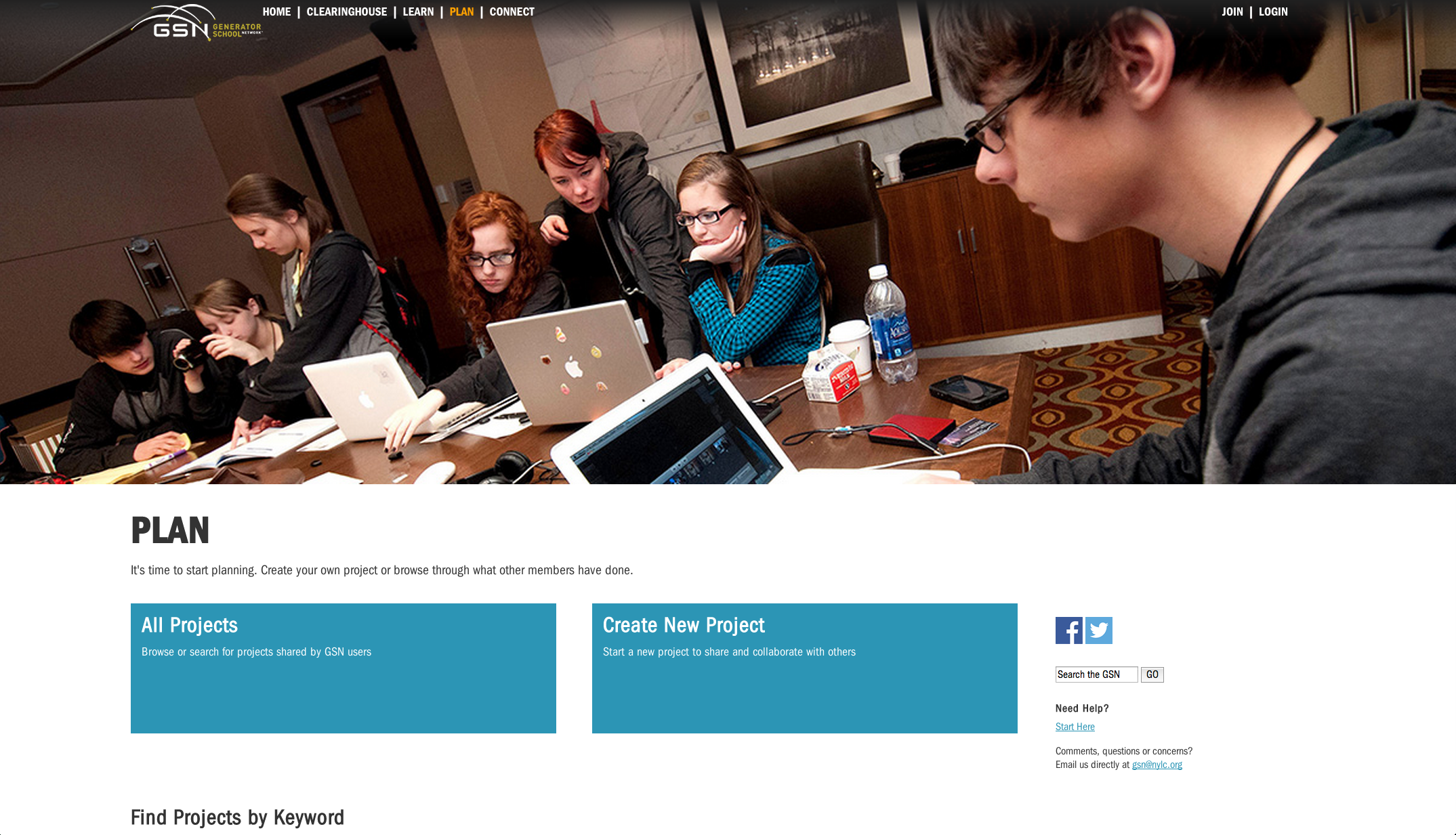
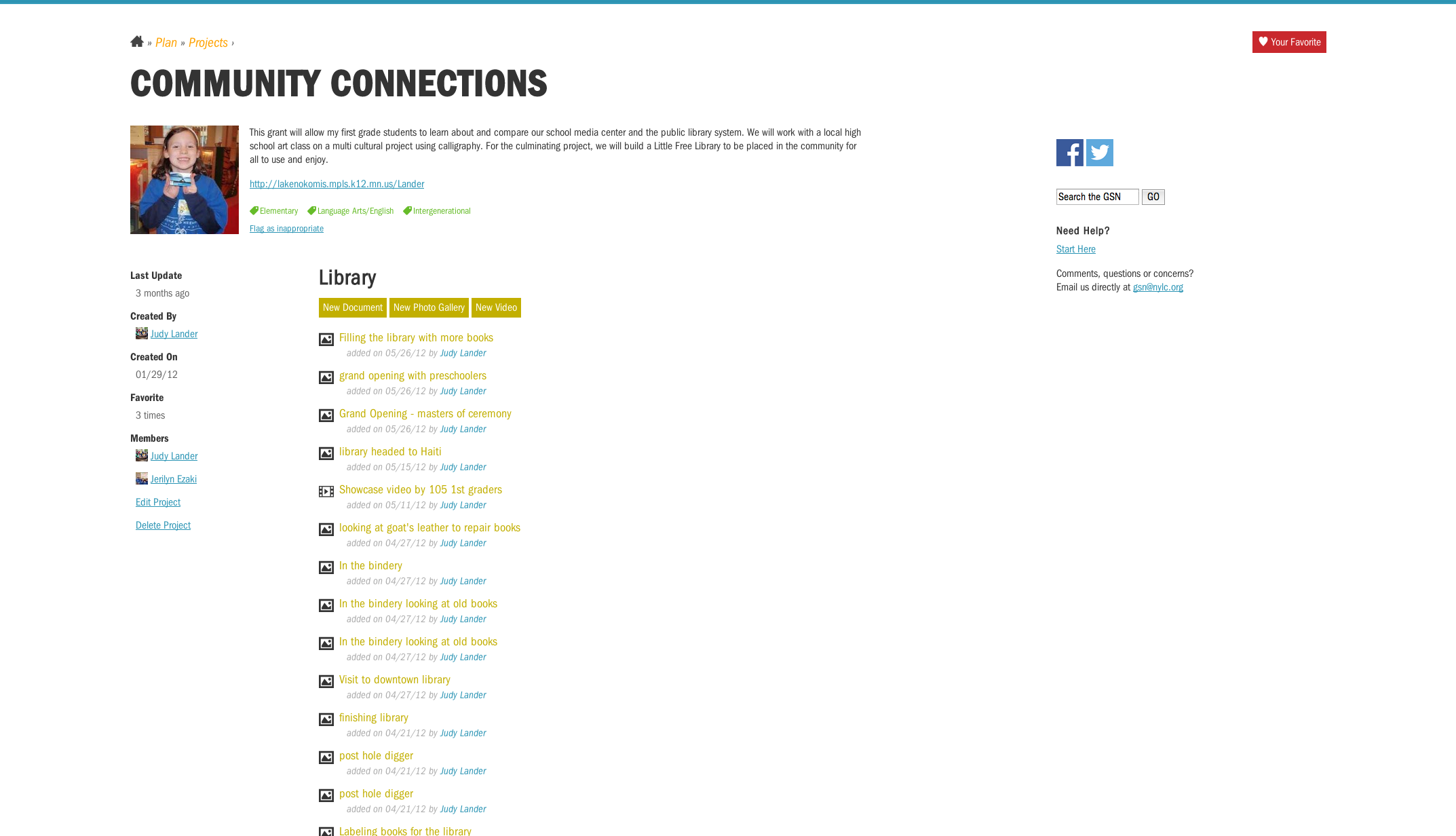
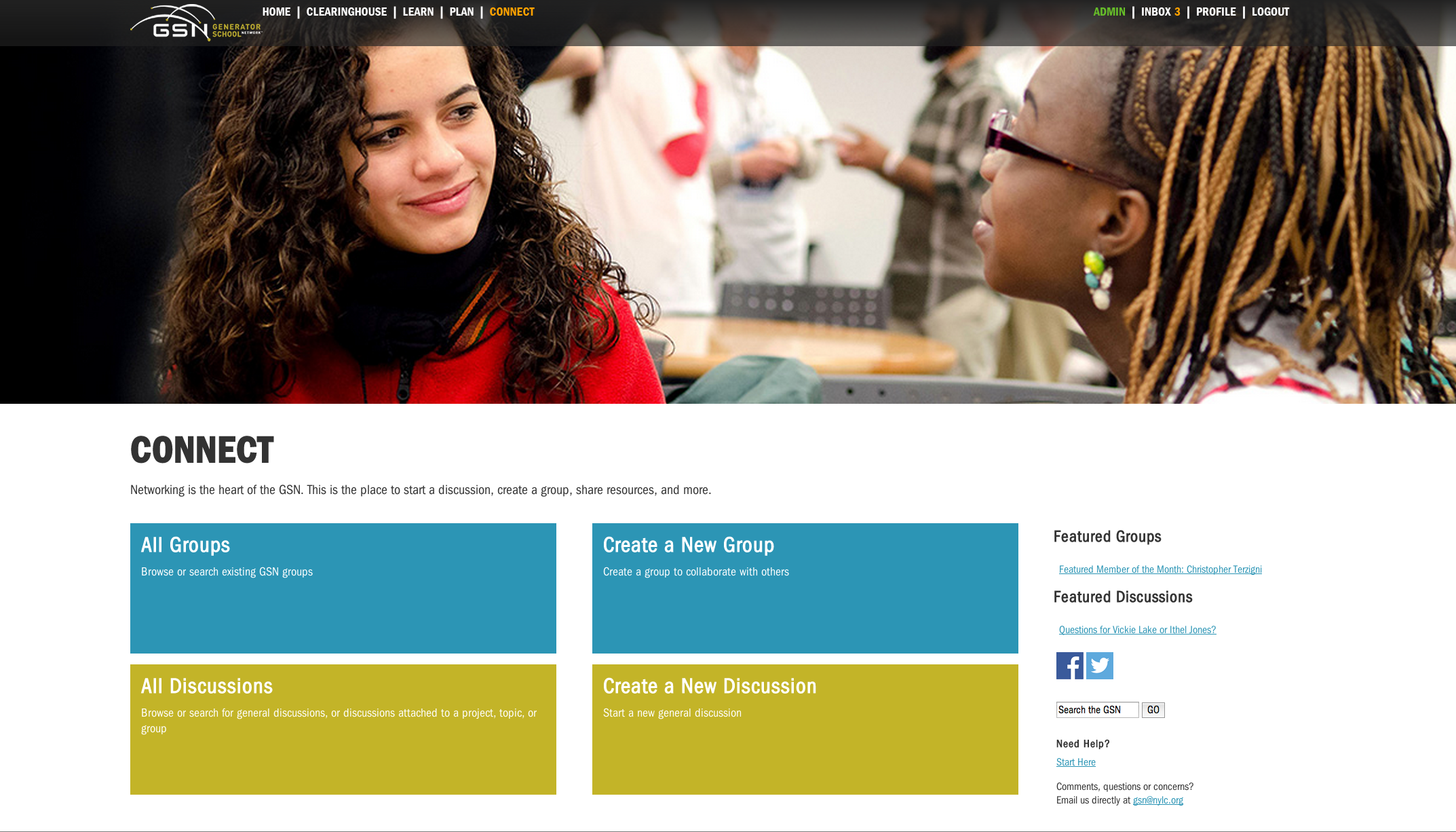
    The sight is broken into four main areas: Clearinghouse, Learn, Plan, and Connect

    Clearinghouse houses all of the aforementioned resources that we recently acquired and serves as an unbiased showcase of the service-learning field’s resources. It has a robust search function to help users find exactly what they are looking for.

     www.gsn.nylc.org/clearinghouse

    Screen Shot 2014-04-04 at 10.00.26 AM

    Learn is where we at NYLC upload all of our free professional development resources including, recorded webinars, downloadable resources, and discussions. We organize this area in different topic areas.

    www.gsn.nylc.org/learn

    Screen Shot 2014-04-29 at 7.08.17 AM

    Screen Shot 2014-04-29 at 7.10.19 AM

    Plan is a user-generated showcase of service-learning projects. We encourage members to upload their project at the inception of the idea vs. after they are all done and build the project as they go. This section will be transformed once the project-planning tool goes live because at this point there is not a lot of incentive for users to upload their projects. Maybe they want to share, see the community as a place to stay organized, or need to collaborate with a peer; but at this point we at NYLC are not supporting service-learning project planners as well as we could.

     www.gsn.nylc.org/plan

    Screen Shot 2014-04-29 at 7.08.52 AM

    Screen Shot 2014-04-29 at 7.09.59 AM

    Connect is where members can organize groups and discussions with peers that they work with locally or colleagues from across the field. It can also serve as a great organizer after an event to stay connected.

    www.gsn.nylc.org/connect 

    Screen Shot 2014-04-29 at 7.10.44 AM

    Now badges will be integrated across the platform and will encourage participation and contribution in all of the areas. The exact design is still to be decided but it will acknowledge behavior as simple as signing on to creating and administering a group.

  • Digital Learning Day 2014

    Digital Learning Day 2014

    Despite the technical issues we were having with our website, the show must go on. I was lucky to have an event like Digital Learning Day to take my mind off the server drama. While not directly connected to my project, the event taught me a lot and truly shifted my perspective on just how many people and organizations are invested in educational technology.

    At the heart of Digital Learning Day is quality teaching and learning from educators and students around the world. The day itself is really a celebration of the innovative lessons and projects that we know happen everyday in and out of classrooms. It is an opportunity to highlight some of the best tech-forward districts, organizations, and corporations from around the country. In order to make such a large international observance, the Alliance for Excellent Education calls upon the support of schools, nonprofits, and for-profits who believe that digital learning is a key component of a strong education.

    The National Youth Leadership Council shares in that belief and is honored to support Digital Learning Day as a core partner annually. As a core partner, we encourage our networks of educators and young people to participate in Digital Learning Day. To further support this initiative, partner organizations also share their quality resources for the digital learning toolkits that can be found on digitallearningday.org. One of the best benefits of being a partner for this initiative is attending the national event in-person. And one of the biggest benefits of being the “ED tech” specialist at work is getting to be that representative to attend the in-person celebration.

    The celebration started the night before at a beautiful reception held at the Alliance for Excellent Education’s office. It was nice to have a few hours to meet professionals who have mutual interests in educational technology, youth leadership, and access to quality teaching and learning tools. I left the celebration buzzing from all the wonderful conversations and new connections I had made. My excitement for the next day was growing by the second.

    photo-12

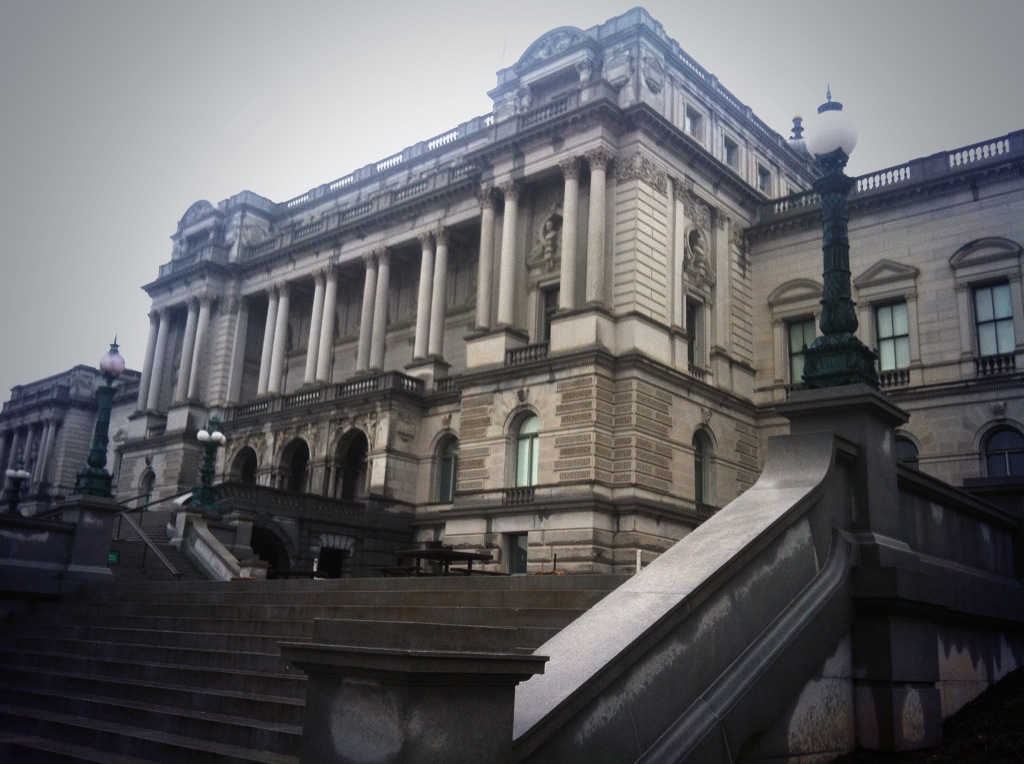
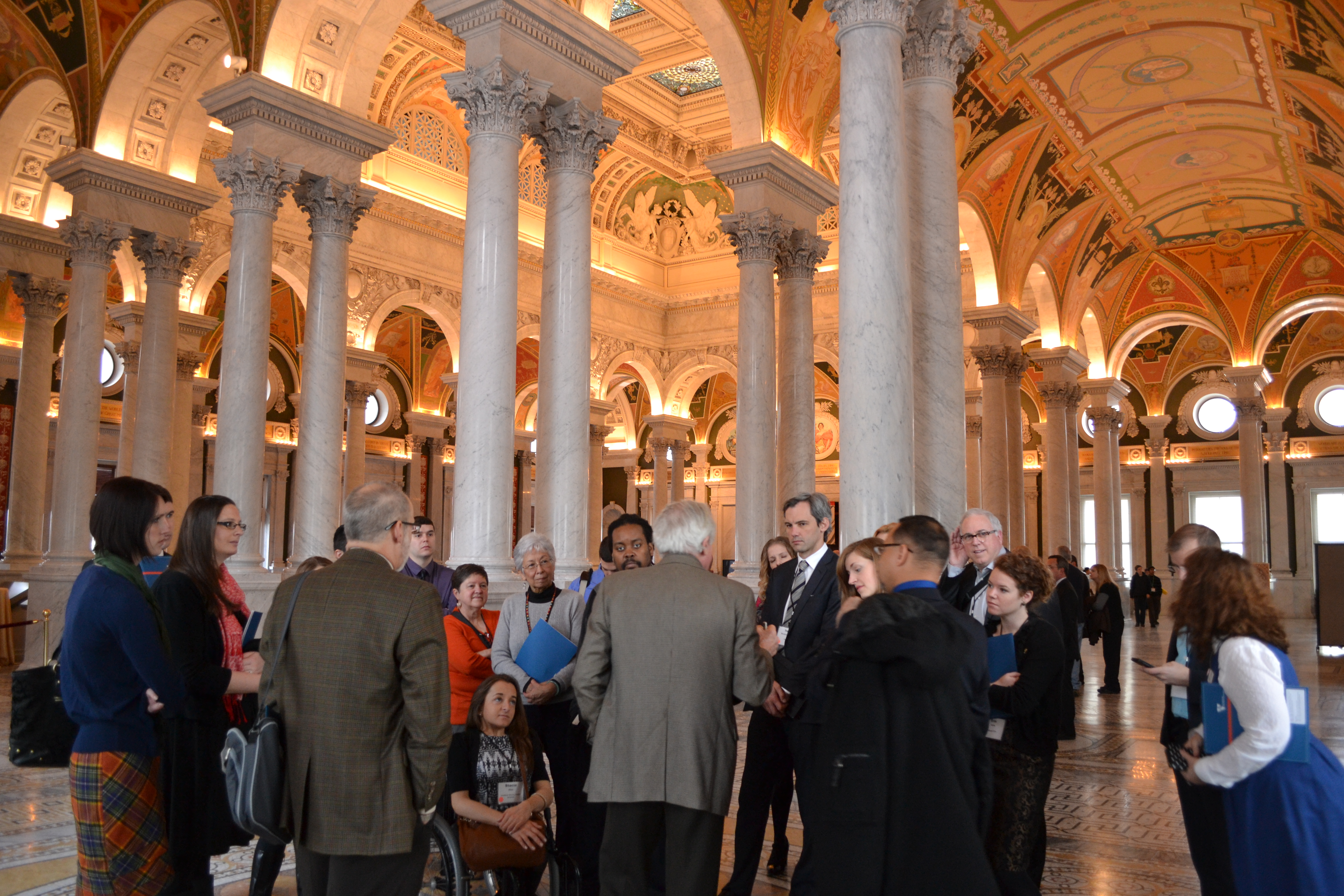
    Climbing up the steps to the Library of Congress in Washington D.C., butterflies started fluttering as I knew the day would be dynamic both in-person and online. A large group gathered to take a tour of the building that is covered in beautiful detail and symbolism. Libraries are the foundational setting for digital learning and media, which made the Library of Congress a perfect location for the celebration. And that location has also been the setting for many historical political decisions related to educational technology.

    DSC_0646

    DSC_0667

    After the tour we piled into the Coolidge Auditorium where we were welcomed by Dr. James Billington to the library. While the day of amazing examples of digital learning was just beginning, Tom Wheeler, the Chairman of the FCC reminded us that many educators do not have the access to the internet they need in their classroom. He shared that his goal was to have the first Erate updates completed before fall of 2014. Roberto Rodriguez, Special Assistant to the President for Education Policy, echoed Wheeler’s concern for internet access and added that this is really an issue of equity within education.

    DSC_0659

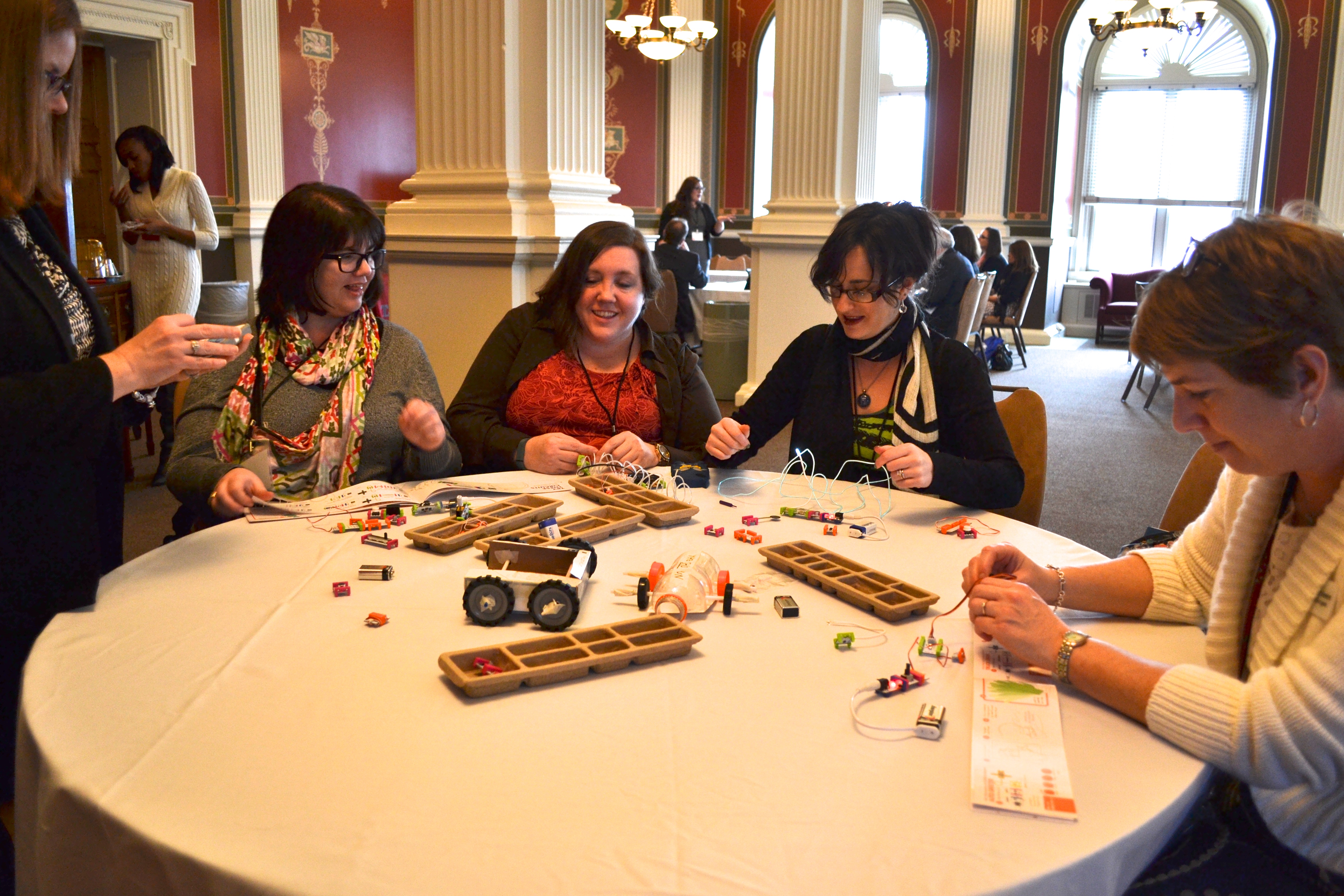
    The day became an exhibit of some of the best digital learning from around the country. Participants had the opportunity to talk with youth, educators, and administrators that were eager to share their replicable programs and projects. In the midst of the live celebration, many of us were also trying to keep up through Twitter and the Google Hangouts throughout the day. These digital and in-person opportunities to connect expanded personal learning networks and added new resources to our ED tech tool belts.

    DSC_0678 DSC_0681

    The live event culminated with a panel of district staff, state administrators, federal employees, and leaders from national organizations. The most dynamic panelist was a student, Amber Garrett from Talladega County, who shared the youth perspective from before and after the personalized learning initiative was implemented in her district. She cited that technology helped her develop 21st century skills and gave her opportunities to use those skills in the real world.

    DSC_0703

    Digital Learning Day 2014 taught me that while at the core of this issue is teaching and learning, everyone should have a vested interest and role in educational technology. If we don’t provide our young people with the best education possible our society, economy, and future is at risk. The use and access to technology and media, quality teaching methods, and excellent curriculum must be supported by students, educators, administrators, policy makers, IT professionals, community-based organizations, and corporate partners. The Alliance for Excellent Education does an amazing job organizing Digital Learning Day. NYLC is honored to be a core partner.

    If you missed the excitement from the day, check out #DLDay on Twitter or digitallearningday.org

    DSC_0670My view at lunch : )

    DSC_0652The young scholar on the right and the older scholar on the left represent life-long learning.

  • S.O.S.

    S.O.S.

    After a meeting with Angelica about my final project was feeling energized and ready to take action! Our web developer was working on some updates to the Ruby on Rails Platform, changing some settings on the site, and giving the GSN an updated look. Everything was falling into place to have a new and improved Generator School Network.

    Then…

    The GSN was mysteriously down due to server maintenance. Our web contractor submitted a help ticket to our server and received this message in return:

    We regret to inform you that the host machine that Cloud Server, gsn-demo, resides on cannot be recovered despite the very best efforts of our Engineering and Data Center Operations teams.  It has been determined that this server has experienced complete data loss.

    If you have a recent server image, your next step should be to build a new server from that image. Should you require the same IP, please contact support prior to deleting the impacted server from your account and we will assist you in sharing the IP to the new device.

    If you do not have a current server image, your next step will be to build a new server from a stock image and upload data from your local backup.

    Finally, you will need to delete the impacted server from your account to prevent any further billing associated with the device.

    Say What? Essentially the company that we pay every month to back up everything just stopped working. And this would not have been a problem except the server took a back up of a broken website and the site had not been externally backed up since SEPTEMBER! Which means we lost everything from September to the end of January that users and our staff had uploaded.

    At that point we had to decide to bring back the September version of the site or just wait two weeks and launch the new and improved GSN. We chose the latter because it meant things would move faster. We came up with some clever marketing in the meantime:

    february

    The GSN is experiencing flu-like symptoms which requires rest.

    Don’t worry — it isn’t contagious.

    Our cloud server crashed taking back-up copies with it.

    What this means to you: the GSN will be offline for about two weeks for rest and recovery. When it comes back on February 14 it will be better than ever with an updated look and all the resources of the National Service-Learning Clearinghouse.

    In the meantime, keep connected on Twitter, Facebook, and the K-12, HE, or CBO listservs. Visit nylc.org for service-learning resources, stories, and news, and check out our YouTube channel for recorded webinars. If you have any questions, please email us at gsn@nylc.org.

    Thank you for wishing the GSN a speedy recovery!

    Lana Peterson

    Deep breathes. Bad timing. I was trying to be grateful we didn’t loose everything. Needless to say this shifted my project a bit until I was able to get everything back to speed. I gave myself a crisis badge because… well I didn’t cry and crawl under my desk, and I really wanted to.

  • Introduction to CI5190

    Introduction to CI5190

    Time really does fly when you are having fun; it is hard to believe I am already at my final semester for my M.Ed. in Learning Technologies. This initial post is an introduction to my final project for CI5190; I will be using my blog to document my progress throughout the semester.

    Although I had some ideas for what I wanted my final project to be, in January the CI5190 students received an email from our new adviser Angelica Pazurek to give us further guidance for completing our final project. An excerpt from that email:

    Details About the M.Ed. Final Project

    The objective of the final capstone project is to showcase your skills and knowledge gained during the M.Ed.  This final project must be new work– it cannot be a repurposing of work that you have already done in other classes during your program.  However, it can be an extension of prior work; for example, you could add new things to a project you have been developing throughout your M.Ed. program.  The additions should be significant; that is, they must require a sufficient amount of effort and time investment from you befitting an M.Ed final capstone project.  If you choose to go this route, I will ask you to explain exactly what will be new or what you will add, extend, develop further, etc.  Or, you may have a whole new idea!

    As you are envisioning your M.Ed. project, you should strive to:

    1) Create something that solves a problem you care about.

    2) Create something that might be useful for others

    3) Use your LT knowledge

    The following excerpt is what I love about the Learning Technologies program at the University of Minnesota. Their aim is for you to be spending time on projects and assignments that are relative to your work and have actual application in the real world. This call to action makes the line between my work life and school life practically non-existent.

    Currently I am a Professional Development Manager at the National Youth Leadership Council (NYLC). Specifically I train adults and young people about leadership and service-learning both face-to-face and online. I manage our online platform, the Generator School Network (www.gsn.nylc.org) a community for youth and adults to learn, plan, and connect around service-learning. It is this role and my love for educational technology that drew me into the Learning Technologies program in the first place.

    Some Background

    The Generator School Network as an online community is almost five years old, my organization created it initially to stay connected to teachers that we work with across the country. The site has been built from the ground up but if we were starting this network now we would most likely use a pre-existing LMS. While the site has transformed throughout the years from it’s initial thinking one of the biggest changes was in July of 2012. The site was originally created for K-12 teachers to collaborate, but we had many non-formal educators and other educational professionals using the site as well.  Only catering to adults did not align with our mission so we opened the site to youth ages 13-18 and updated our security features.

    While young people were welcome to use the site it really wasn’t a community designed for young people. It needed a fresh look, more youth driven content, and some sort of incentive for participating. I asked one of our high school interns to give me feedback and she shared, “Participation is a big thing in making the GSN amazing. Youth are going to want an incentive in why they will participate [for instance] with @15, people got points when they participated and then they could use those points for other goodies, DoSomething.org has grants, and the 26 second campaign sends you a t-shirt just for liking them on Facebook”.

    She was right! But I would add it is not just youth who have a choice, adults have a choice as well. It was from that impetus that I began looking at user incentives for online participation not just to drawn them to our site but to get them to contribute and collaborate on our site. My search to find the holy grail of online incentives sent me tumbling down a rabbit hole of digital badges (which I will explain further in my blogs). This quest has pushed me to grow as a financial developer, an instructional designer, a project manager, evaluator, and technical developer all with the help of the LT program.

    The Project

    In the fall of 2013 NYLC secured funding through State Farm insurance to integrate digital badges and an interactive project-planning tool in the Generator School Network. Some initial thinking for this work happened in the fall in these classes (click the link to see the related projects)

    CI 5336- Planning for Multimedia Design and Development:

    CI5331 Introduction to Learning Technologies:

    CI5177 Practical Research- This was the basis for my research and what will be submitted to the IRB after further updates.

    The assignments in those courses allowed me to further research digital badges and create a draft plan for my project planning tool. To build on those projects I proposed my final M.Ed. project guide me through the first quarter of my website updates which includes:

    • Writing a web development RFP
    • Hiring a web developer
    • Conceptualizing and designing the GSN’s badge system
    • Conceptualizing and designing the GSN’s project planning tool
    • Submit my practical research paper to the institutional review board

    Read on to see how this project progresses throughout the semester!

  • Irish Car Bomb Cupcakes

    Irish Car Bomb Cupcakes

    St. Patrick’s Day is filled with delicious food: corned beef and cabbage, soda bread, beef stew, shepherd’s pie. Do not forget the dessert! And frankly, look no further. These are the best cupcakes you will ever eat.

    DSC_0403

    The recipe is from Smitten Kitchen… side note if you don’t already have this cookbook/follow this blog you are missing out. My only note would be that you do not need to cut the center out of the cupcake. After the cupcakes come out of the oven and are cooling on a rack, take the handle end of a large cooking spoon and push a hole into the cupcake. Pulling out the center is messy and unnecessary.

    And if you cook a few extra… you can bring them down to the St. Patty’s Day beer tents with you. Sell them for $5 a piece to hungry leprechauns and finance your beverage purchases for the night. Not that I have any experience doing that…

  • Bar La Grassa

    Bar La Grassa

    I have been waiting for my opportunity to eat at BLG for too long. When you ask people in the Twin Cities where to get a really good meal BLG is always offered as a suggestion. This is not a surprise given that the Executive Chef and owner is a James Beard award winner. My sister and I share a birthday (exactly five years apart) and it served as the perfect occasion for a fabulous meal. Thankfully my mom did a lot of research online on what we HAD to have and ordered from there.

    DSC_0037

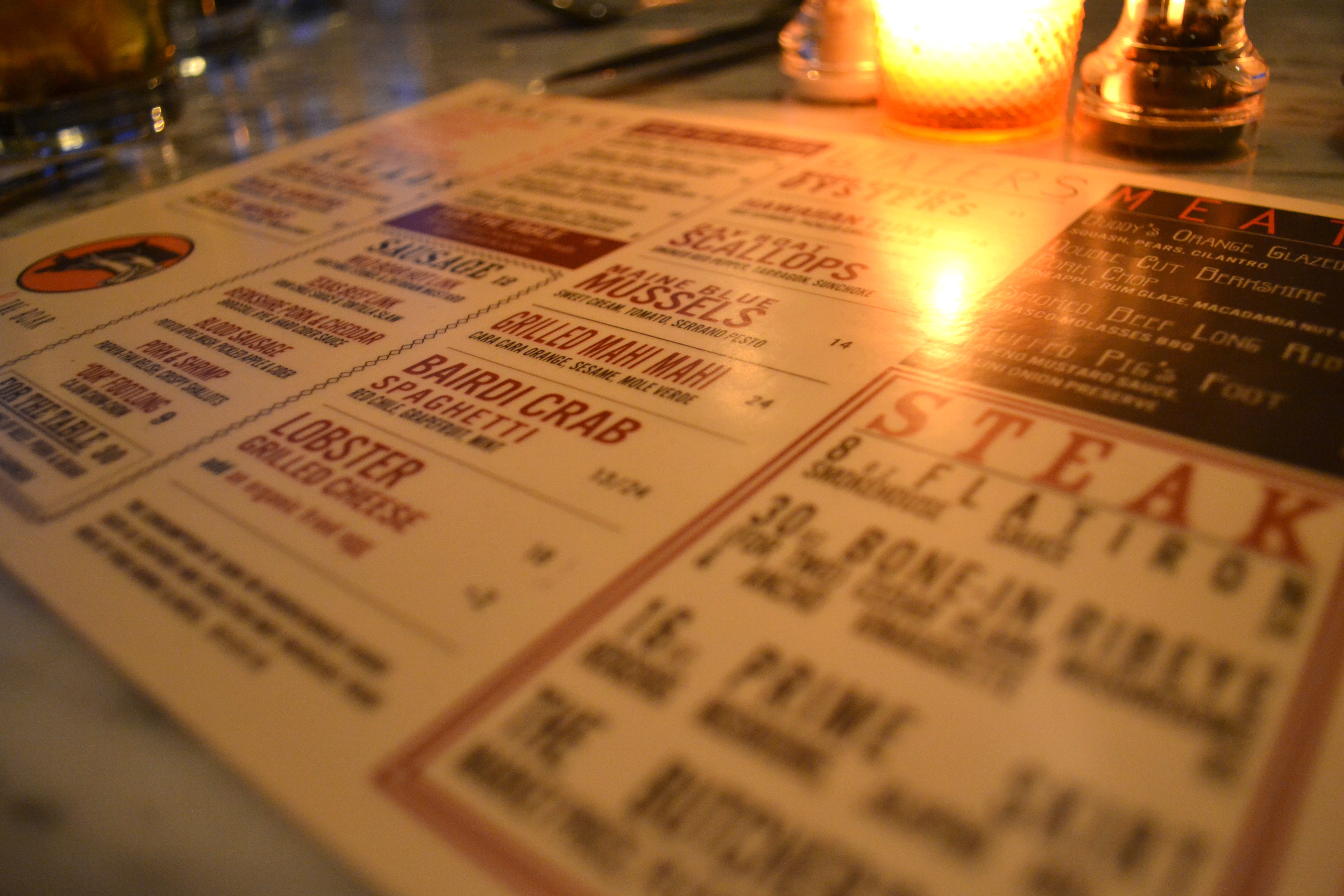
    The menu is big but the descriptions are brief, everything looks good. I worked at three different Italian restaurants during college and AmeriCorps so I think I may have a leg up on deciphering the menu. I would definitely recommend ordering many dishes and sharing everything, but that is my suggestion for every restaurant. Most of the pasta can be ordered as a small or large order; get the small and try more of the menu. Everything we had was rich so sharing was essential as to not feel overwhelmed.

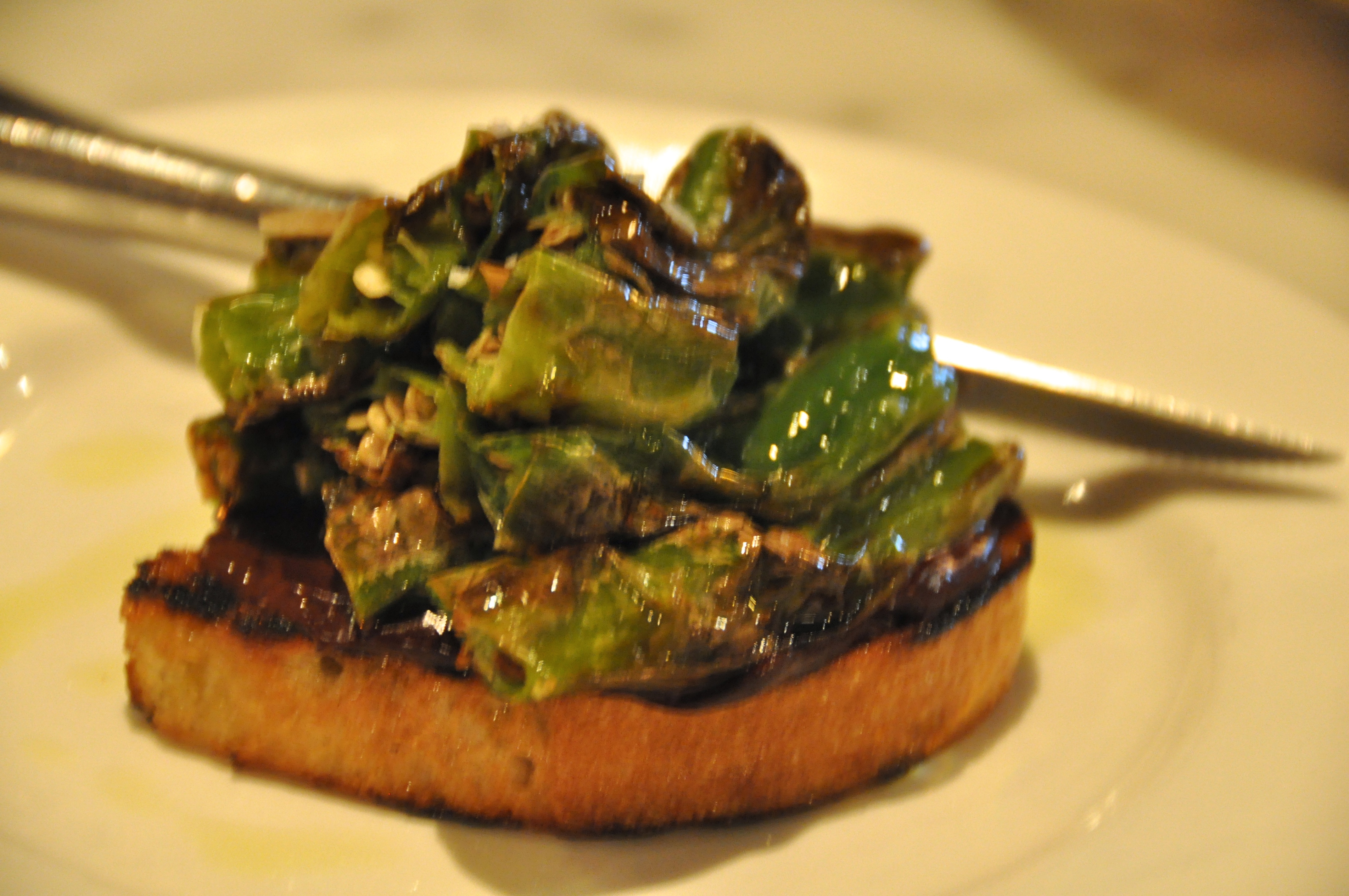
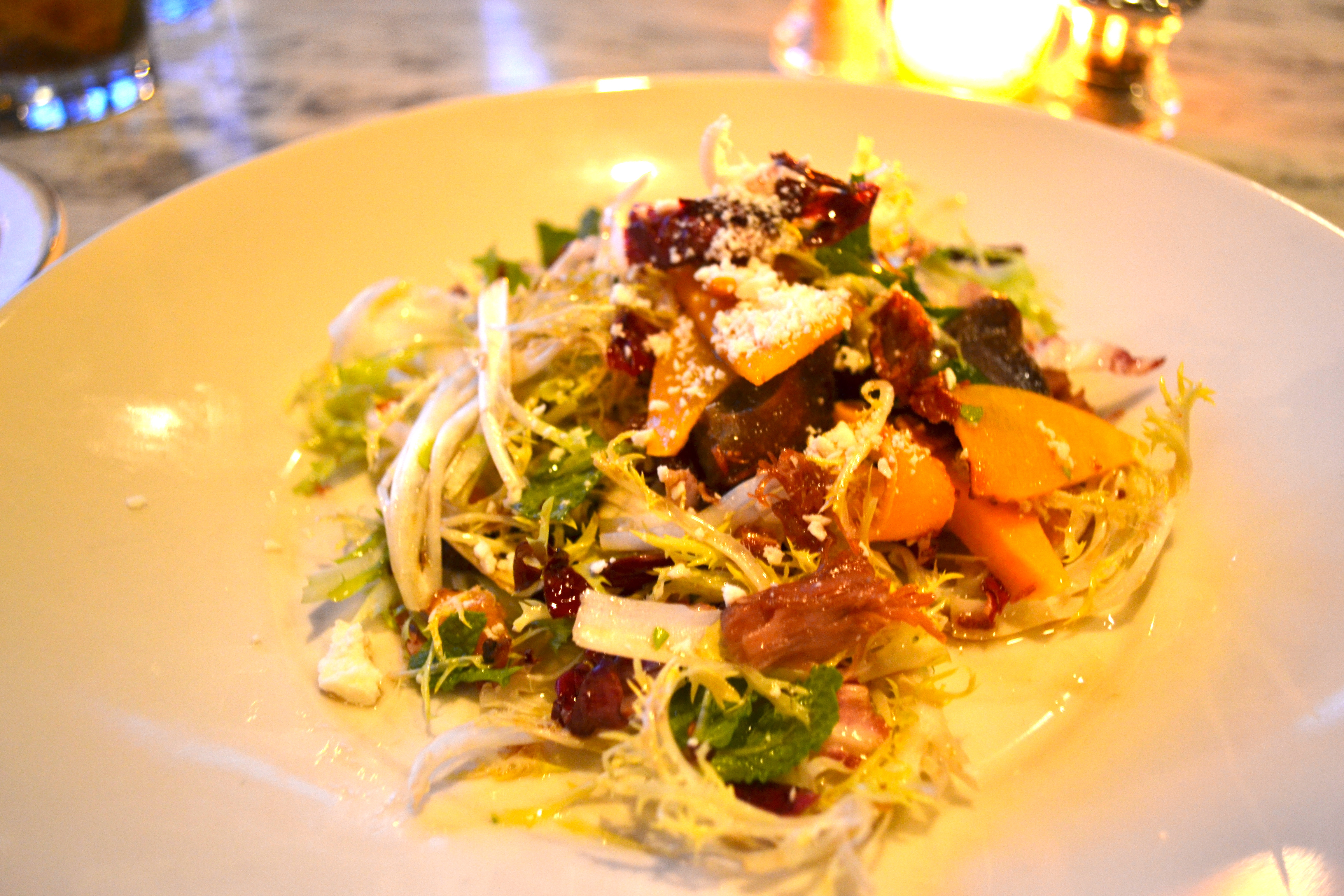
    We started the meal with two bruschettas: the Roasted Shishito Peppers with Chocolate Tepenade and the Gorrgonzola Picante with Peperonata. And both were amazing. The chocolate added a lot of depth to the Shishito bruchetta. The Peperonata was roasted perfectly adding a lot of flavor.

    DSC_0030 DSC_0034 DSC_0022

    Our second course consisted the Seared Sea Scallops with Black Trumpet Mushrooms, the ‘Nduja Egg Raviolo (recommended by the server), and the Smoked Spaghetti alla Chitarra with Brown Butter and Lobster.

    DSC_0035

    DSC_0038

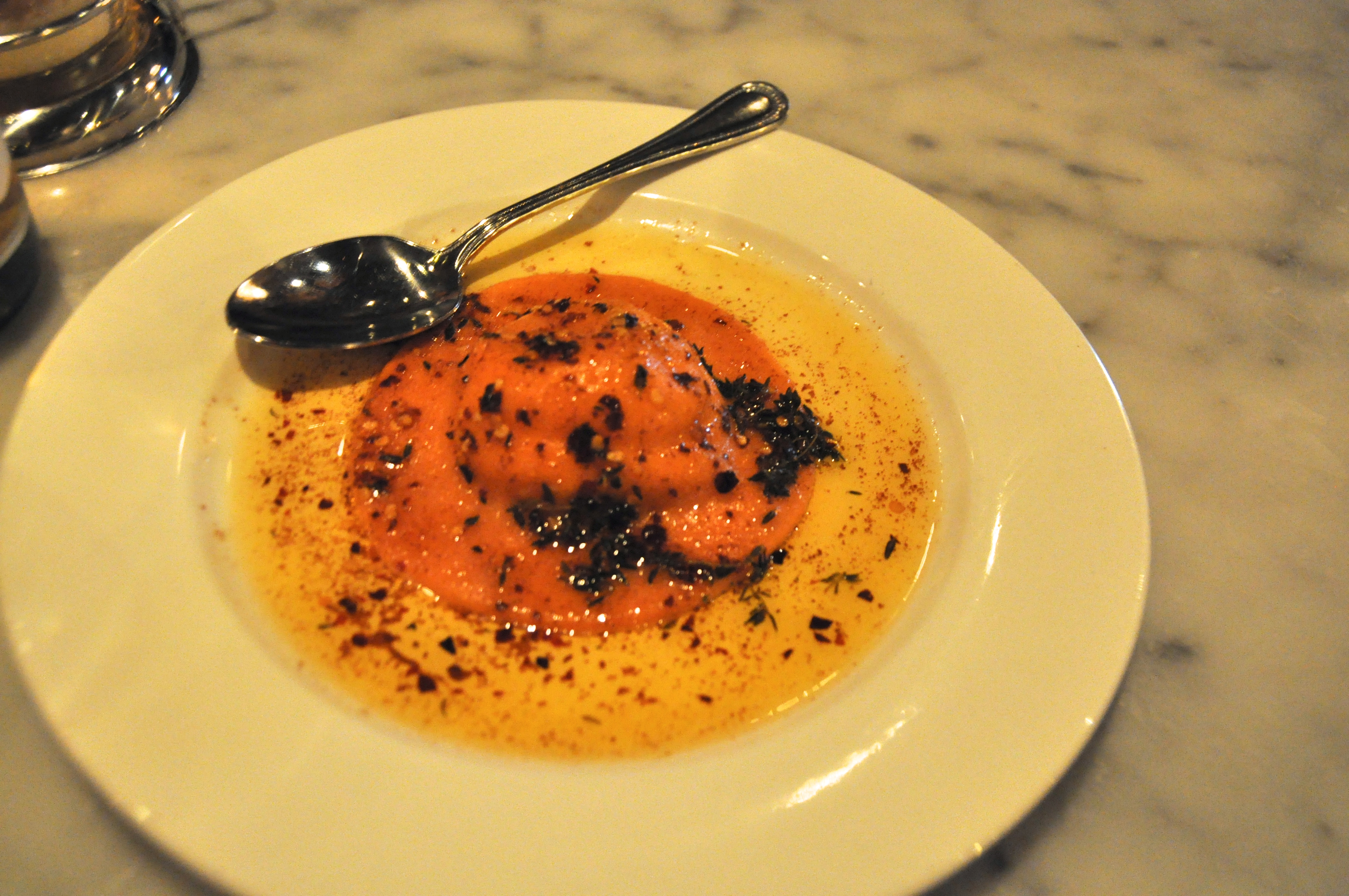
    They were all delicious but the ‘Nduja Egg Raviolo was the clear winner for that course … ALWAYS ask your server what to get. The yoke runs out of the filled fresh pasta and mixes with the spicy chili oil.

    DSC_0042

    The third round was my favorite: Gnocchi with Cauliflower and Orange, Mushroom and Taleggio Agnolotti (also recommended the by the server), and the St. Louis Pork Ribs. HOLY CA-MOLY. All three dishes were knock outs!

    I had to get the Gnocchi after this review from City Pages. I echo everything they say, I was nervous the dish would taste too strong of orange and it wasn’t the case. It was perfect.

    DSC_0045

    The Agnolotti were little pockets of happiness each bite was rich and worth remembering.

    DSC_0049

    The ribs were tender and some of the best tasting meat I have ever had.

    DSC_0052

    I thought we had hit the crescendo of the meal, I thought the best was behind us. I WAS WRONG! The Salted Butter and Caramel Crespelle was heaven on earth. I wanted to crawl into the fetal position and lick the plate.

    DSC_0058

    Going to Bar La Grassa? I would say, don’t leave without having the crespelle, the gnocchi, and the ribs.

    Check it out!

    800 North Washington Ave.

    Minneapolis, MN 55401

    612.333.3837

  • Grandma Becky’s Caramel Bars

    Grandma Becky’s Caramel Bars

    “What is your biggest regret?” middle school students really get straight to the point. Over 20 students who were doing an oral history project focused on food interviewed me yesterday. Questions ranged from “Who would win, the Incredible Hulk or Superman?” to “When you look up in the sky, what do you think about?” My biggest regret is directly connected to the recipe that I brought to share (as well as samples of that recipe).

    My biggest regret was that I never cooked with my grandmas. Both of my grandmas were amazing cooks but unfortunately I didn’t take the time to learn from them. I have several of their recipes but notes on paper don’t do their food justice although I continue to try.

    For the interviews, I was to bring in a recipe to share and I chose my Grandma Becky’s caramel bars. If I ever want anything out of my father, I know bribing him with these bars will work 100% of the time.

    DSC_0884

    The first step is to unwrap 50 caramels (this can easily be done while watching your favorite reality television show)

    DSC_0861

    Preheat the oven to 350 and in a large bowl combine these ingredients

    DSC_0859

    DSC_0865

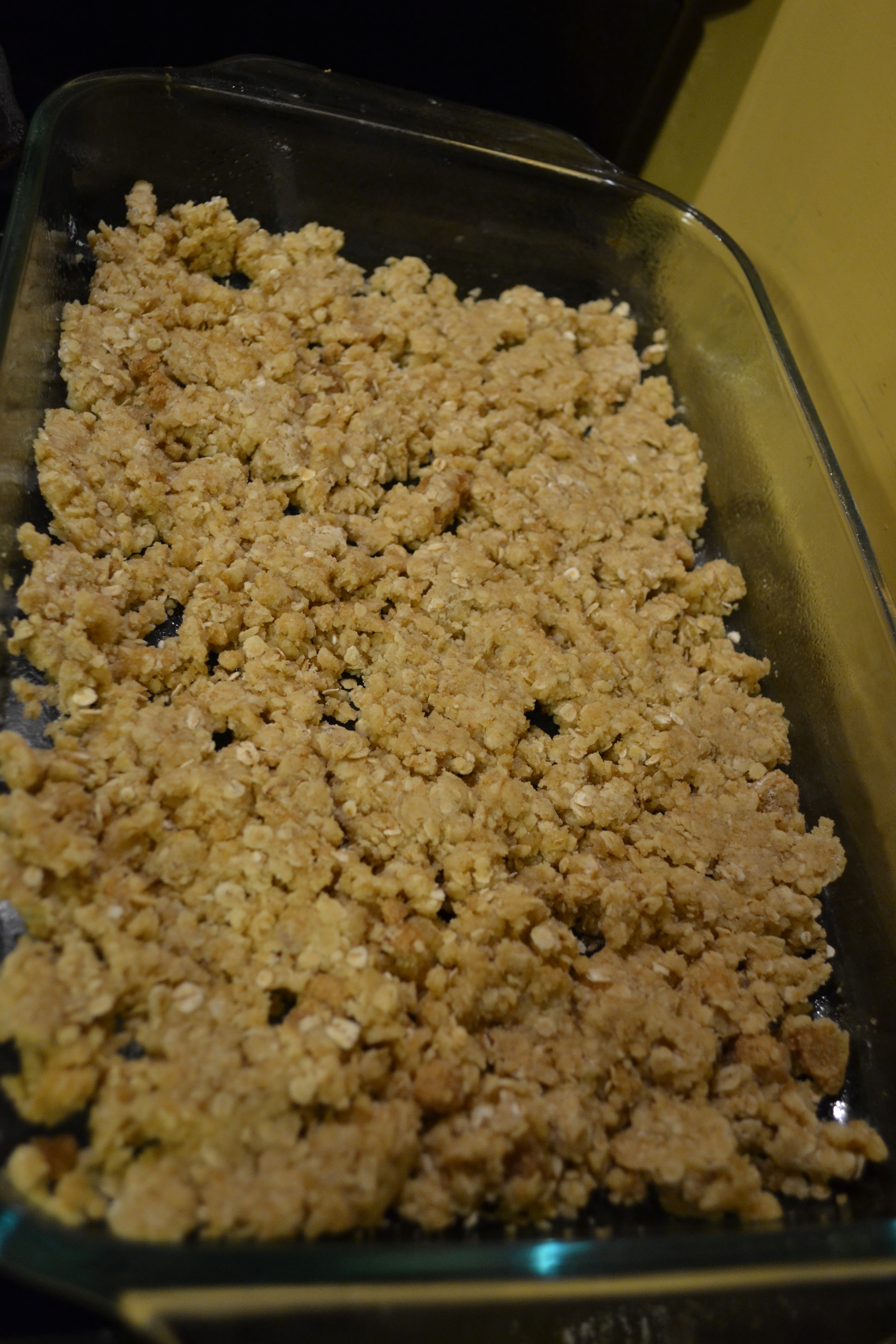
    Take ¾ of the mixture and spread/press it to the bottom of a 9 x 13 inch pan, bake this for ten minutes

    DSC_0866 DSC_0871

    While the bottom crust is baking melt your caramels and 7 Tablespoons of light cream in a double boiler or microwave

    DSC_0872

    Once the caramel is melted and the crust has baked ten minutes, spread the caramel mixture on top

    DSC_0873

    Crumble the ¼ remaining crust mixture on top evenly and bake for another 15-20 minutes

    DSC_0875

    Let them cool and enjoy!

    DSC_0880

    Every interview ended with the same question, “do you have any advice for us?” I consistently replied, “spend time in the kitchen with the amazing cooks in your life!”

    Caramel Bar Recipe

    Ingredients:

    • 50 caramel pieces
    • 7 Tablespoons of light cream
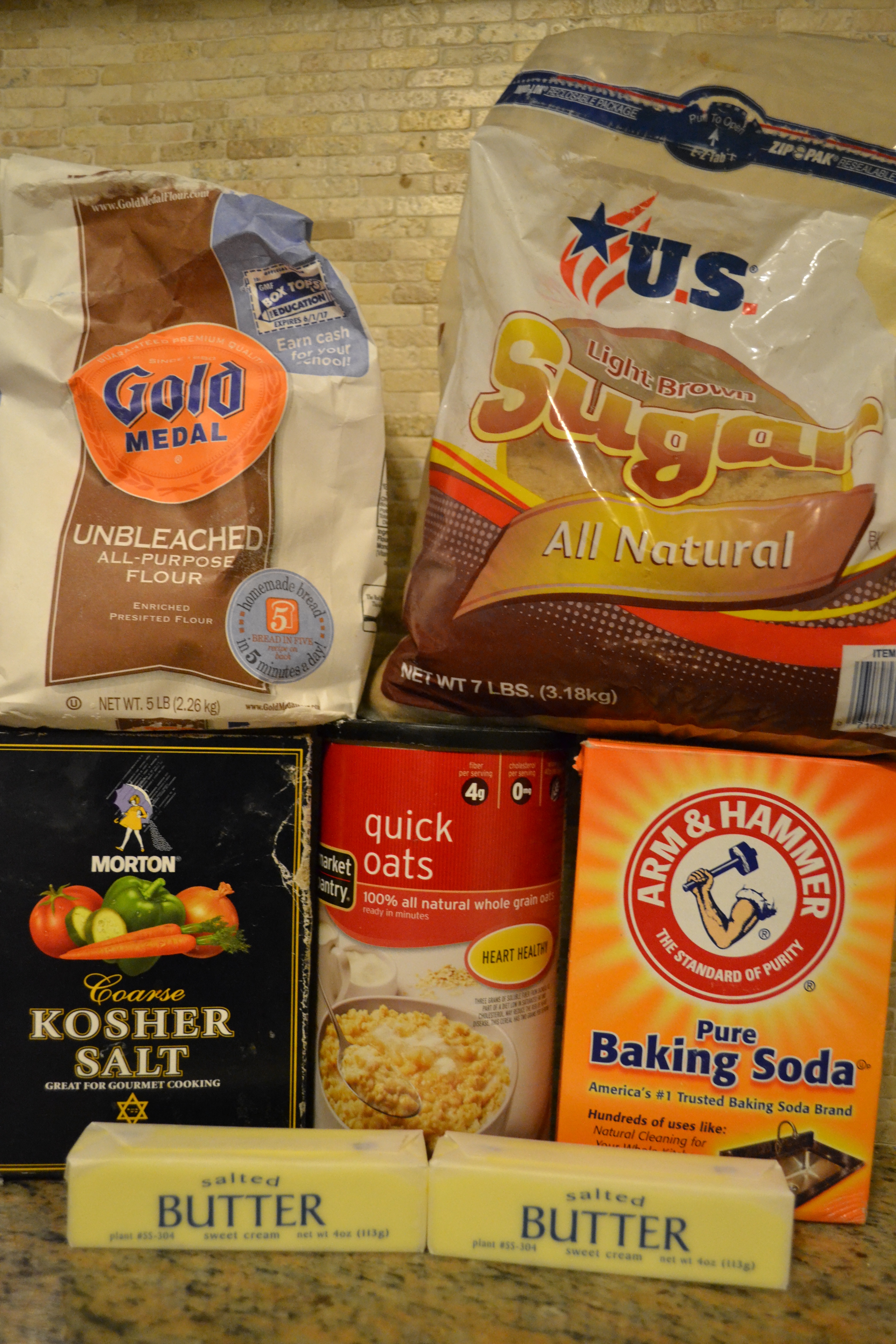
    • 1 ½ cups of flour
    • 1 ½ cups of quick oats
    • ¾ cup brown sugar
    • ¾ teaspoon baking soda
    • ¼ teaspoon salt
    • 1 cup of shortening or butter (recipe called for shortening but I didn’t have it, butter tasted great too)

    Directions:

    Unwrap the caramels and start melting them with the cream in a double boiler. Mix all of the remaining ingredients in a large bowl. Spread ¾ of the crust mixture in the bottom of a 9x 13-inch pan and bake for ten minutes.

    Once the caramel is melted and the bottom crust has baked for ten minutes pour the caramel on top of the crust. Crumble the remaining crust mixture on top evenly and bake for another 15-20 minutes.

  • Digital Learning Day 2014

    Digital Learning Day 2014

    At the heart of Digital Learning Day is quality teaching and learning from educators and students around the world. The day itself is really a celebration of the innovative lessons and projects that we know happen everyday in and out of classrooms. It is an opportunity to highlight some of the best tech-forward districts, organizations, and corporations from around the country. In order to make such a large international observance, the Alliance for Excellent Education calls upon the support of schools, nonprofits, and for-profits who believe that digital learning is a key component of a strong education.

    The National Youth Leadership Council shares in that belief and is honored to support Digital Learning Day as a core partner annually. As a core partner, we encourage our networks of educators and young people to participate in Digital Learning Day. To further support this initiative, partner organizations also share their quality resources for the digital learning toolkits that can be found on digitallearningday.org. One of the best benefits of being a partner for this initiative is attending the national event in-person. And one of the biggest benefits of being the “ED tech” specialist at work is getting to be that representative to attend the in-person celebration.

    The celebration started the night before at a beautiful reception held at the Alliance for Excellent Education’s office. It was nice to have a few hours to meet professionals who have mutual interests in educational technology, youth leadership, and access to quality teaching and learning tools. I left the celebration buzzing from all the wonderful conversations and new connections I had made. My excitement for the next day was growing by the second.

    photo-12

    Climbing up the steps to the Library of Congress in Washington D.C., butterflies started fluttering as I knew the day would be dynamic both in-person and online. A large group gathered to take a tour of the building that is covered in beautiful detail and symbolism. Libraries are the foundational setting for digital learning and media, which made the Library of Congress a perfect location for the celebration. And that location has also been the setting for many historical political decisions related to educational technology.

    DSC_0646

    DSC_0667

    After the tour we piled into the Coolidge Auditorium where we were welcomed by Dr. James Billington to the library. While the day of amazing examples of digital learning was just beginning, Tom Wheeler, the Chairman of the FCC reminded us that many educators do not have the access to the internet they need in their classroom. He shared that his goal was to have the first Erate updates completed before fall of 2014. Roberto Rodriguez, Special Assistant to the President for Education Policy, echoed Wheeler’s concern for internet access and added that this is really an issue of equity within education.

    DSC_0659

    The day became an exhibit of some of the best digital learning from around the country. Participants had the opportunity to talk with youth, educators, and administrators that were eager to share their replicable programs and projects. In the midst of the live celebration, many of us were also trying to keep up through Twitter and the Google Hangouts throughout the day. These digital and in-person opportunities to connect expanded personal learning networks and added new resources to our ED tech tool belts.

    DSC_0678 DSC_0681

    The live event culminated with a panel of district staff, state administrators, federal employees, and leaders from national organizations. The most dynamic panelist was a student, Amber Garrett from Talladega County, who shared the youth perspective from before and after the personalized learning initiative was implemented in her district. She cited that technology helped her develop 21st century skills and gave her opportunities to use those skills in the real world.

    DSC_0703

    Digital Learning Day 2014 taught me that while at the core of this issue is teaching and learning, everyone should have a vested interest and role in educational technology. If we don’t provide our young people with the best education possible our society, economy, and future is at risk. The use and access to technology and media, quality teaching methods, and excellent curriculum must be supported by students, educators, administrators, policy makers, IT professionals, community-based organizations, and corporate partners. The Alliance for Excellent Education does an amazing job organizing Digital Learning Day. NYLC is honored to be a core partner.

    If you missed the excitement from the day, check out #DLDay on Twitter or digitallearningday.org

    DSC_0670My view at lunch : )

    DSC_0652The young scholar on the right and the older scholar on the left represent life-long learning.

  • Empanadas

    Empanadas

    Super bowl is great opportunity to make some tasty foods and this year I want to offer something extra special. I looked through my appetizer board on Pinterest and one thing that stuck out to me was empanadas. There are so many different recipes to choose from but I chose this recipe from myfridgefood as my inspiration. My empanada preparation was a little different and I chose to make mine a little smaller since there would be a lot to choose from at the party.

    I should say that this recipe is multi-step and can be pretty labor intensive depending on how big or small your empanadas turn out. If making from scratch, you need to make the dough, make the filling, roll and cut the dough, fill the dough, and then bake the dough. There could be short cuts if you bought pre-made dough, pre-made filling, or if you ask a friend to help. The recipe you see in this how-to is doubled fyi, since it was Super bowl I wanted to make a lot.

    First I made the dough using this recipe from Laylita’s Recipes but instead of using the food processor, I used a Kitchenaid mixer.

    DSC_0547

    After you make your dough it needs to refrigerate for a half hour.

    DSC_0549

    While the dough was in the fridge, I started making the filling. My recipe is a little different than my inspiration, I used more ingredients and my preparation is not exactly the same.

    DSC_0556

    Cut up your chicken into one inch cubs, and dice your onion.

    DSC_0557

    Add a 2 tablespoons vegetable oil to the bottom of the pan and set to medium high heat. Then throw these ingredients into the pot at once: chicken, onions, chipotles, can of diced tomatoes, cumin, coriander, and garlic.

    DSC_0560

    Let the juice from the tomatoes and the chicken create a hot tub for the chicken and other ingredients. Stir every 5 minutes cook until the chicken is tender and shreds easily… maybe 30-45 minutes.

    DSC_0570

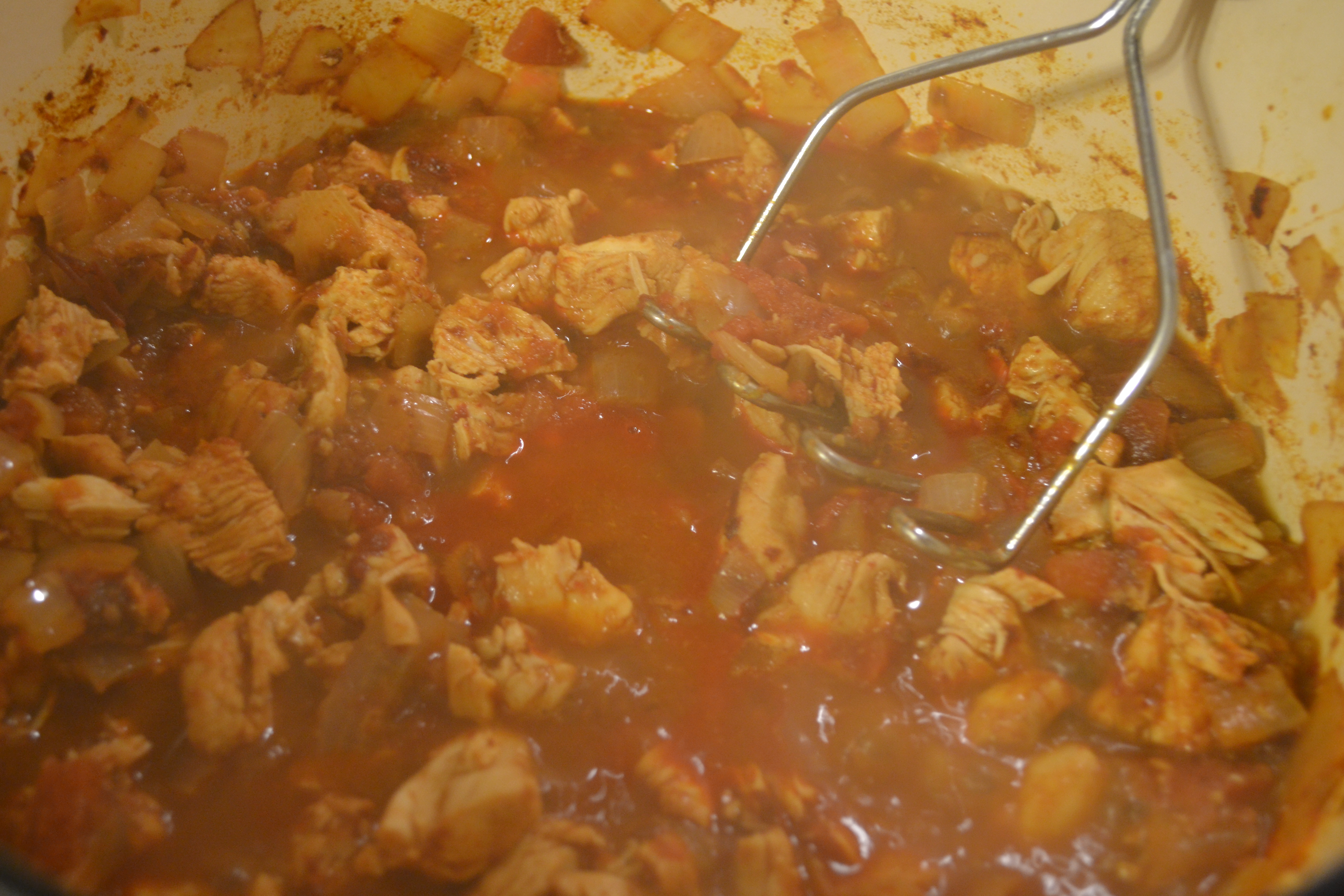
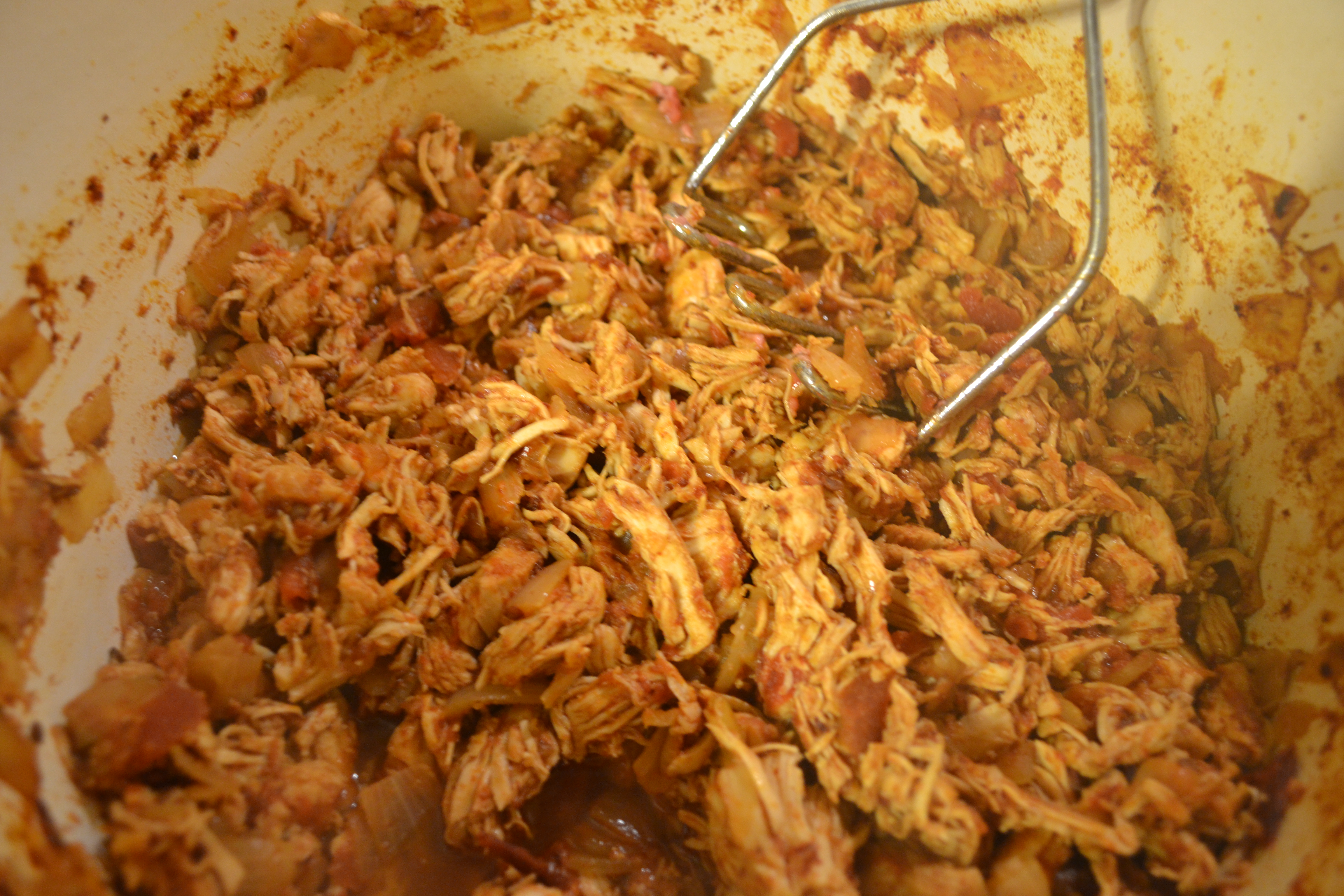
    Then I just took a hand potato masher to the dish and broke up the chicken, tomatoes, and peppers. Let the excess moisture cook out. I think the filling could easily be made in the crock pot, I would just add all the ingredients as I did above, put it in a crock pot on low while you go to work or run errands maybe 6-8 hours and then voila!

    DSC_0571

    Your filling will need to cool before you stuff. I made the dough and filling the night before but you could put the filling in the fridge or freezer to cool while you roll out and cut the dough. Note, the longer you let the dough sit the harder it will get because it has butter in it. Don’t worry though, as soon as it warms up a bit it will become easier to work with.

    Clean a large surface:

    DSC_0575

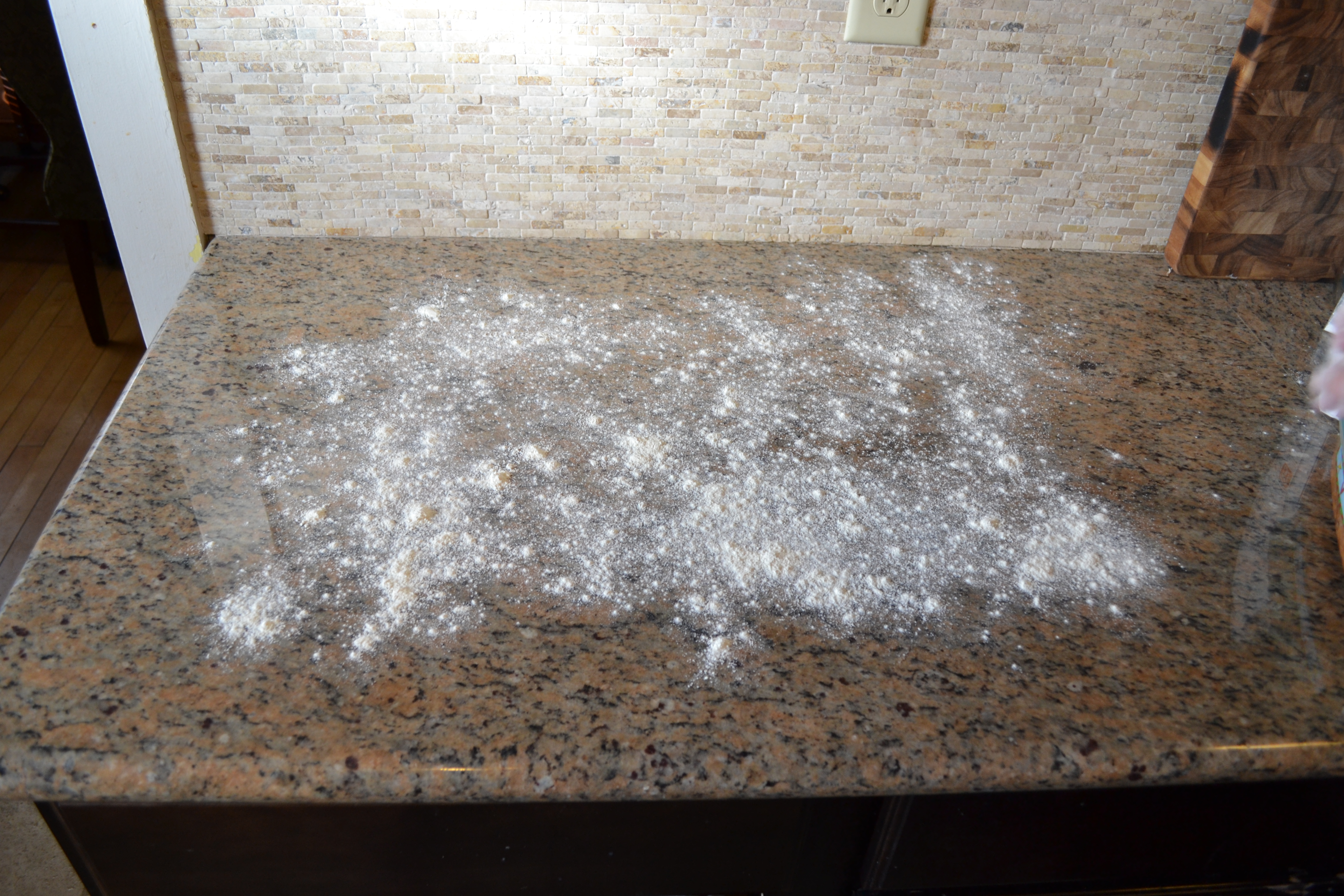
    Dirty that same large surface with a lot of flour (and have more standing by):

    DSC_0576

    Roll out your dough, the directions say 1/8”, I just let the dough gods take over. Then use whatever tool you want to cut. I used an oval cutter, the directions call for a circle.

    DSC_0581

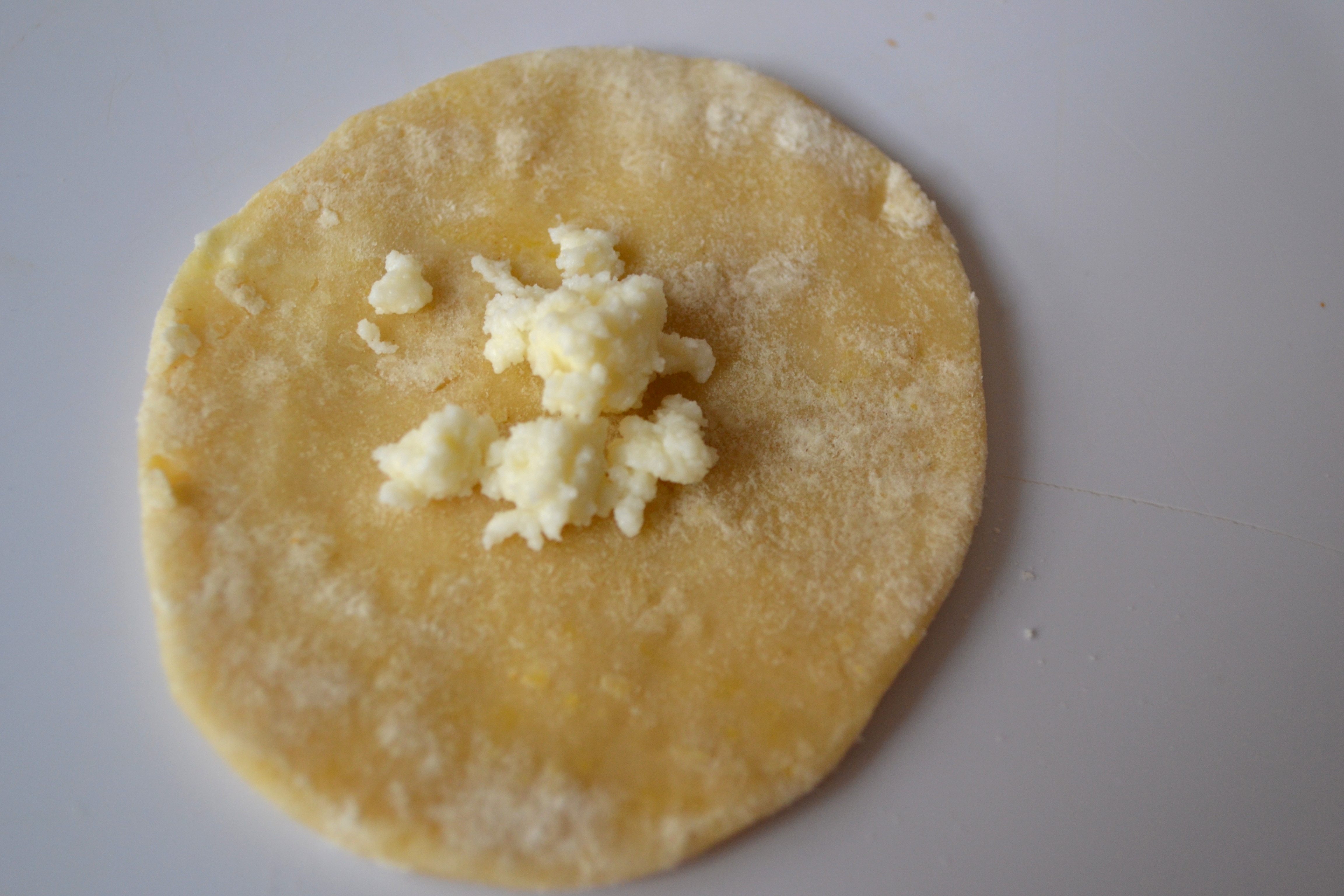
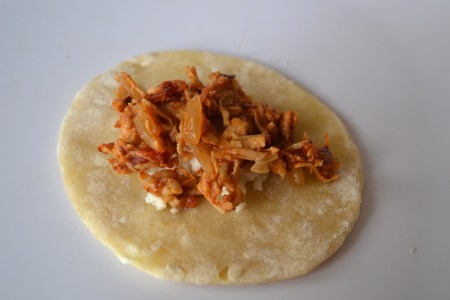
    Then fill! I put a little queso fresco down first, then the shredded chicken filling, fold over the sides, and then I used a fork to seal the sides. This is really the step that I think having a partner would speed up the process.

    DSC_0587 DSC_0588 DSC_0589 DSC_0590

    When you start to get to the end of your filling process, turn your oven to 400 degrees. I used parchment paper (NOT WAX PAPER) when baking as much as possible as it prevents sticking and it saves on clean up. Line your empanadas up – the dough will not expand a lot so they don’t have to be that far apart.

    DSC_0612

    Make your eggs wash with 2 eggs and a few tablespoons of water. Paint the eggs wash on top and pop the empanadas in the oven for 30 minutes.

    DSC_0613

    DSC_0617

    Ingredients:

    (for a single batch)

    For the filling

    • 2 tablespoons of vegetable oil
    • 1 yellow onion diced
    • 1 can of diced tomatoes (do not drain)
    • 1 ibs of chicken
    • 1 small can of chipotles in adobo- you will use 2 peppers and 1 tablespoon of the sauce (adjust the spice as you need it)
    • ½ tablespoon of cumin
    • 2 tablespoons of ground coriander
    • salt and pepper
    • 1 package of queso fresco

    For the dough

    Laylita’s Recipe

    To finish:

    • 2 eggs
    • 2 tablespoons of water

    Directions

    Make the dough according to Laylita’s directions either using a food processor or Kitchenaid mixer. Let it cool in the over for at least a half hour.

    While the dough is cooling, chop your chicken into one inch cubes and dice your onions. Put 2 tablespoons of oil in the bottom of a pan and heat to medium high heat. Add the chicken, onions, tomatoes, chipotle peppers, adobo sauce, cumin, coriander, salt, and pepper.

    Let the mixture cook until the chicken is very tender and able to shred, about 30-45 minutes. Then begin shredded the chicken with forks or potato mashers. Make sure that almost all of the liquid is cooked out of the pan.

    ***Or throw all of these ingredients into a crock-pot and cook on low for 6-8 hours.

    While the filling is cooling, roll out the dough on a clean and well-floured surface. If the dough is stiff from being cool breathe on it for a few minutes (kidding), just give it some time. Roll out the dough to 1/8”. Select a round or oval pastry or cookie cutter that is 3 inches for a small empanada or 4-5 inches for a larger empanada.

    Fill each piece of dough with a teaspoon to a tablespoon (depending on your size) of queso fresco and then top with as much chicken mixture that will fit. Fold over the sides and seal with a fork.

    When you are getting to the end of dough filling, set the oven to 400 degrees. Lay parchment paper on a cookie sheet; line your empanadas with a little space in between.

    Create an egg wash from 2 eggs and 2 tablespoons of water; mix thoroughly. Paint each empanada with the wash, bake for 30 minute and enjoy!

    DSC_0619

  • Mom’s Fried Chicken

    Mom’s Fried Chicken

    For me, there is nothing more sacred than cooking a recipe that was passed down from someone you love. One of my biggest regrets in life is that I never got to cook with my grandma. I was twelve when she died and now when I cook one of her recipes I trust that she is in heaven guiding me around the kitchen. Spend time with the talented cooks in your life, cherish the memories and soak up all of their knowledge.

    Tonight, I spent time with my favorite family chef, my mom. I love cooking with my mom. It is our time to catch up and do something that we both enjoy, together. She learned to cook from her mom and someday I will teach my daughter. Through my blog I hope to chronicle some of her recipes- warning, none are healthy. She learned from my grandma who would fry bacon and then use all the grease for the hash browns. They are delicious though, and we start this series off with deliciously unhealthy fried chicken.

    Have you ever looked up how to make fried chicken? I have, you will find a million different ways, different breading, oil, seasoning, etc. This recipe adds one more to the mix.

    To begin, set your oven to 350 degrees

    The oil:

    Equal parts butter and Crisco… oh yeah forgot to mention, if you are looking for specific measurements this might be the wrong fried chicken recipe for you. As I was saying, equal parts butter and Crisco (eyeball it).

    DSC_0487

    Do you remember this scene from the help? Crisco really is magical.

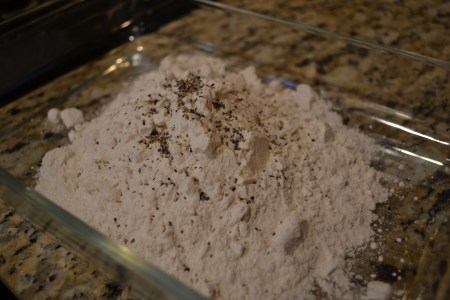
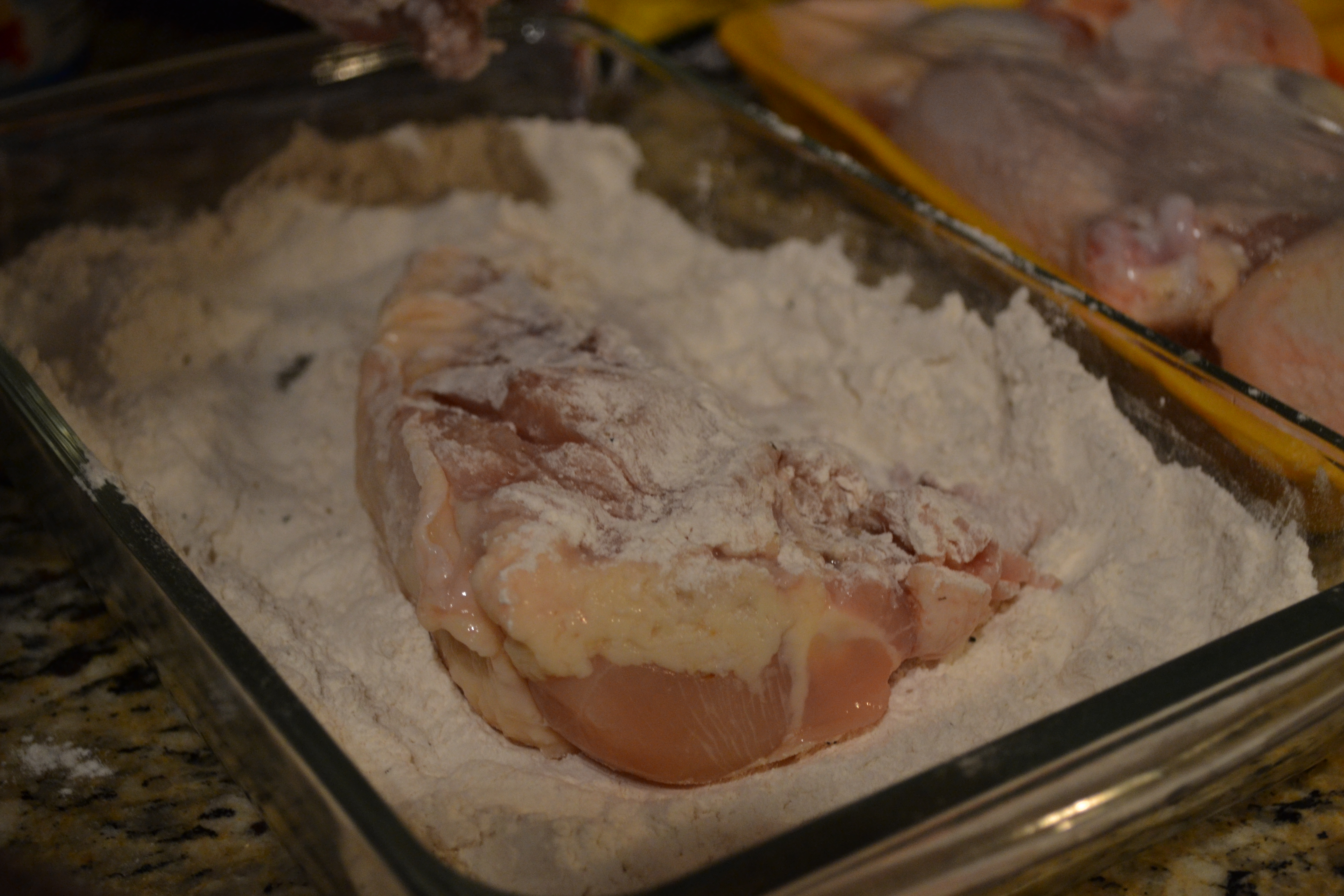
    Get the oil going over medium-high heat. While it is warming up, dredge your chicken in flour that has been lightly peppered. Start with you chicken breasts first then your other chicken pieces.

    DSC_0489 DSC_0490

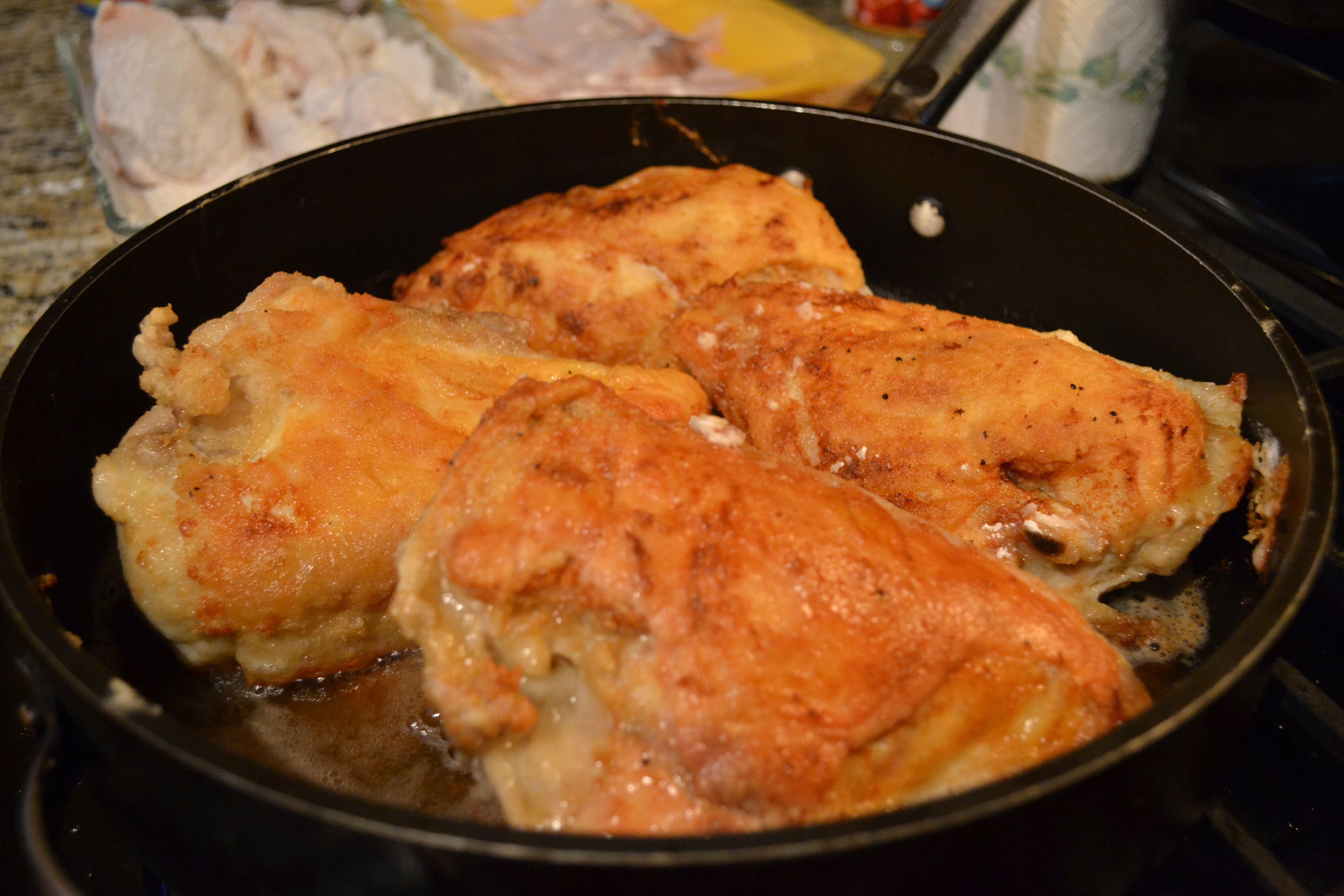
    You will know oil is hot by putting a little flour in first and if it fries up the oil is ready. Put your chicken breasts meat side down and let the brown up for 5-10 minutes until they are the color of these bad boys:

    DSC_0494

    Then flip them; the other side will take less time but aim for a similar color.  You may need to add more butter and Crisco for the second batch. While they are finishing up frying quarter an onion and put it at the bottom of a flat bottom metal pan with sides.

    DSC_0493

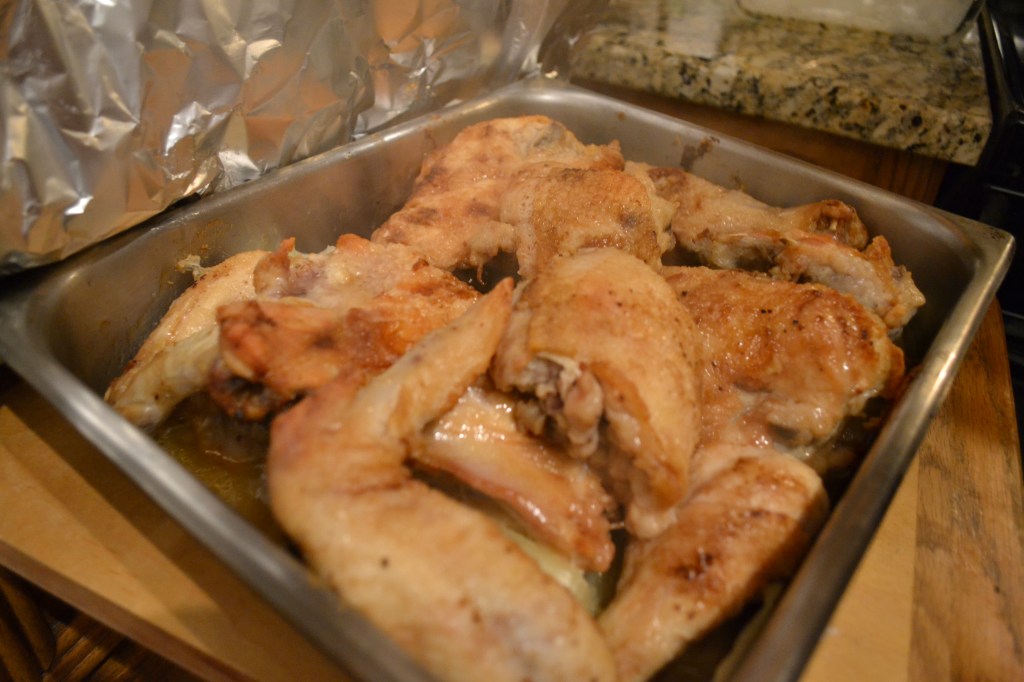
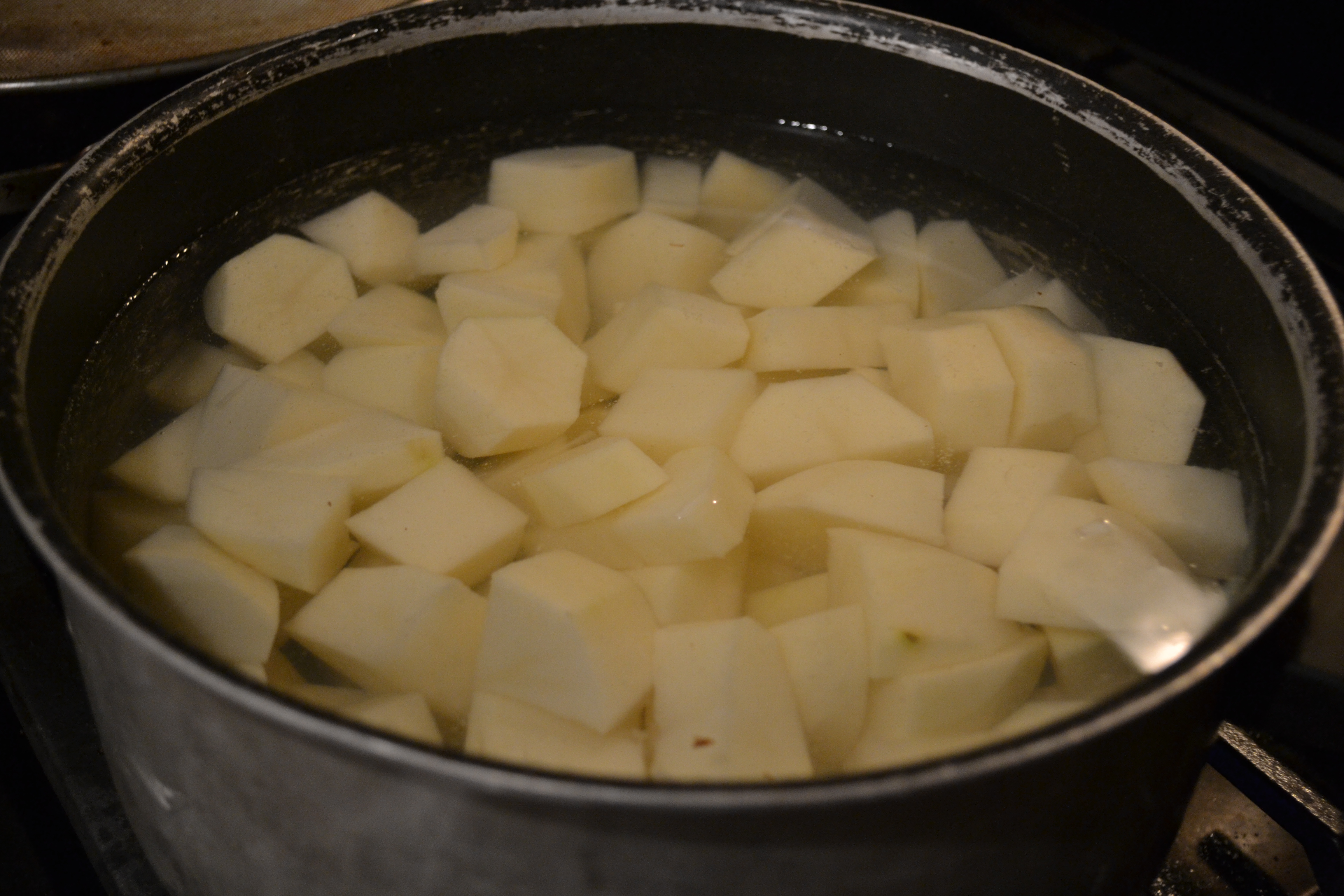
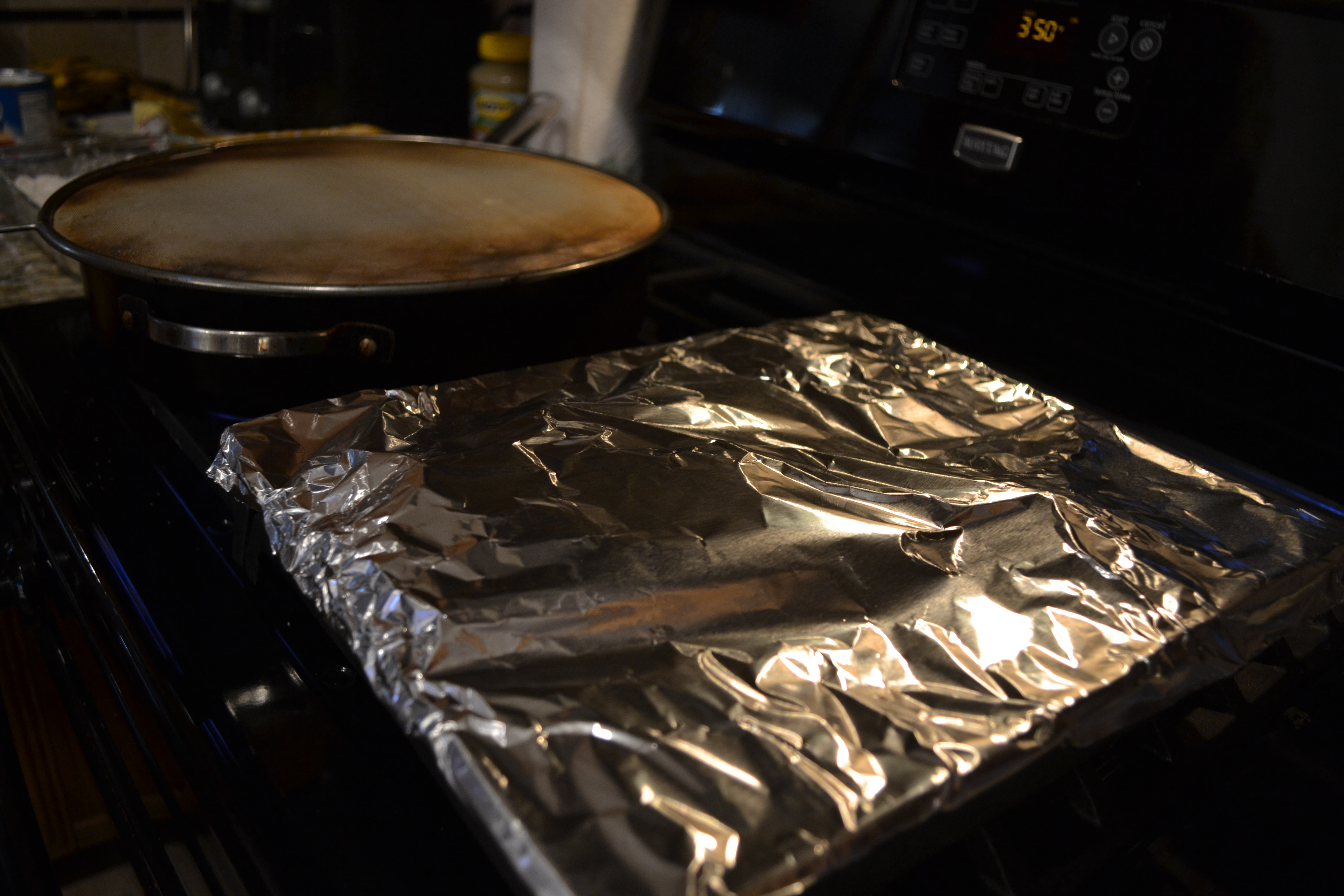
    Place the browned chicken breasts in the pan, cover with tin foil and put them in the oven. Since the breasts are meatier, this will give them more time to cook. While they are in the oven, follow the same steps with the wings, legs, etc. Add the rest of the chicken to the breasts, recover, and bake for an additional 30-45 minutes. During this time peel, chop, and begin to boil potatoes for mashing.

    DSC_0502 DSC_0497

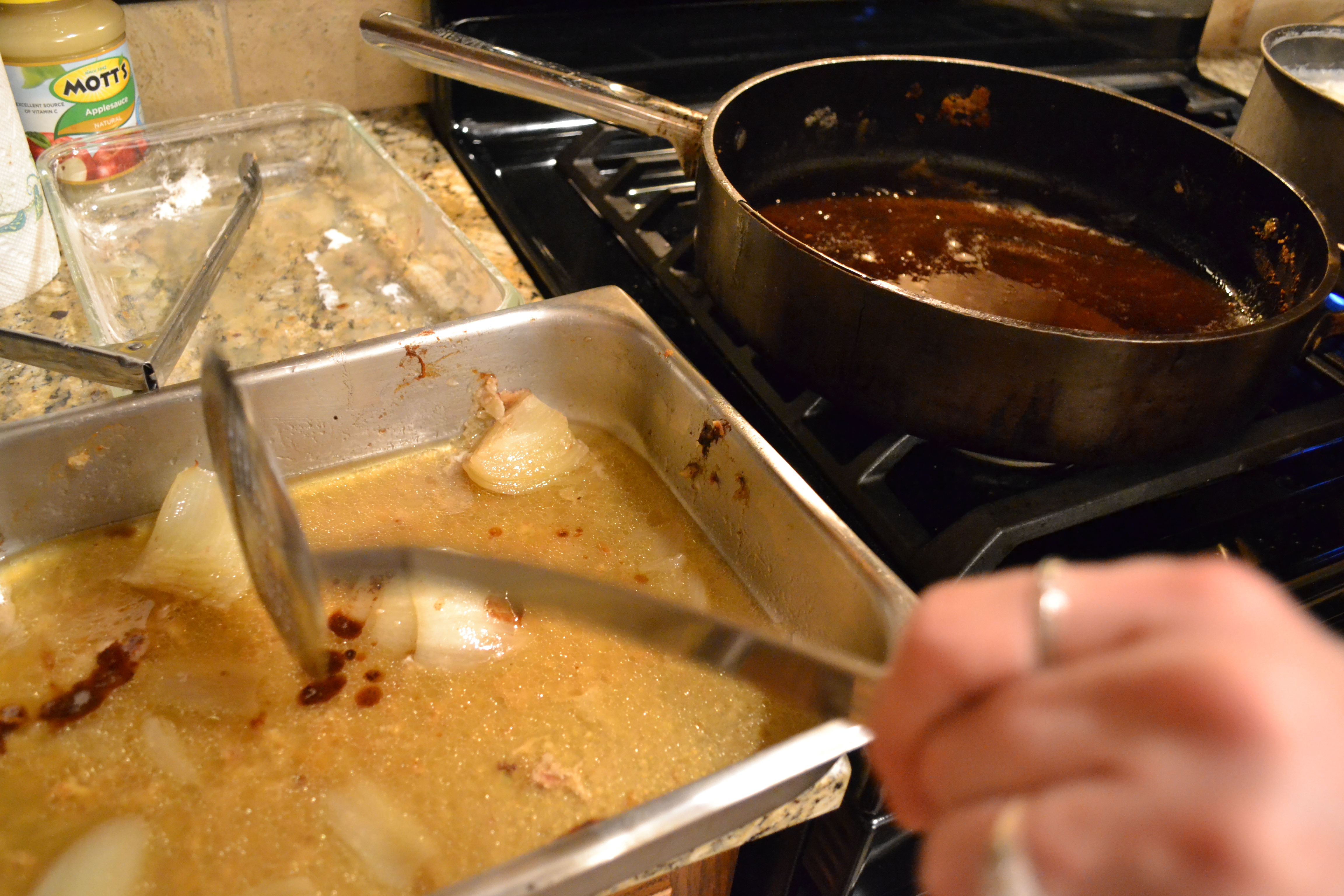
    Don’t throw away the grease that you used to fry your chicken! My mom said this is where she gets all the good flavor for her gravy… while raising her eyebrows. When you pull the pan of chicken out, it should be at least 165 degrees and the pan will be filled with happy chicken juice. Place your chicken in a different pan and cover with foil and bring the happy chicken juice metal plan to stove top to begin the gravy making experience.

    DSC_0519

    Gravy Tangent

    Making gravy… it is a skill. And like fried chicken, there are millions of ways (well maybe not millions) but a lot of ways to go about making gravy. My mom uses flour for poultry and cornstarch for beef and admittedly does not know why. This tradition is not based on science people and Alton Brown would most likely pull his hair out if he saw this (I have seen his gravy episode).

    DSC_0526 DSC_0528

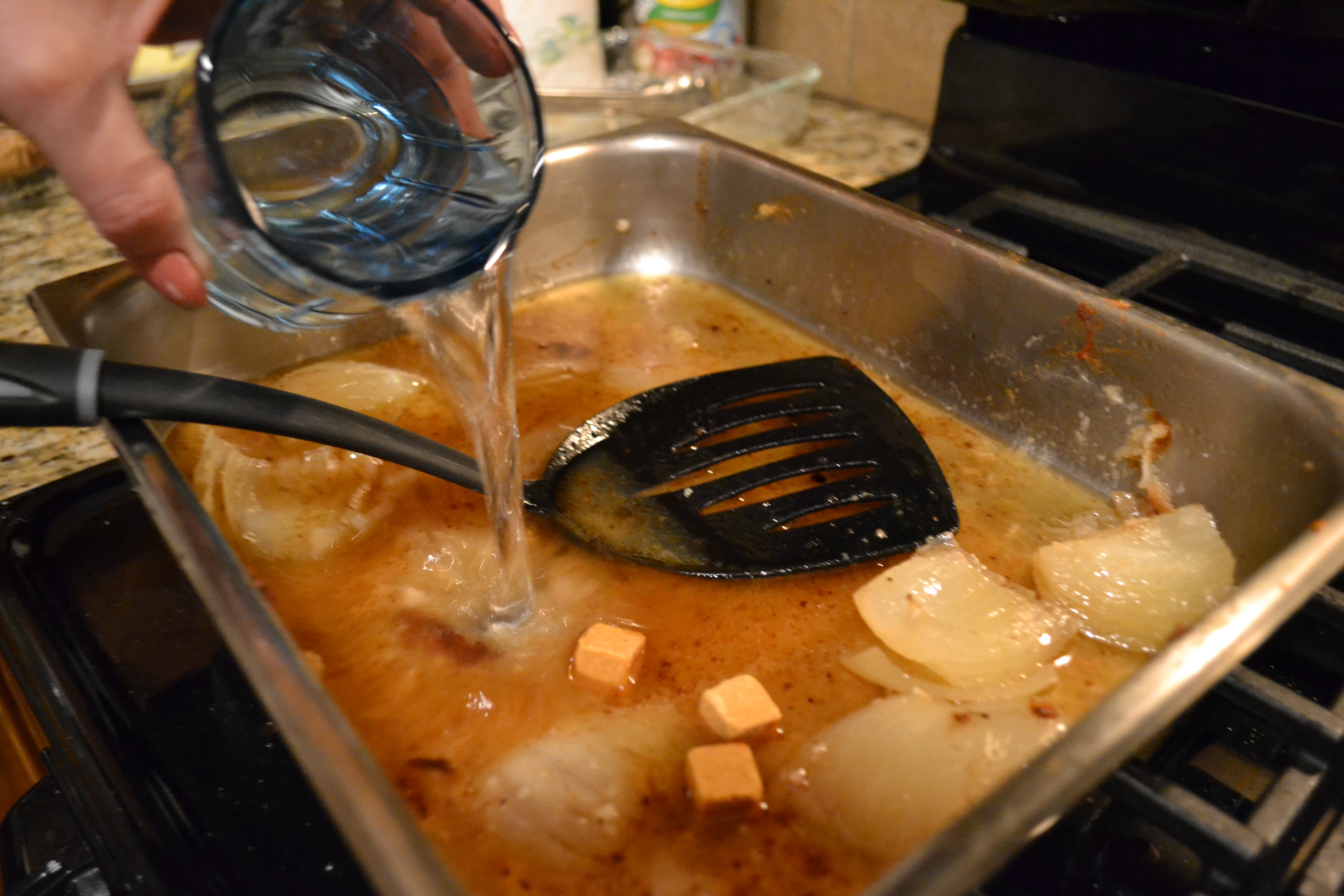
    Anyways, to the happy chicken juice with floating onions my mom adds some of the browned bits of chicken and flour from the bottom of the fry pan (not the grease the little scraps). How much of the scraps? Maybe four little spoonfuls? She lights the burner to medium under the metal pan, adds three chicken bouillon cubes, and a half a cup of water. After it heats up in looks like a fun hot tub.

    DSC_0533 DSC_0538

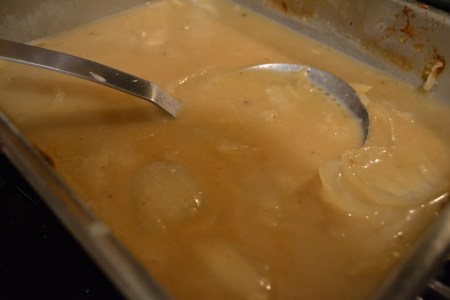
    On the side, she has a cup with a half-cup of water and a half-cup of milk mixed and then a cup with a few tablespoons of flour and water that make a runny paste. The goal is to thicken the hot tub with a little paste, add a little milk mixture, little paste… on and on until it gets the right consistency.  Remember, that gravy will thicken more as it cools. If you are new to gravy… it wouldn’t hurt to have a spare gravy packet in the cupboard in case the whole thing goes to hell.

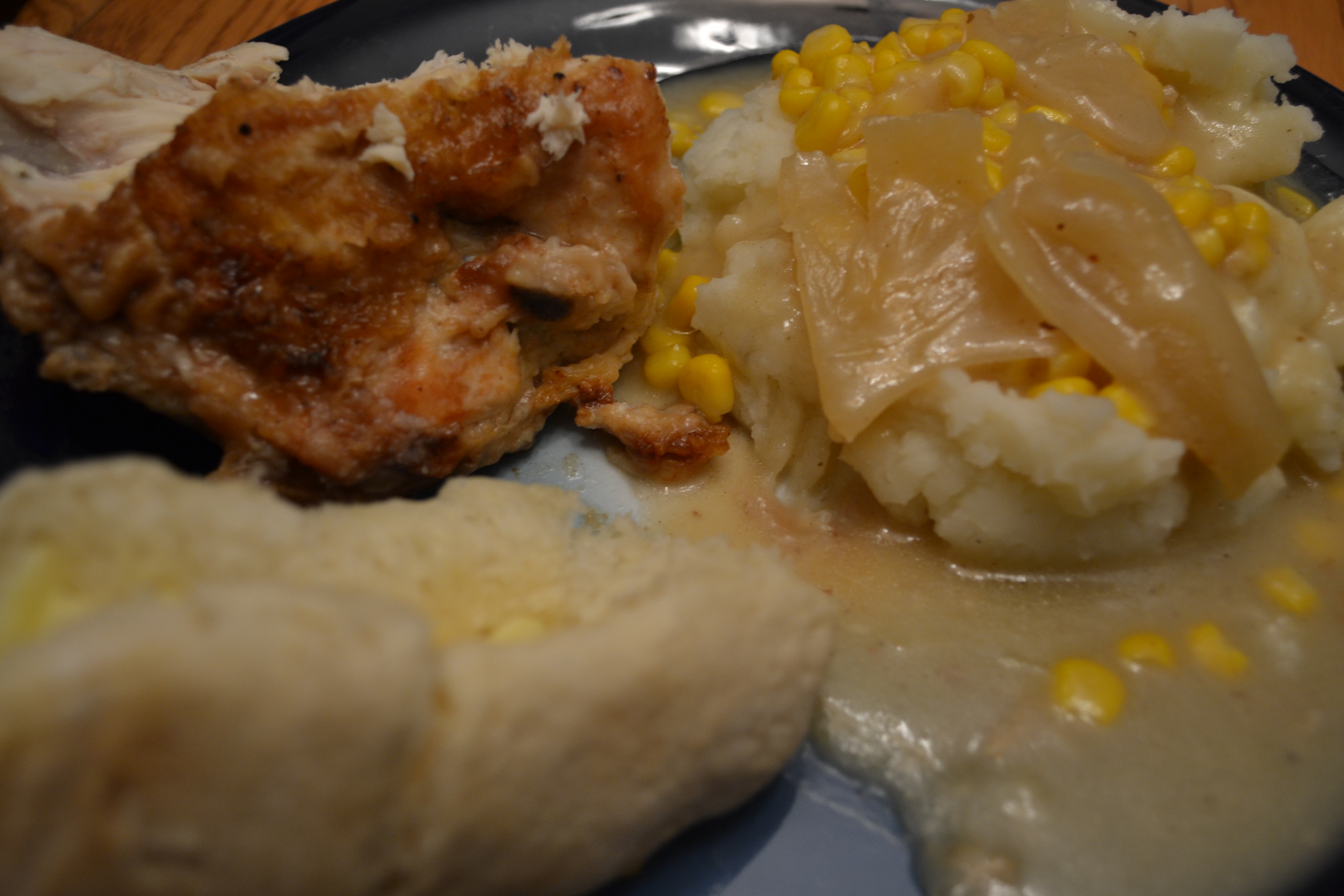
    Mash your potatoes with milk, butter, salt, and pepper and serve!

    DSC_0539

    Ingredients:

    Fried Chicken-

    • Whole fryer chicken cut up (if your family really loves the breasts or the legs consider buying extra… or another chicken)
    • 1 stick of butter
    • Crisco
    • Flour
    • Pepper
    • 1 Yellow onion quartered

    Preheat the oven to 350 degrees

    In a large frying pan, heat half the stick of butter and a large scoop of Crisco on medium-high heat. Dredge the chicken breasts in a shallow pan with flour that has been dusted with pepper until the breast is covered. Place the chicken breasts meat side down in the oil and fry for 5-10 minutes until brown then flip and fry the other side.

    In a metal pan with tall sides, add the onion quarters to the bottom. Break them up so they cover more of the bottom. Add the chicken breasts to the top of the onions; cover the pan with tinfoil and place in the oven.

    While the breasts are in the oven, follow the same process with the rest of the chicken. You may need to add the rest of the stick of butter and more Crisco to the frying pan. When both sides are brown, add them to the metal pan in the oven with the chicken breasts and recover. Bake for 30-45 minutes. DO NOT THROW OUT THE GREASE FROM THE PAN.

    When the chicken has reached 165 degrees (it will not hurt anyone if it cooks a little longer) take the chicken out of the metal pan, which will now be filled with juice. Place the chicken in a different pan and cover while you make the gravy.

    Gravy-

    • 3 chicken bouillon cubes
    • ½ cup of water
    • ½ cup water and ½ cup milk mixture
    • 2 tablespoons flour with another water mixed in to create a runny paste
    • Scraplings from the bottom of the frying pan

    Put the metal pan on the stove and begin heating the juice on medium. Add some of the scraps (pieces of chicken or flour) from the bottom of the fry pan (just a few teaspoons worth).

    Add the chicken bouillon cubes and the half-cup of water. Slowly begin to add a little of the flour paste then a little of the milk mixture until you have reached the perfect gravy texture. The gravy will continue to thicken as it cools.

  • Thai Butternut Squash Soup

    Thai Butternut Squash Soup

    It is January here in Minnesota, it is cold and windy outside. Sunday is for napping, relaxing, and eating home cooked meals. Tonight, to warm up I made some butternut squash soup featuring my favorite flavor, red curry. The inspiration for this recipe came from myrecipes.com but as with everything from my kitchen, I had to put my own spin on it.

    Leading role: butternut squash

    DSC_0475

    The biggest difference is that I started by roasting a whole butternut squash vs. using frozen cubes. I cut the squash down the middle, roast it inside down for 45 minutes at 400 and when you take it out the inside will be soft and scoop right out of the skin. You can take the seeds out before or after you cook it.

    Supporting characters:

    DSC_0469

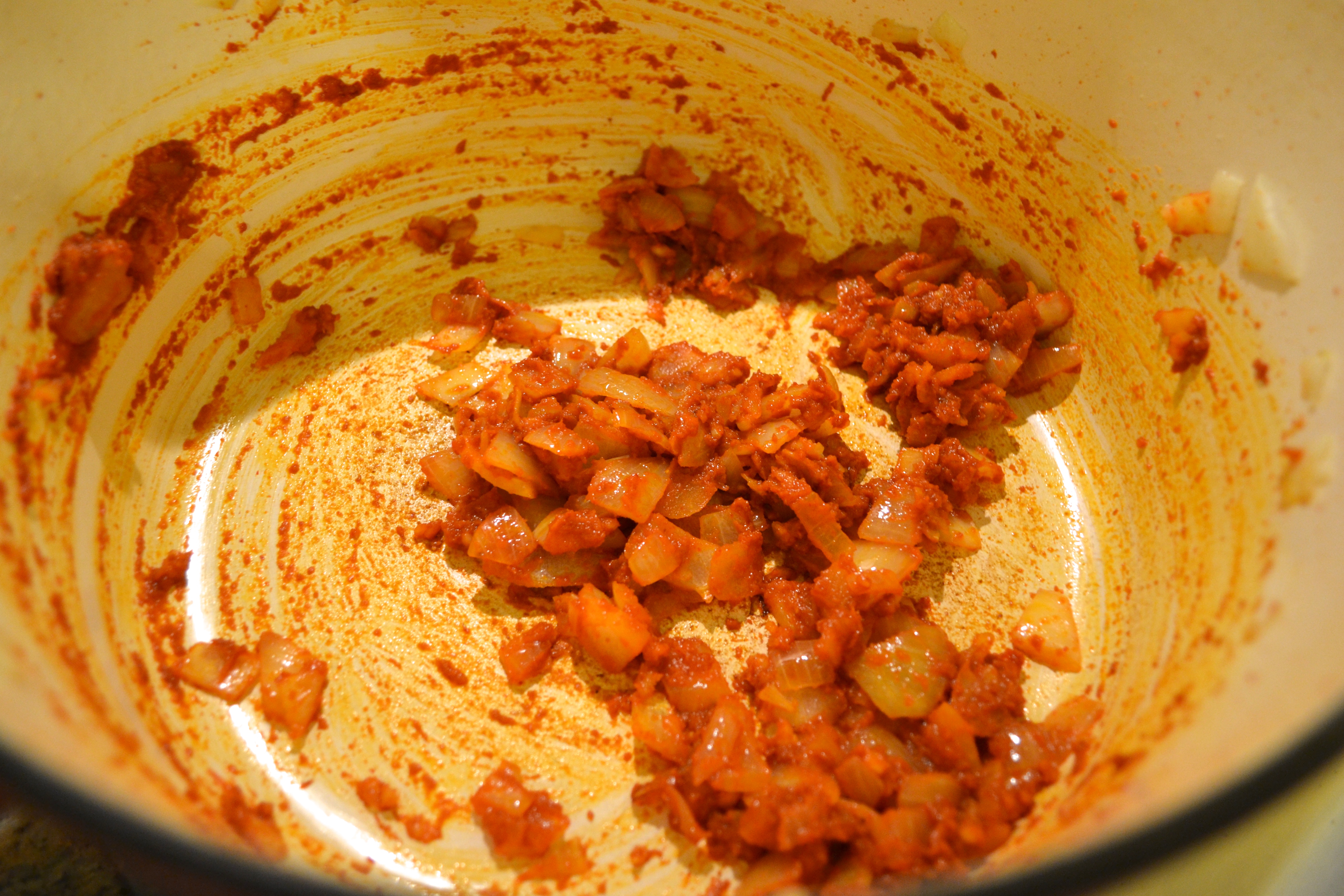
    After pulling the squash out of the oven to cool, I started by sautéing the onion in some canola oil. As the onion became softer I added garlic, powdered ginger, and red curry and sautéed for a minute or so.

    DSC_0477

    The original recipe called for chicken broth but I substituted that with water and a chicken bouillon cube. I then added the coconut milk, lime juice, brown sugar, a dash of soy sauce, and the whole butternut squash.

    DSC_0478

    From here you can choose to eat your soup a little bit chunky or blend it in a blender, food processor, or with an immersion blender. I tried it both ways and think it is based on your personal preference. To garnish, use crushed peanuts and chopped cilantro which add texture and flavor.
    DSC_0480

    This soup is fresh, flavorful, and healthy.

    Thai Butternut Squash Soup:

    • 1 butternut squash soup
    • 2 tablespoons canola oil
    • 1 medium diced onion
    • 2-3 gloves of minced garlic
    • 2-3 tablespoons of red curry paste
    • 1/2 teaspoon powdered ginger OR 1 teaspoon of fresh minced ginger
    • 1 cup of water with 1 chicken bouillon cube OR 1 cup chicken broth
    • 2 tablespoons of brown sugar
    • 1 can of coconut milk
    • 1 tablespoon of lime juice- more to taste
    • 1 teaspoon of salt
    • 1 dash of soy sauce- more to taste
    • chopped peanuts and cilantro for garnish

    Preheat the oven to 400 degrees, cut the butternut squash length-wise down the center roasting skin up on a cookie sheet with sides. Roast squash for 45 minutes.

    Once squash is done and cooling, sauté the diced onion in the canola oil for 3-5 minutes until soft. Then add the ginger, red curry, and garlic to the pan and sauté for another minute or two.

    Add the broth, coconut milk,  sugar, salt, soy sauce, lime juice, and squash, simmer for 10 minutes. At this point you can either serve the soup chunky or blend the soup for a smoother finish. Either way, garnish with chopped peanuts and cilantro.

  • The Maine Event- Part 2

    The Maine Event- Part 2

    Bar Harbor, Maine Days 3-5

    Day 3

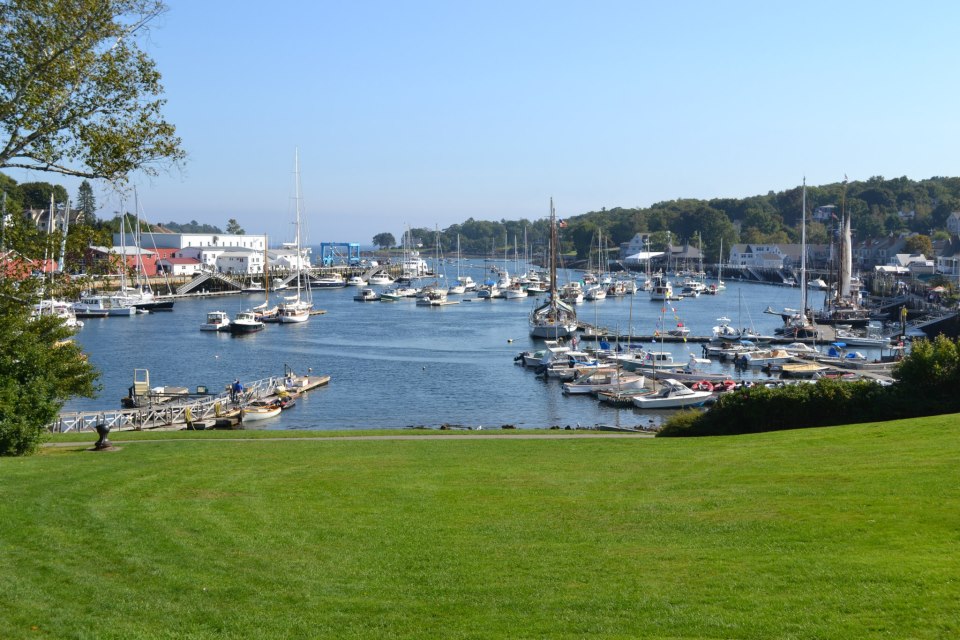
    The next morning we headed NE to Bar Harbor and if you are not in a hurry (you are on vacation of course you are not in a hurry), take the scenic route on U.S. 1. This beautiful coastal road will take you through every quintessential small Maine town along the ocean. Take time to get out of your car do some shopping, get a few bites to eat, and take in the scenery. Some pictures from our drive:
    60782_10101796438479781_1529728882_n 133815_10101796416818191_496403291_o 225958_10101796610954141_389016830_n 249997_10101796463709221_1039383354_n 487643_10101796465605421_1274520268_n 523302_10101796439847041_1479911686_n 539377_10101796461743161_1338947680_n

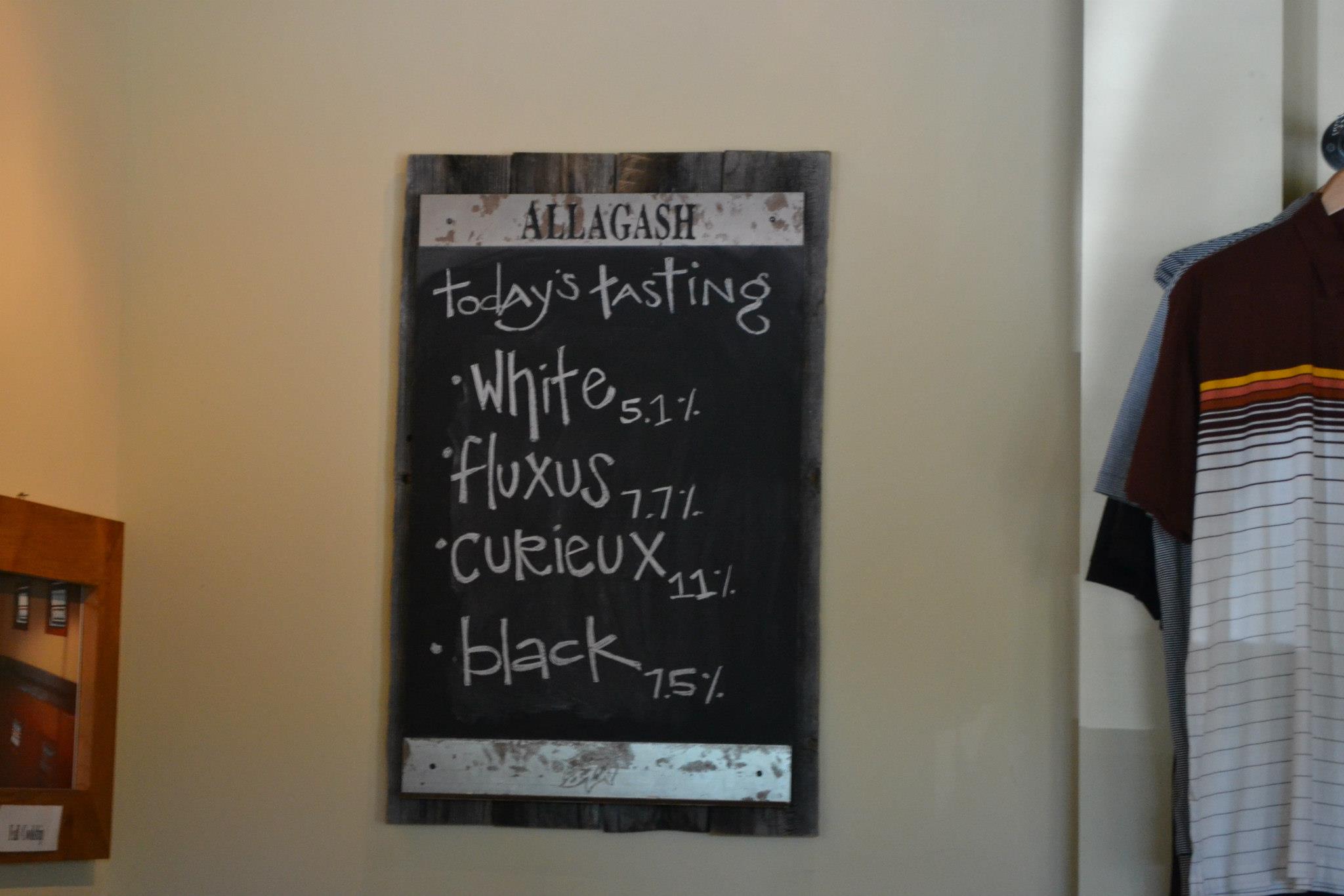
    The staff at the Allagash Brewery recommended getting a picnic lunch and taking a hike up to Bald Rock. There are two different ways to get to the top of Bald Rock, the first is through the main entrance of Camden State Park, and the second is through the trailhead in Lincolnville. For more detailed information: http://www.mainetrailfinder.com/trail/camden-hills-state-park-northern-trail-network/. We took the trailhead from Lincolnville that has a parking lot.

    335247_10101796446349011_85179076_o 460915_10101796447831041_1492354525_o 477449_10101796459961731_424745959_o

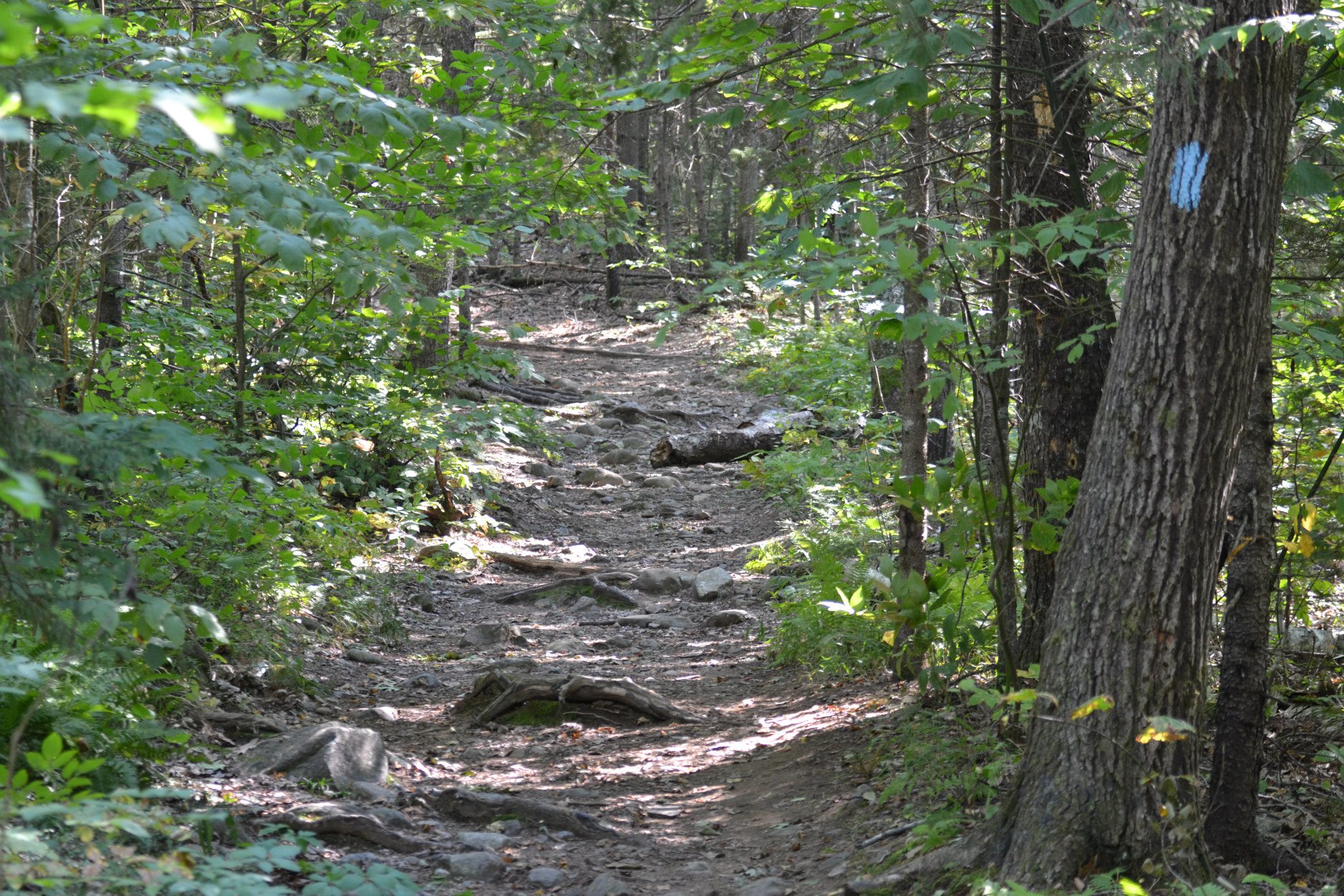
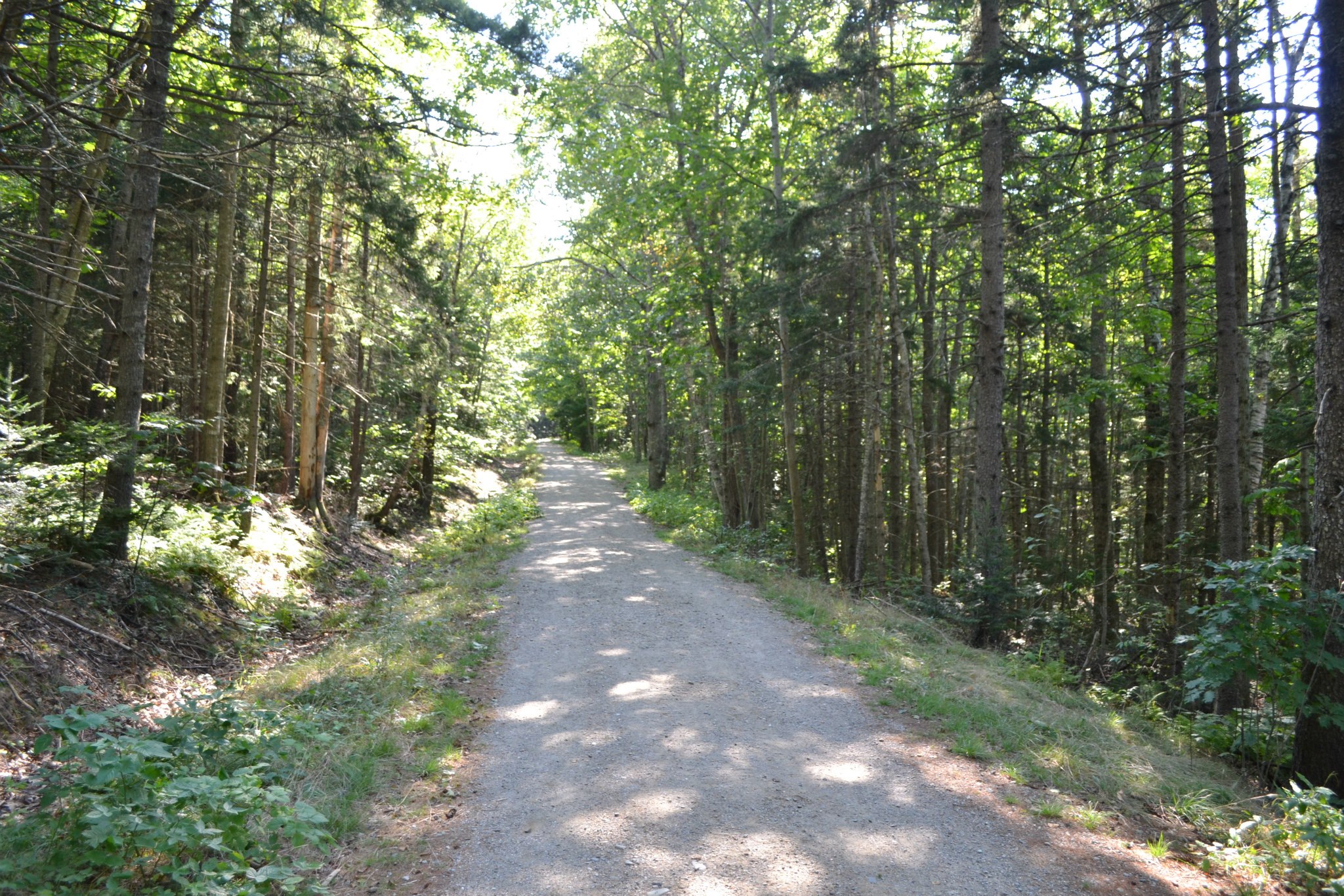
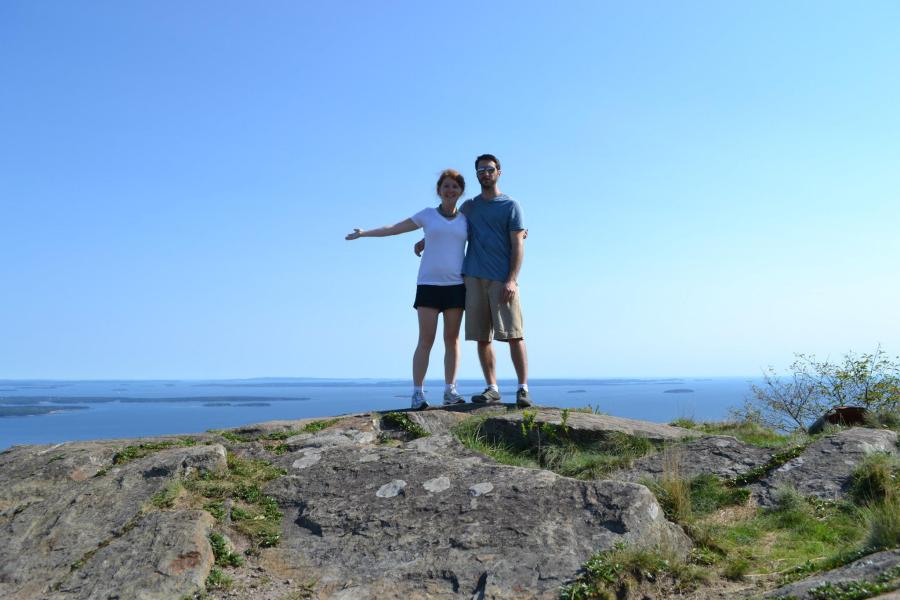
    I would say that this hike is pretty strenuous as it is 2.5 miles completely uphill. Most of the hike is on cleared large paths but at the end it begins to get steeper. If I can do it, I have no doubt it you and the end reward is worth it! Pictures really don’t do it justice but have a look anyways. 190980_10101796452945791_1043977475_o209958_10101796450600491_1166784428_o 36582_10101796448469761_770545877_n 201414_10101796452057571_186187871_o

    We then checked into our hotel, the Best Western Acadia Park Inn. I would highly recommend this hotel. The rooms were nice, it was a short drive from Bar Harbor and Acadia National Park, and the price was very reasonable. There are many motels along state highway 3 that seemed to be vacant as it was not “tourist season” but I it would take more investigating to find out their availability.

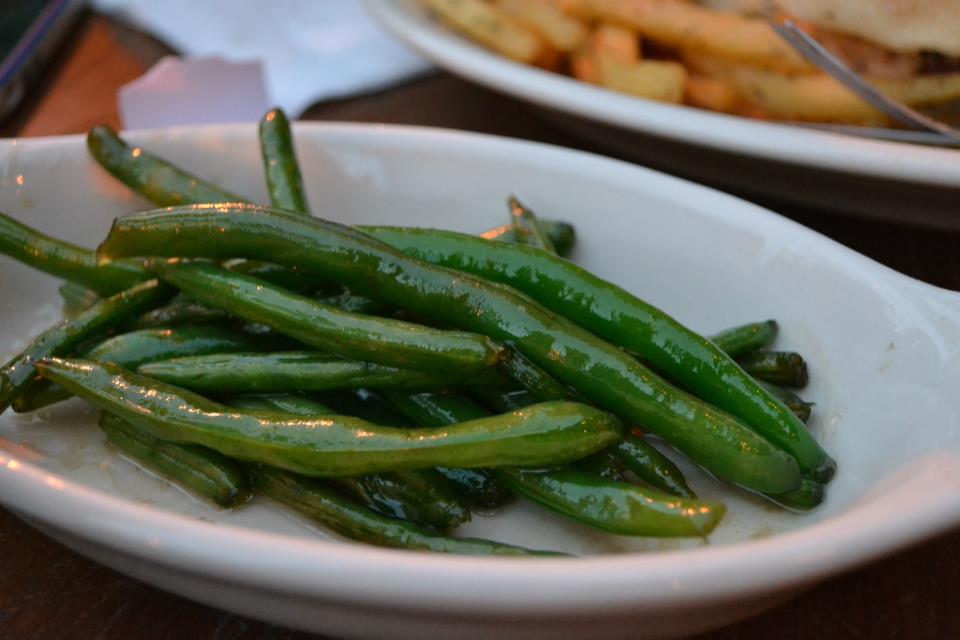
    We settled into our hotel and then headed down to Bar Harbor for dinner. Generally I would describe the town as touristy but romantic, again we didn’t technically go at peak visiting time but there were a few cruise ships in town. We ate at Rupununi Restaurant that offered your typical Maine Fare. We chose the restaurant because we wanted to people watch on the patio. Erik had the Rueben burger with rosemary fries, I had the crab cake appetizer, sweet potato rounds, and “special sauce” green beans. It wasn’t the best meal in the world but it did the trick that night.

    307792_10101796470984641_2146380335_n 293025_10101796469572471_1896979601_n 269085_10101796466847931_511238279_n

    After dinner we shopped and wandered around the streets. It was another beautiful night.

    3126_10101796498150201_1903953162_n 3462_10101796473993611_911578859_n 54958_10101796412736371_1556096832_o 55134_10101796489003531_1917774510_o 198694_10101796475505581_1441094094_n55533_10101796491548431_429282967_o-1 220460_10101796476603381_132756435_o 228819_10101796490335861_1632881188_n 281165_10101796483454651_297335389_o 557114_10101796495345821_132050756_n 527273_10101796486199151_984817514_n

    Day 4

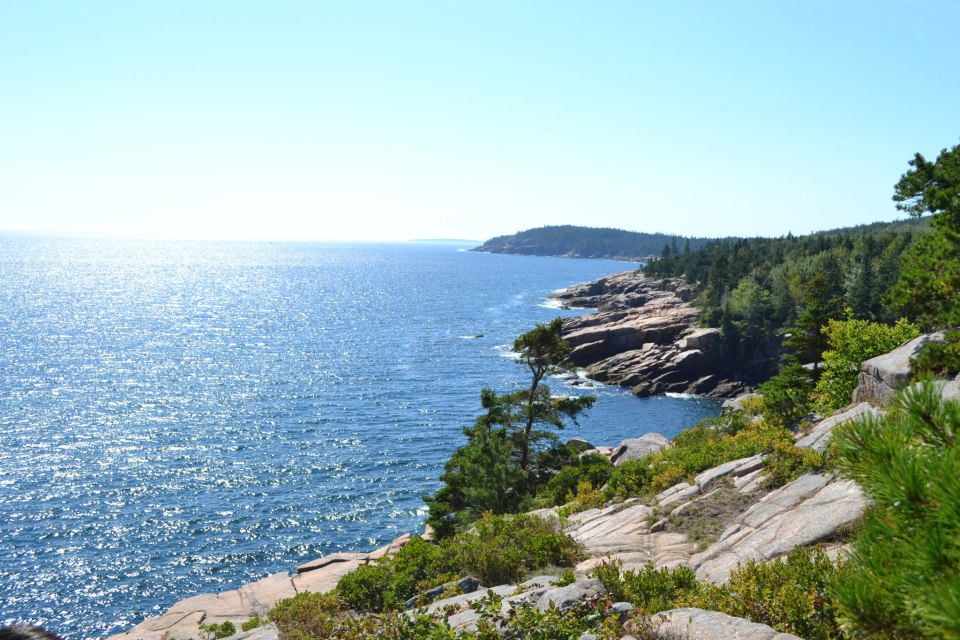
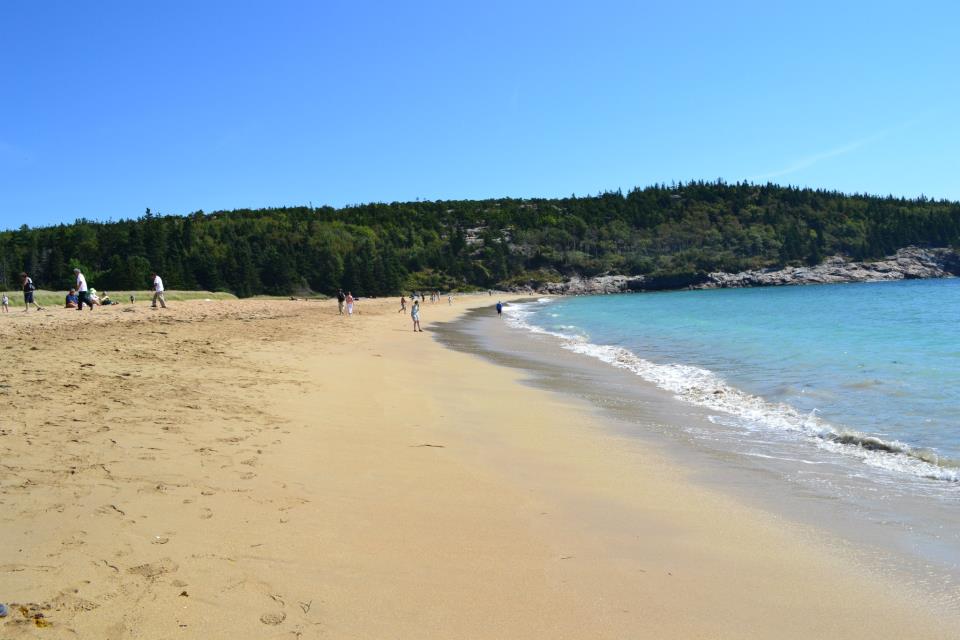
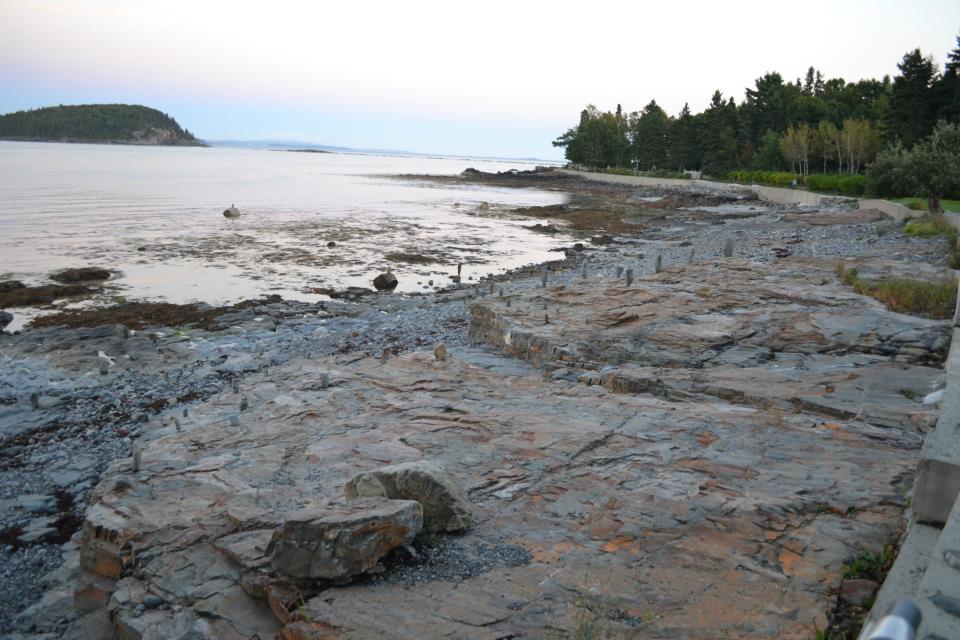
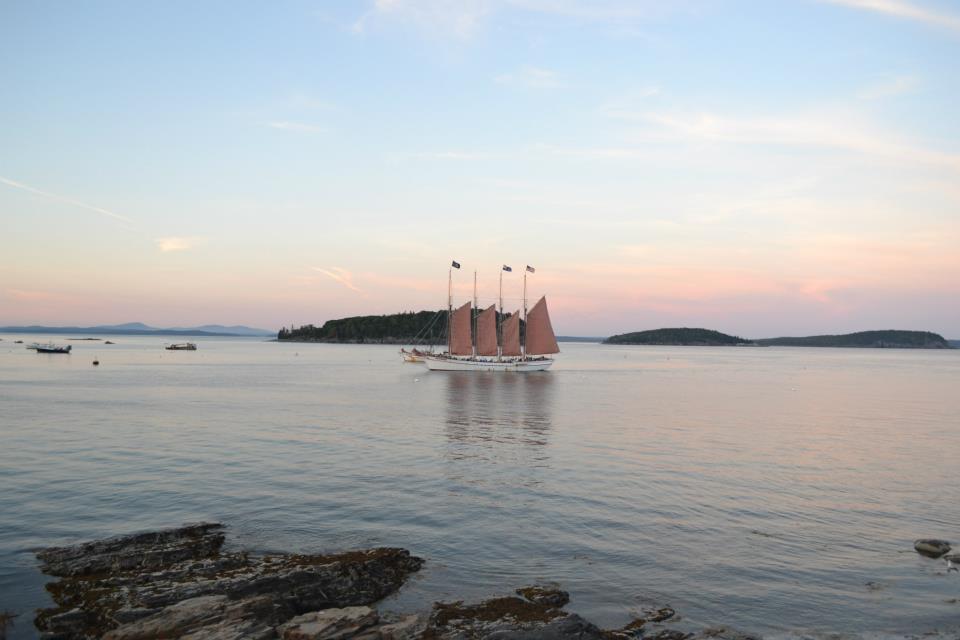
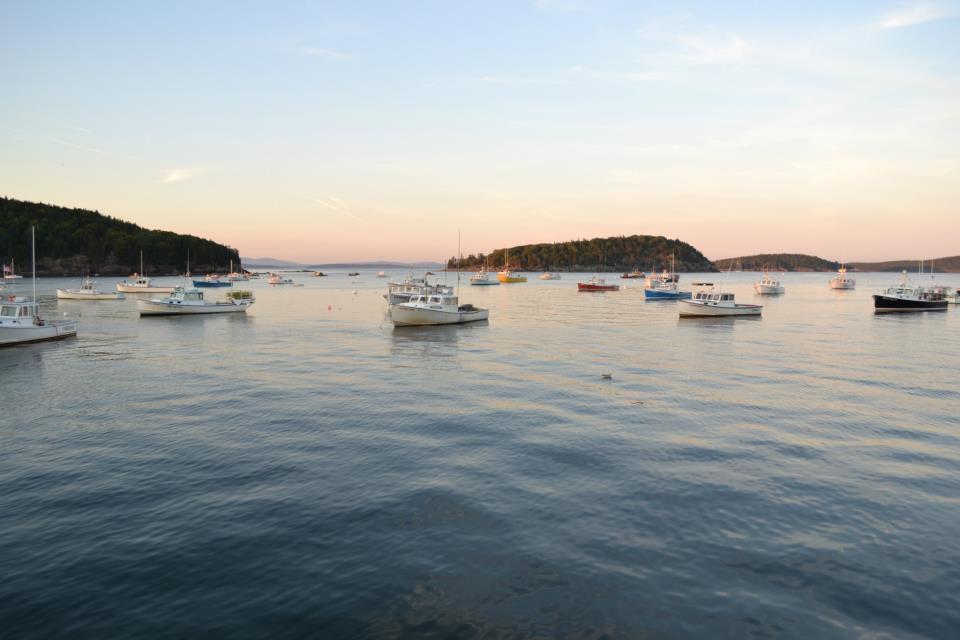
    The next morning we visited Acadia National Park. That day was one of the most memorable days of my life. Acadia National Park has it all, beaches, forests, lakes, cliffs, and amazing views. We had one day at the park and once we got there we realized we could have spent a week there (we hope to in the future). We drove a long Park Loop Rd and visited the Sand Beach, Beaver Dam Pond, Jordan Pond House, and basked in the views atop Cadillac Mountain. To plan your visit:http://www.nps.gov/acad/index.htm

    248469_10101796528988401_1565946715_n47203_10101796542147031_228952884_n 253052_10101796520814781_1096334077_n 413374_10101796504322831_7959812_o 539286_10101796531687991_2005795914_n 564065_10101796532631101_1664371078_n 598660_10101796577236711_8527483_n 304472_10101796563399441_1333719355_n 422817_10101796539971391_198936203_n426348_10101796568943331_236132992_n486767_10101796556882501_1344077496_n

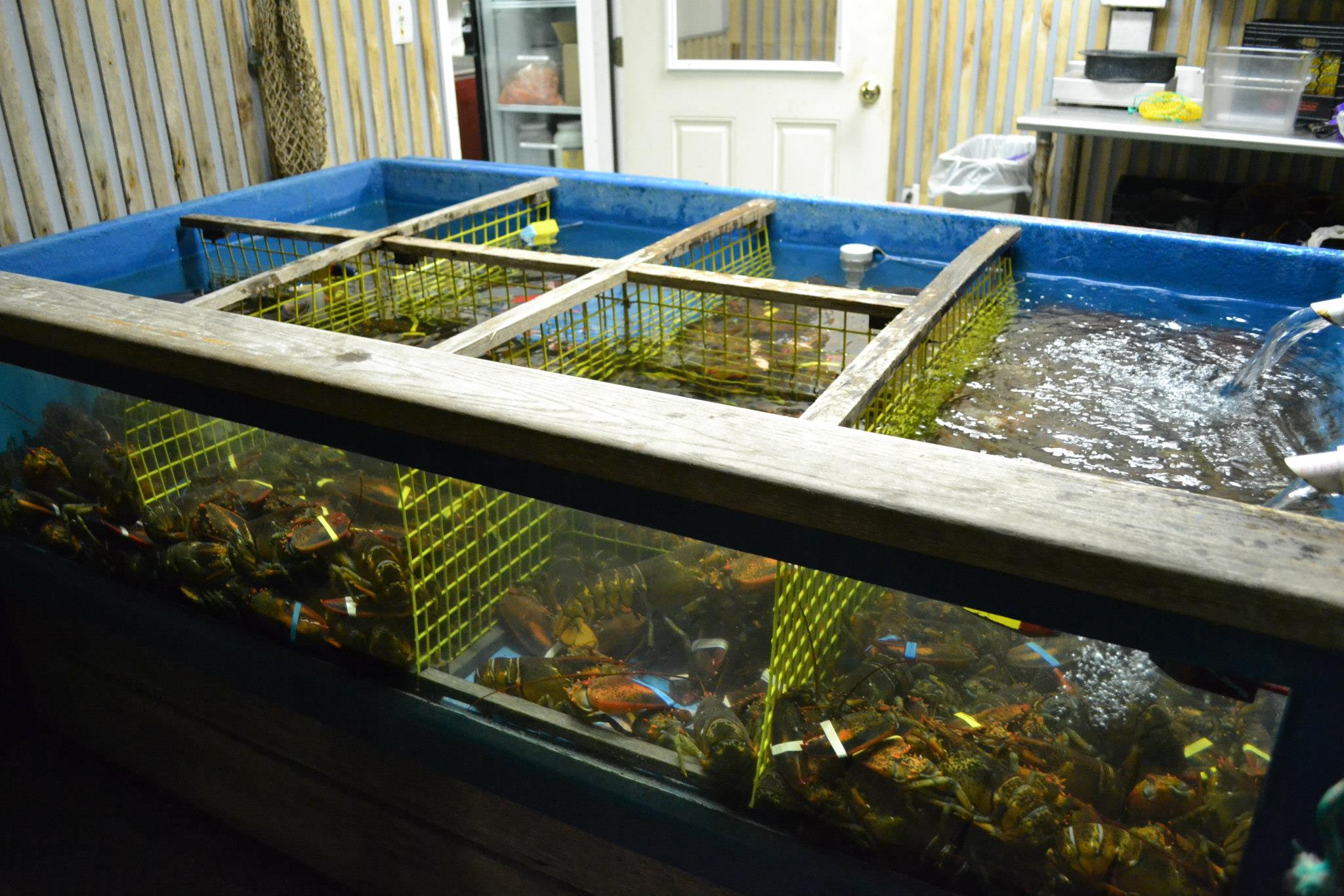
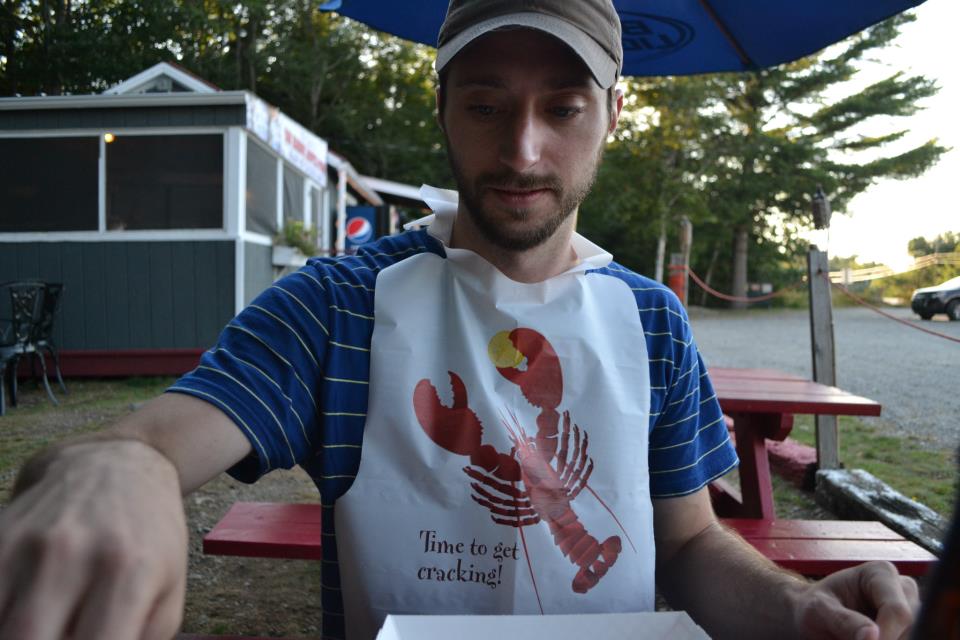
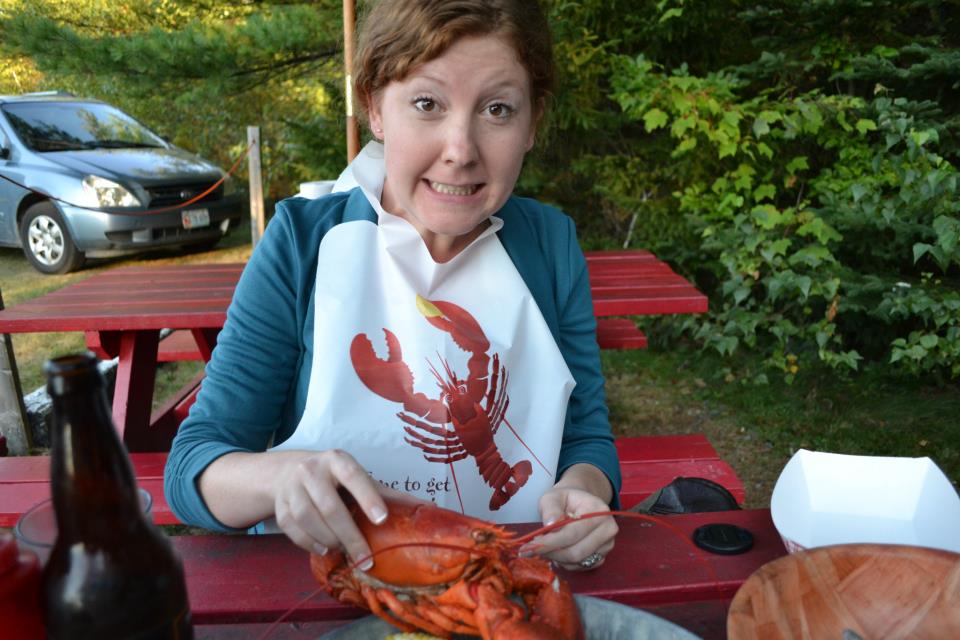
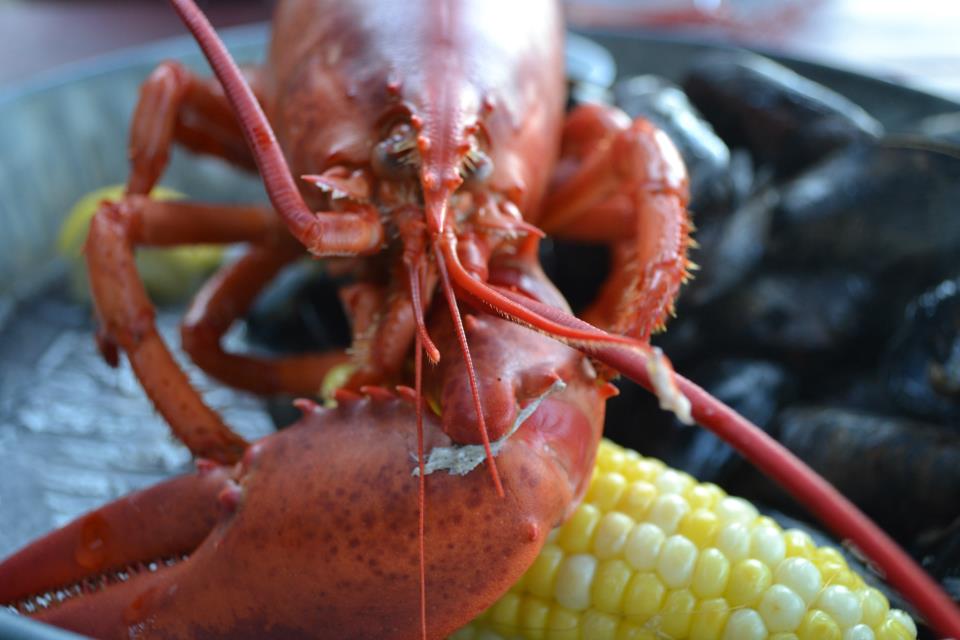
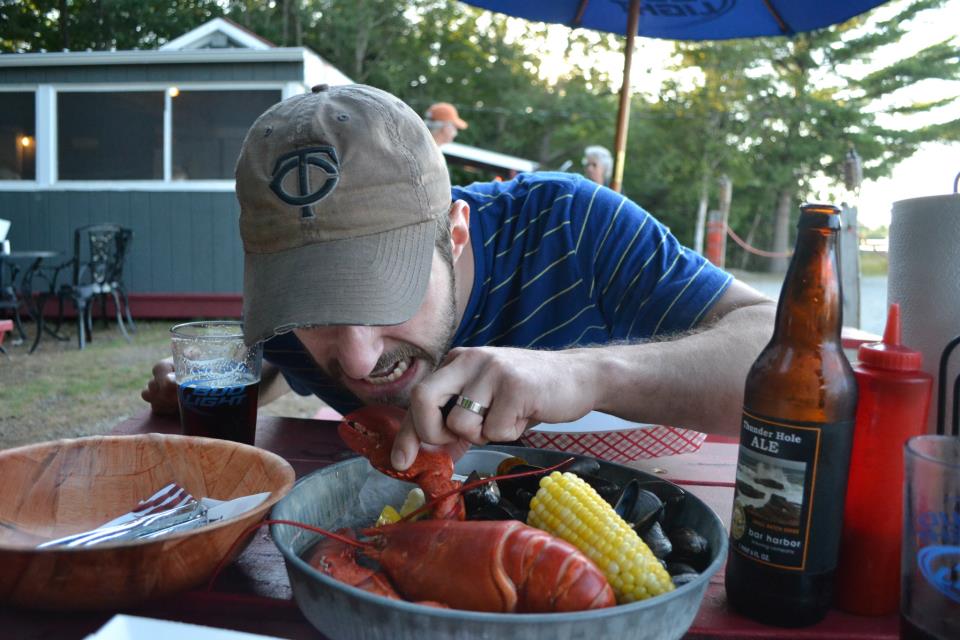
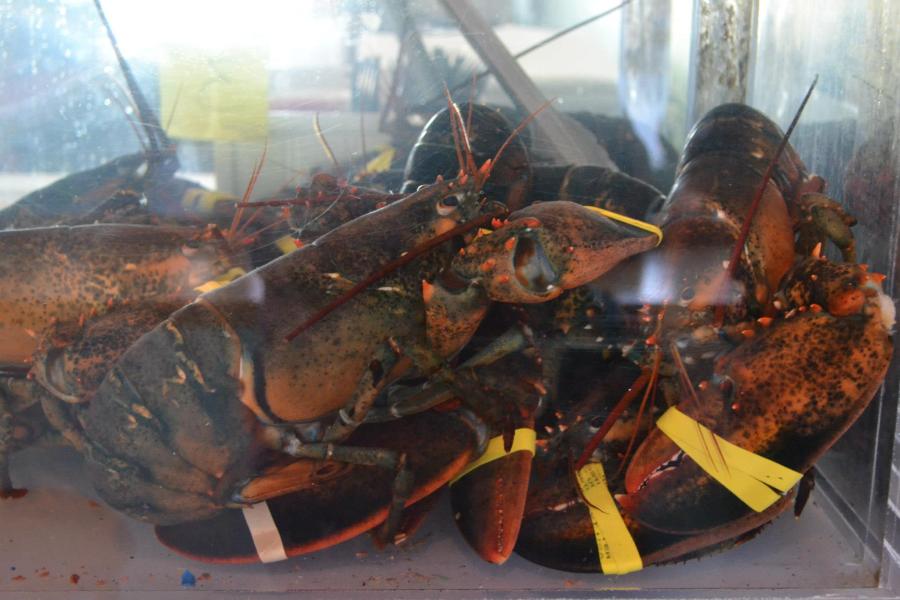
    That night we wanted an authentic lobster boil. Side note: neither of us really love seafood but when in Rome. I believe everyone should go to a lobster boil on the side of the highway. We had no idea what we were doing when it came to us; it reminded me of dissecting something in science class except that you eat it at the end. But it tasted great and the price was reasonable.

    486646_10101796582266631_974910665_n271181_10101796584033091_2093873675_n 303259_10101796584821511_2006683297_n 390551_10101796585400351_406473614_n 408577_10101796580530111_721225843_n  548000_10101796579357461_912532301_n 581563_10101796583214731_1930214152_n

    That night we wandered around Bar Harbor again, got some pizza for our second dinner at Rosalie’s Pizza, and brought a bottle of wine back to our hotel.

    408718_10101796587216711_1171010712_n46565_10101796585959231_1842876729_n 218001_10101796593389341_1690561415_n 308293_10101796588683771_1165706277_n 393663_10101796589786561_663434579_n 483042_10101796591922281_638499771_n 539504_10101796589207721_1431514035_n 578423_10101796586528091_1286186390_n538921_10101796590759611_1061415477_n 644099_10101796596058991_1453556108_n 536210_10101796597061981_854416652_n

    Day 5

    I had never seen a whale in the wild before our trip to Maine, and sadly I have still never seen a whale in the wild. This fact is sad, not because I deserve to see a whale in the wild or I am mad I paid a lot of money to see one and didn’t… but because our tour guides shared that normally the time we visited was prime whale viewing normally. But because of changes in water temperature (approximately 3 degrees higher that normal) the whale’s food was somewhere else changing their migration patterns.

    On a bright note, we took a glorious tour through the Bar Harbor Whale Watch Co. and saw many seals and sea birds; it was very informative and beautiful. And because we did not actually see a whale our ticket is good for another free trip for as long as we live until we see a whale on their cruise (we will be back).

    246557_10101796609018021_1298489319_n76208_10101796598793511_458317746_n 185085_10101796601453181_1811330786_n404149_10101796609422211_1496194260_n

    We slowly headed back to Portland, ME after our cruise, bellied up to the bar a the Great Lost Bear again and played some cribbage.

    Day 6

    We only had a little time in the morning but we made sure not to leave without checking out the brunch at Local 188 which was suggested over and over to us by our servers in Portland. It was amazing, do not leave Portland without eating there. My husband ordered one of the best bloody mary’s I have ever had and I had a delicious mimosa. For breakfast I ordered the Caribbean corned beef hash and my husband had the biscuits and gravy. You must go there.

    576876_10101796613169701_1878924651_n 383998_10101796613873291_1586359886_n307837_10101796612550941_1226578678_n

    In closing, I couldn’t recommend Maine for an awesome cost-efficient honeymoon. It was truly spectacular, and if you love food and craft beer it is perfect for you! Questions? Ask away!

  • The Maine Event- Honeymoon Sept. 2012

    The Maine Event- Honeymoon Sept. 2012

    Part 1 of 3

    For our honeymoon, my husband and I traveled to Maine. Why? Maine was recommended for a cost-effective romantic retreat that could be traveled in a week’s time. Our journey definitely matched that description and created lasting memories.

    Day 1

    Our first few nights were spent in Portland, Maine (which is where we flew into). As giddy newly-weds we crashed at a cheaper motel farther in from the water but we had a car so travel wasn’t an issue. The first night we walked down by the water, it was much colder than I had expected at night for September. We had dinner at a great pub with live music and tons of beer on tap. It was a Monday so there wasn’t a lot going on.

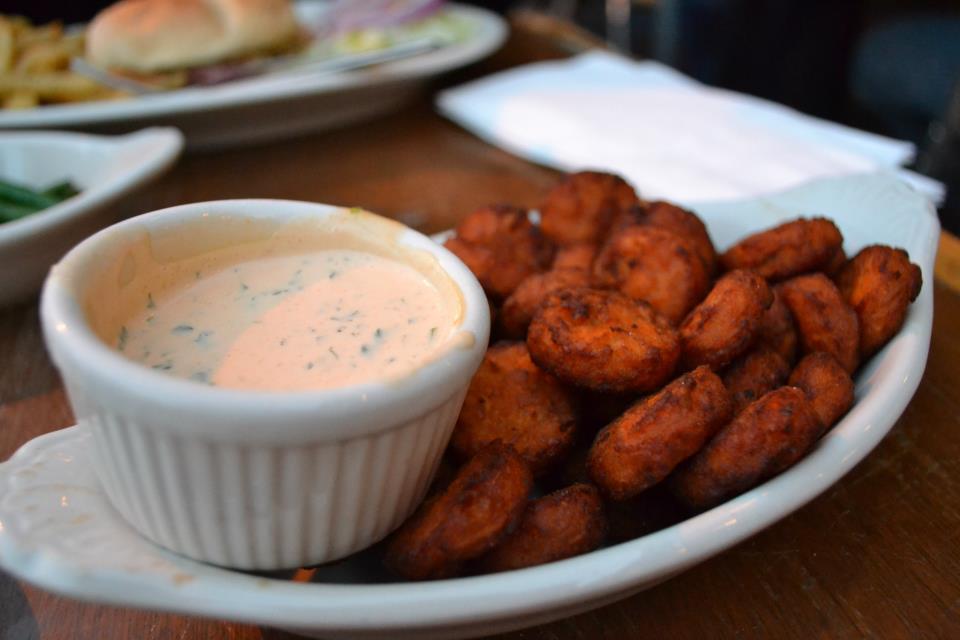
    At Andy’s we really wanted a “Maine Experience” and asked the server what we just had to have (a common question I ask restaurant staff). We got a lobster roll with bacon and avocado, macaroni and cheese with hot dogs, and the fried poppin’ shrimp mixed with fried jalapenos. The server was awesome and gave some great suggestions of where we had to go and a synopsis of the town. Apparently the local population of Portland eats out more regularly than your average city, which makes the restaurant business a bit more competitive. It was not just building after building of touristy slop.

    328021_10101796340820491_407584663_o 273175_10101796339702731_340489856_o 220229_10101796338375391_898407898_o

    I like to do some research before I travel but while I am there I depend a lot on 3 things: recommendations, Yelp, and T.V. Food Maps. All signs pointed to The Great Lost Bear which was conveniently on our way to our hotel. The Great Lost Bear has over 60 beers on tap and a wonderful atmosphere to match. It reminded me a lot of Duluth, MN (where Erik and I met). Maine reminded me a lot of Napa but focused on beer not wine and 100% less pretentious… so nothing like Napa. But beer is everything and everywhere. Lots of micro-breweries and pubs everywhere and for someone in Minnesota who does not have access to most of these brands it was very fun. Again, we were met with hospitality which helped derive a plan for our second day in Maine.

    469009_10101796345980151_1443991241_o194589_10101796343400321_1254958078_o 291258_10101796344867381_1806033381_o 266760_10101796342077971_737771624_o

    Day 2

    The next morning we headed back into the “downtown” area of Portland. We walked up and down Congress Street doing a bit of shopping and drinking amazing coffee from the Speckled Ax. If you want a unique coffee experience, go there. They use the fancy machines below to produce a pour over coffee. I think just the amount of time one person spent on it made my coffee taste better.

    229306_10101796351753581_783901780_n 422763_10101796351015061_2018416497_n

    There are tons of shops featuring local artists and vintage pieces to fill our morning. We didn’t eat breakfast because we were saving ourselves for something very specific that had been recommended to us several times since our arrival.

    Nosh Kitchen Bar, also on Congress Street, has everything your favorite sandwich place has but with a twist. I think I could have spent weeks conquering their menu but we came for something specific. The Apocalypse Now Burger ::DUN:: DUN:: DUNNNNN:::

    253542_10101796348505091_592952184_n

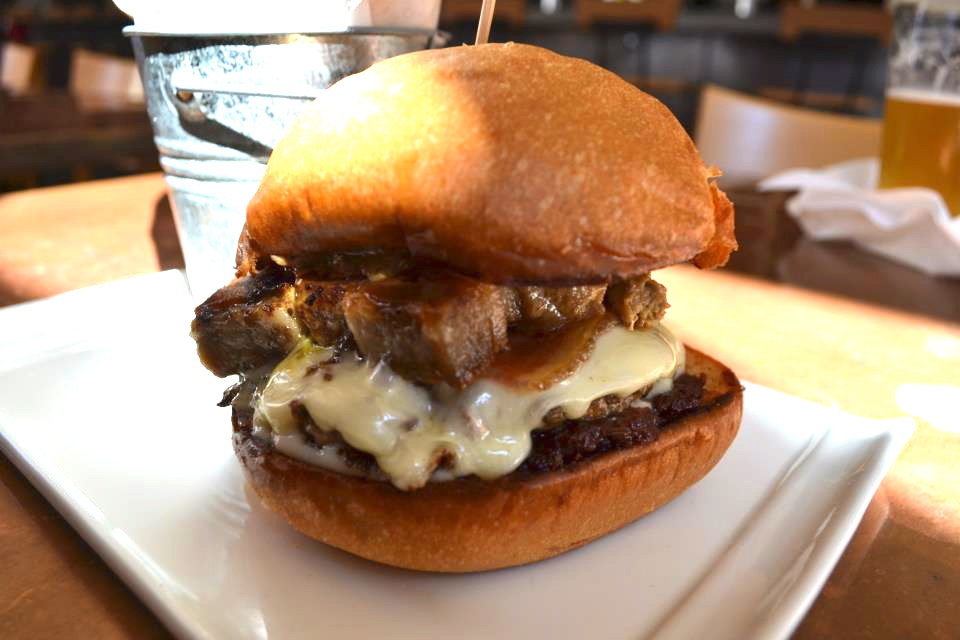
    This burger patty: beef chuck, beef brisket, pork shoulder, house-cured bacon, garlic and rosemary. Accompanied with American cheese, crispy pork belly, foie gras (if you have an opinion about that I don’t really care), mayo, and cherry jam all sitting beautifully atop a brioche bun. HOW DO YOU LIKE THEM APPLES??? The burger is 20 dollars and worth every penny (my husband and I split it).

    But wait, you cannot just have a burger. You must have fries. Not just any fries… no, no, no. Bacon dusted fries. And if you are picturing tiny bacon bits you must alter you vision. The fries are perfectly coated with a powdery happiness that tastes exactly like bacon; in general it may be witchcraft.

    530168_10101796349263571_2139903061_n

    We shopped around closer to the bay while waiting for our brewery tour appointment and I had to stop at Standard Baking Co. It was mentioned in almost every blog or news story I had read before going to Portland, ME. Because I have not self-control I ordered a sweet warm brioche, a savory cheese fougasse, and a baguette. Every bite was pure happiness.

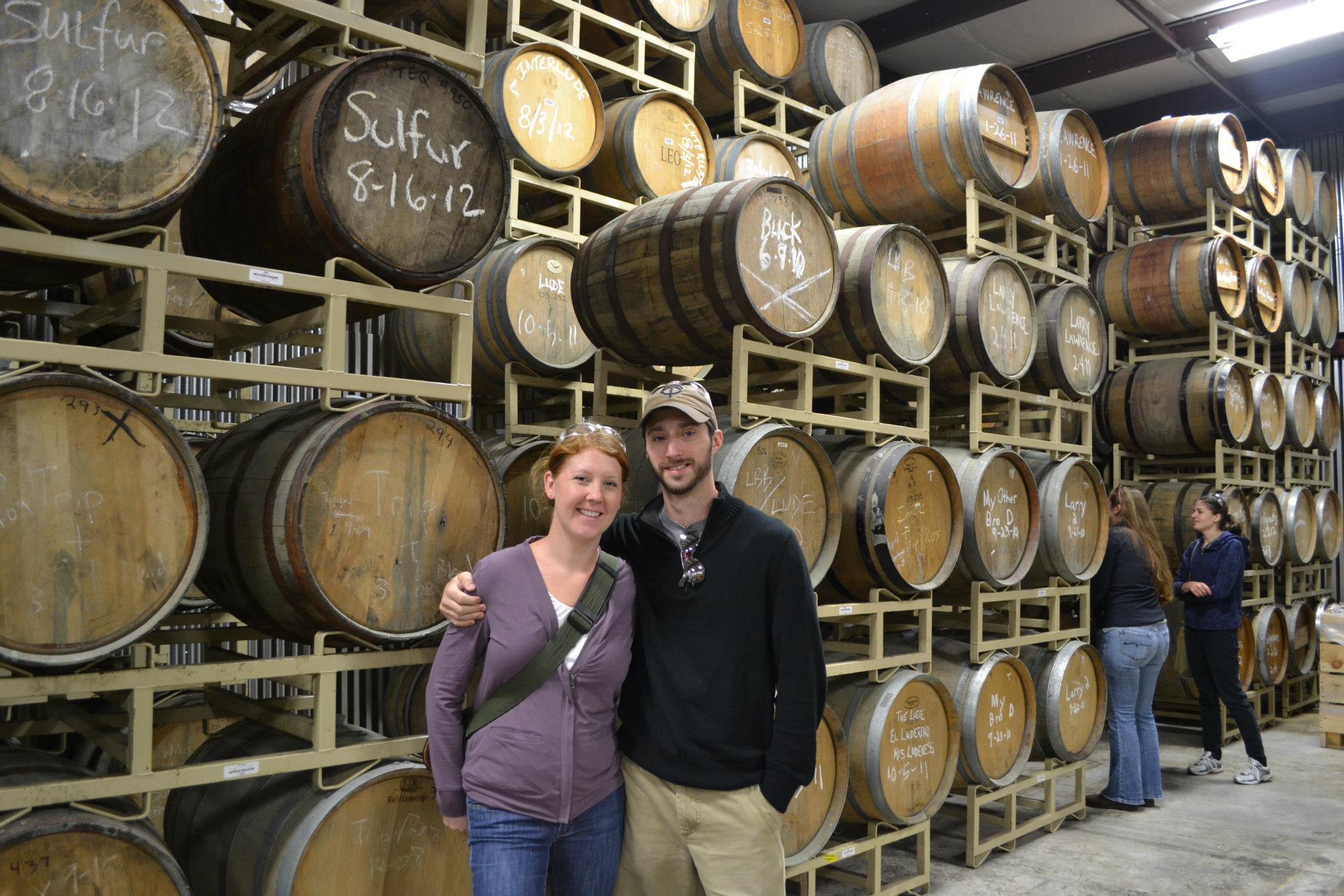
    We headed up to the Allagash Brewery, which is 15 minutes from the downtown area. I have been on a lot of brewery tours and usually I am just looking forward to the samples at the end. Allagash serves you samples at the beginning! Genius. The staff were beyond friendly and made the tour intimate vs. feeling like another number.

    476307_10101796384173611_703378603_o 469255_10101796355920231_1794652004_o

    468350_10101796368120781_1936967451_o 291262_10101796385795361_368479428_o271745_10101796369602811_1105218723_o

    322518_10101796373999001_666808982_o

    258206_10101796376623741_1399012839_o 561532_10101796382137691_1870634232_n

    It was not quite time for dinner so we headed back down to the Portland Lobster Co. for more drinks and appetizers. I am sure this is exactly what most tourists do but the atmosphere was awesome, the view was great, and there was live music. What more could you as for?

    462464_10101796387382181_200113947_o 466155_10101796395376161_1042094531_o 322565_10101796391389151_249303632_o

    322820_10101796399403091_1755628549_o 327015_10101796389647641_123736676_o 191583_10101796393055811_1601104719_o

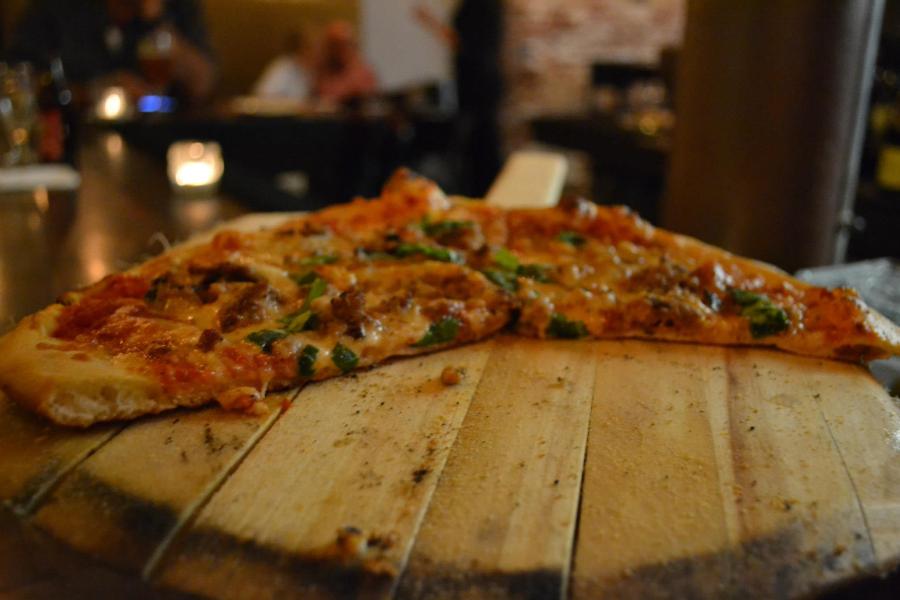
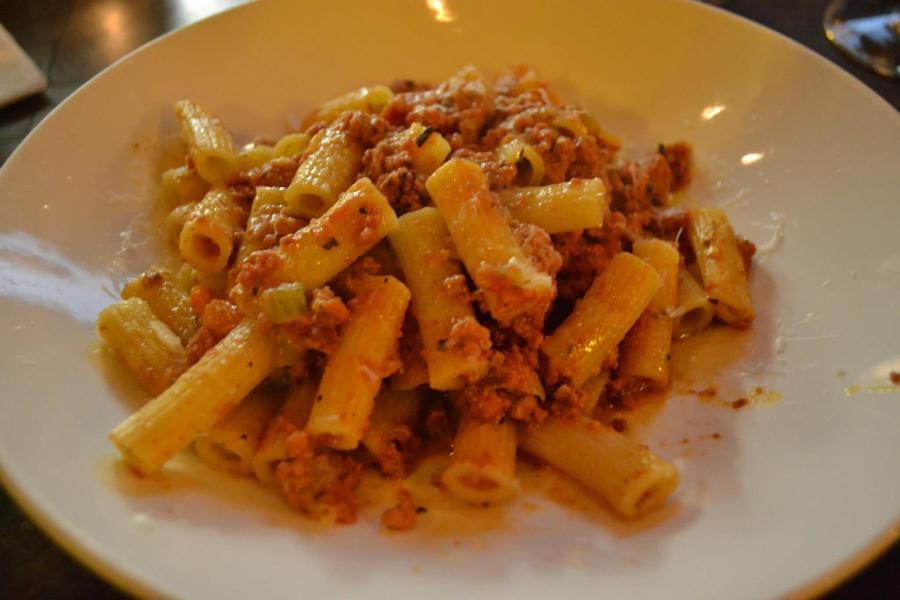
    For dinner, we stumbled upon a delicious dinner at Vignola Cinque Terre. Italian is a weakness of mine- I could eat it for every meal (especially breakfast). I had the Rigatoni Bolognese, which was perfect because it was chilly outside. My husband had a pizza because that is what he eats. The restaurant can be perfect for a formal dinner or you could keep it casual and eat at the bar like we did.

    413280_10101796407781301_204704704_o477147_10101796406583701_2030160561_o

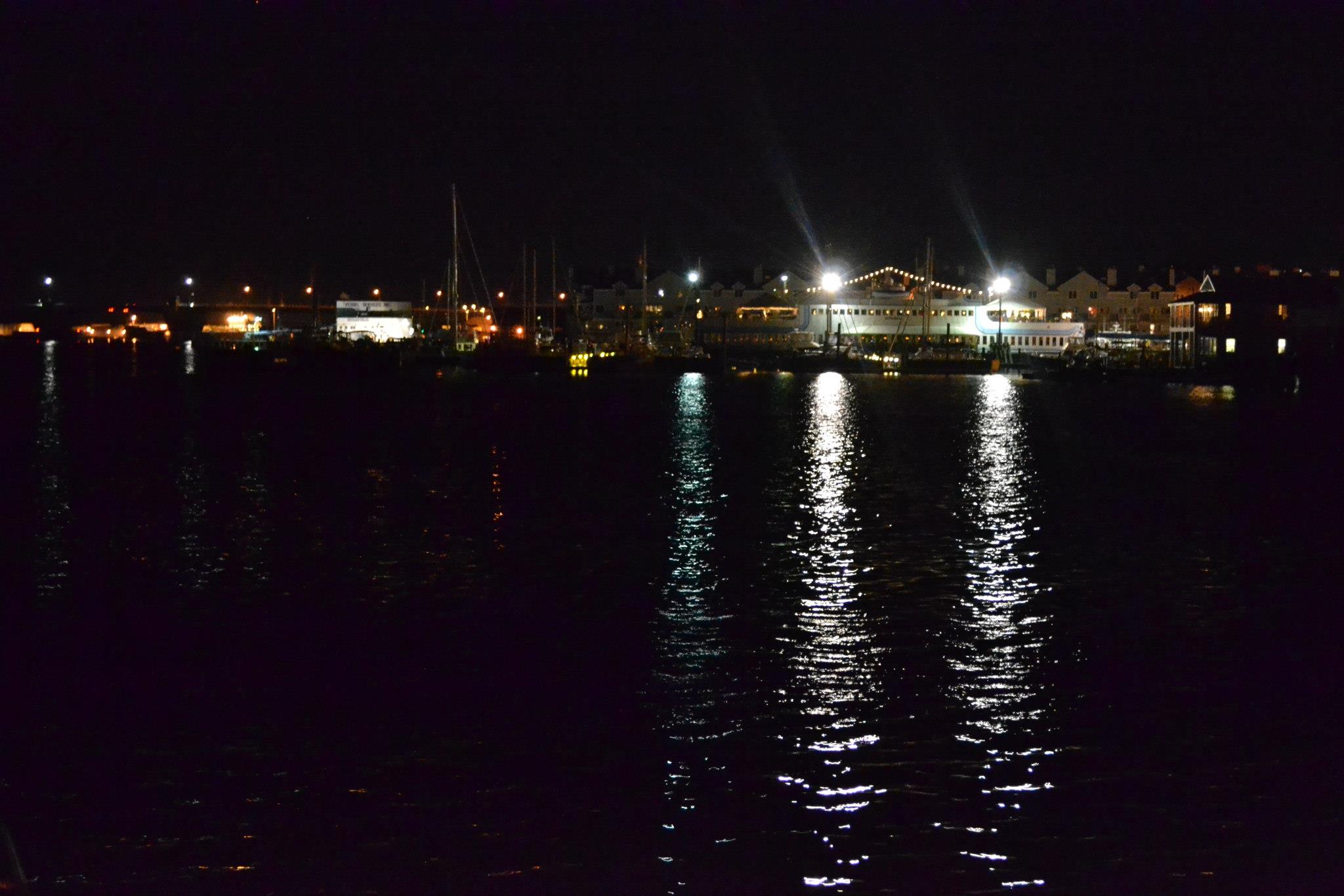
    We spent the rest of the night wandering around the different piers enjoying the crisp night.

    54958_10101796412736371_1556096832_o281165_10101796483454651_297335389_o

    193146_10101796411453941_991478079_o 209311_10101796409782291_1320622576_o

  • Combatting Complacency

    I spend most of my time selling the idea and training on service-learning. I rarely, however, get the chance to sit down with a group of folks committed to service-learning as a best-practice pedagogy and analyze the method. That is why some of my favorite service-learning discussions happen with members who work in higher ed settings. Although I am committed to training on service-learning in the K-12 education field, I find university faculty more willing to talk openly about its challenges and successes with a probing eye.

    On Friday, April 5, I had the opportunity to attend a discussion titled “Combatting Complacency: Challenges of Advancing a Critical Service-Learning Pedagogy”, led by Professor Tania D. Mitchell from the University of Minnesota. Professor Mitchell shared some of her research on the difference between “traditional” and “critical” pedagogy within service-learning. Critical service-learning is focused on social change and redistribution of power, which causes service in the first place. This method is change driven, versus need driven, and sees community partners as teaching partners.

    This made me think of the K-12 Service-Learning Standards for Quality Practice, and how people use the eight standards for planning or to ”check off” their progress along the way. How many teachers have sat down and really studied the indicators for those standards to really assess whether or not they are truly meeting those teaching practice standards in their classroom?

    In her many positions at a range of universities from Amherst to Stanford, Tania has served in many different roles related to service-learning and culture. She stressed that it is a hard to find a balance between encouraging teachers to integrate service-learning as a methodology, and to think beyond the “my students volunteered X amount of hours in the community resulting in $X contributed because of their service” mentality. I struggle with that same balancing act as a professional development manager; I want to encourage teachers to try, but I also want to give them the push to create real change.

    Inevitably, these discussions led to the institutional barriers that higher ed schools face, including the integration of technology, which, to me, was not the intended focus of the discussion, but it was hard to ignore. Hurdles such as the school calendar, tenure procedures, job descriptions, ease of integration, the marginalization of serviced-learning, professional development, language and definition, humanities vs. science-based courses, and students not seeing the community around the university as their home were all mentioned as barriers that faculty in the room face. The answer to all of these seems to be a shift in culture, starting with the leadership.

    In closing, I ask everyone reading this from any setting: Are you, or the teachers you work with, using a traditional or critical approach to service-learning? What are the hurdles you are facing institutionally to service-learning, and how can we work together around those?

    To read more about critical pedagogy in service-learning, visit:
    Traditional vs. Critical Service-Learning: Engaging the Literature to Differentiate Two Models
    , Tania D. Mitchell
    Critical Consciousness and Critical Service-Learning at the Intersection of the Personal and the Structural, Etsuko Kinefuchi

    Originally posted and written for the National Youth Leadership Council’s blog

  • Iron Chef: Bacon

    Iron Chef: Bacon

    I have a lot of foodie friends and I work with a lot of foodie people, it is troubling for my waste line as well as my wallet. But in the end food brings happiness, togetherness, and COMPETITION! I was invited into a tradition titled “Iron Chef” much like the television show it pins two chefs (albeit amateur in our case) against each other using 1 secret ingredient. As friends we decide that ingredient at least a month ahead of time to give the challengers time to come up with an appetizer, entrée, dessert, and beverage that uses the ingredient.

    The rest of us are judges and we use the following rubric to decide the winner:

    • Sustainability 1-5, so the chef would get extra points if he/she bought local or in some cases hunted/fished the animal themselves.
    • Aesthetics 1-5, how pretty is the dish?
    • Use of the ingredient 1-5, for instance is the ingredient just sprinkled on top as an afterthought or is it core to the flavor of the dish?
    • Overall 1-5, for this category I like to think how important is it that I have this dish again?

    We judge each course according to this and then the may the best chef win! By the way being a judge is awesome; you sit back drink wine and let others serve you… not too shabby.

    Before we get into the recipes, word of the wise from my peers who have been doing this awhile be careful on your special ingredient selection. Apparently citrusy and cheesy ingredients can be a bit much… I am sure there are others you should steer clear of. Before I knew this group of friends they had a peanut butter challenge that was very tasty. For my first iron chef, the secret ingredient was BACON! The challengers were Mason and Elizabeth. Spoiler, Elizabeth won and I tell you this because Mason wont share his recipes with me so the following pictures share some of both of their dishes but only Elizabeth’s recipes.

    Appetizers:

    Fall 2010-93 Fall 2010-90

    Elizabeth started the competition with a butternut squash pizza on phyllo dough with rosemary.

    Fall 2010-103

    Recipe from Epicurious

    Mason countered the offer with walleye sushi and homemade lefse with bacon mashed potato:

    Fall 2010-114

    Both were delicious… onto the main dish.

    Elizabeth BROUGHT IT with bacon corn chowder and BACON JAM. Yeah that’s right jam made of bacon… no berries necessary.

    Fall 2010-120

    Bacon jam recipe from Not Quite Nigella and the chowder is from Bitchin Camero

    Mason had the hard task of following BACON JAM with pasta with bacon:

    Fall 2010-122

    While up to this point Elizabeth had essentially dominated Mason showed her who was boss when he busted out these waffles with homemade bacon ice cream… nom nom

    Fall 2010-131

    I still remember that waffle… Elizabeth made unique bacon cashew caramel popcorn. Regular popcorn no longer makes the cut for me.

    Fall 2010-124

    Recipe from Foodily

    In the end, Elizabeth clinched the championship with this candied bacon martini

    Fall 2010-126

    Recipe courtesy of the LA Times

    Any questions? Ask below. Stay tuned, coming up will be the results from Iron Chef 3: Pumpkin!

  • Butcher and the Boar

    Butcher and the Boar

    It would make sense that my first food blog is on my favorite restaurant, Butcher and the Boar. My life was first changed by this restaurant August of 2012 when I dined with three work friends. I have this category for the best restaurants that I eat at; I call them “remember every bite” restaurants. Butcher and the Boar is the poster child for a “remember every bite” restaurant.

    While I didn’t document my first visit extensively, I do have this photo I took with my phone:

    Long Rib

    In this photo you see the ‘Smoked Beef Long Rib’, which I believe, is one of the two items you should not leave Butcher and the Boar without trying. It is a big shank of tender meat to be shared amongst the group.

    Speaking of group, that is how I would suggest eating at this restaurant. Bring a group of friends who love to try different dishes and share. I watched a couple eat next to us and they ordered many items so they could try something from the various categories. They could hardly make a dent but had a ton of leftovers.

    Butcher and the Boar Menu

    Before we jump too far into the menu, I’m thirsty. Let’s talk beverages. I am not a whisky person normally; I am not even a hard alcohol lover. It doesn’t matter though; you need to try some of their signature cocktails. Again, order a round a share it with everyone around the table. If you are a whisky lover, try a sampling of the large menu of bourbons.

    Juicy Basil

    On to the menu… Starters!  The first visit, we started with the ‘Stuffed Jalapenos’, which have peanut butter in them. Weirdly delicious. On the second visit, we started with the ‘Duck Carnitas’ salad. It is smaller but a perfect first bite.

    Duck Carnitas

    The courses tend to move from left to right but I focused both visits on the ‘Sausage’, ‘Meats’ and ‘Sides’ categories. I am sure their seafood is amazing but that is not why I visit Butcher and the Boar. THE NUMBER ONE ITEM YOU HAVE TO GET IS (drum roll) the ‘Berkshire Pork & Cheddar’. For both visits it was everyone’s favorite hands down (including me). I think there is a witch doctor in the back casting spells on the Berkshire. On the second visit we ordered the ‘For the Table’ sausage sampler, it included the ‘Wild Boar Hot Link’, the ‘Berkshire Pork & Cheddar’ and the ‘Texas Beef Link’… nom nom nom.

    For the Table

    SAVE THE BERKSHIRE FOR LAST!

    To the main course, like I mentioned previously I highly recommend the ‘Smoked Beef Long Rib’ being one of the items you order. That is not to take away from the scrumptious ‘Double Cut Berkshire Pork Chop’. It was smoky and flavorful, and reminded me of ham.

    Berkshire Pork Chop

    On the side, on the sides! You will have a difficult time choosing, pick your favorites and then try something out of your comfort zone. In the two times I have been there I tried the ‘Cheesy Corn Grits’, ‘Blackened Cauliflower’, ‘Cedar Planked Mushrooms’, ‘Red Hot Brussels Sprouts’, ‘Skillet Cornbread’ and the ‘Sour Cream-Chive Mash’. I never felt wronged. Out of this list I would suggest the ‘Cheesy White Corn Grits’ the grits were very smooth and not grainy, it was like having the best mashed potatoes ever.

    Delicious Sides

    I don’t care how full you are. Get some dessert! The first time we had a liquid cocktail dessert, it felt right at the moment but after tasting the ‘Chocolate Diablo Pudding’ I can admit not having dessert my first visit was a mistake 🙂

    Dessert MenuCheck out Butcher and the Boar

    1121 Hennepin Ave  Minneapolis, MN 55403
    (612) 238-8888