Professional Development and Community Engagement Coordinator at the LT Media Lab and PhD candidate in Curriculum and Instruction, Learning Technologies.
In the summer of 2018 I had the opportunity of presenting at my first international conference at the International Conference on Computational Thinking in Education. The experience was incredible and I learned a lot about what cultural norms are specific to academia in the U.S. and what span across the globe. The conference was hosted by the Education University of Hong Kong (EdUHK) which is a gorgeous campus and they were very generous in keeping us well fed!
I presented a paper alongside my very talented peer Yu-hui Chang entitled, “It Opens Up a New Way of Thinking, but…”: Implications from Pre-Service Teachers’ Introduction to Computational Thinking.The purpose of this study is to investigate how pre-service teachers perceive and conceptualize computational thinking (CT) concepts within K-12 education. We conducted a pilot case study that was situated in a teacher technology licensure course in the United States. After the CT exposure through a hands-on exploration of programming and robotics as well as an extension research activity, forty-four pre-service teachers’ learning artifacts were collected for a content analysis. In the initial findings, we found that pre-service teachers were trying to understand practical examples of CT, were inspired by the social justice issues related to computing, and shared CT is in alignment with their educational beliefs. Though a conceptual change of CT occurred among preservice teachers, there were assumptions and concerns among the pre-service teachers about its application in the classroom.
Peterson, L., & Scharber, C. (2018). Learning About Makerspaces: Professional Development with K-12 Inservice Educators. Journal of Digital Learning in Teacher Education, 34(1), 43-52. https://doi.org/10.1080/21532974.2017.1387833
Abstract
Makerspaces are the latest educational movement that may disrupt the “grammar of schooling.” Makerspaces may change the ways schools use technology; change the ways schools engage in learning and teaching; and change the forms of learning that count in schools. However, without deliberate professional learning and planning, the glamor of new tech tools can overshadow the importance of pedagogy within makerspaces. We share our approach to makerspace professional learning in K–12 schools, which is adapted from the Frank et al. “Focus, Fiddle, and Friends” framework on knowledge diffusion within schools. Our workshops focus on teaching and learning strategies, model making pedagogy, expose educators to current technology tools, and value play.
In the fall of 2017, Dr. Cassie Scharber and I published an article in the International Journal of Information and Learning Technology. This article is part of a special issue focused on research trends in instructional technology.
Peterson, L., & Scharber, C. (2017). Supporting a 1:1 program with a student technology team. International Journal of Information and Learning Technology [Special Issue: Research Trends in Instructional Technology], 34(5), 396-408. doi: https://doi.org/10.1108/IJILT-06-2017-0049
Abstract:
This paper describes the practice of using student technology teams (STTs) offered at a high school within a 1:1 district showing that the STT provides a rich and authentic learning opportunity for students interested in information technology. The purpose of this paper is to describe the practice of using student technology teams (STTs) offered at a high school within a 1:1 district. This qualitative case study (Merriam, 1998, 2009) documents how an STT program functioned in 2015-2016 academic year. Findings show the STT provided a rich and authentic learning opportunity for students interested in information technology. The district benefits greatly through both cost savings and personnel support related to its 1:1 initiative. As there is no current research on K-12 STTs, this study serves as a foundation for a practice that is growing within schools
In the spring of 2017, I presented at the American Education Research Association Conference in San Antonio, TX. I had a wonderful experience meeting new scholars, getting feedback on my work, and experiencing San Antonio with my peers.
I presented a round table on behalf of my peers Dr. Cassie Scharber and Tiffany Nielsen-Winkelman titled, “If You Build It, They [Don’t Always] Come”: Investigating K–12 Tech-Infused Flexible Learning Spaces. This study investigates newly designed learning spaces within three schools: one elementary, one middle, and one high school. Guided by script theory, this qualitative case study describes (1) the ways in which these spaces are being used for teaching and learning, (2) how technology tools are being used by teachers/students, and (3) the impact these spaces had on teachers’ pedagogical practices. “Underutilized potential” was evident across the three schools, most notably at the middle school. Oftentimes, spaces were empty or being used as a “pull out” space for students with special needs. While the access to technology was robust, the actual use of technologies was limited. There is little evidence of shifts to teachers’ traditional pedagogical practices.
I presented a paper with my peer Dan Bordwell titled, Empowering Students to Turn Knowledge Into Action: Development of Civic Identities Through Micro-Writing Workshops. This Design-Based Implementation Research study informs the development and implementation of a civic micro-writing workshop to help students identify and enact civic anonymous and non-anonymous identities through online discussions. Using Critical Discourse Analysis, researchers analyzed discussion boards within three ninth grade honors government classes. The results helped builded the writer’s workshop based on Kahne et al.’s Participatory Politics Framework and research on new digital literacies.
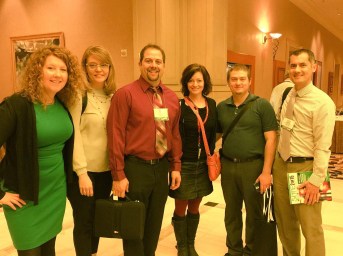
Additionally it was my first AERA officially serving as the graduate student representative for the Computers and Internet Applications in Education SIG. Here is a group photo from our business meeting:
In March of 2017, Dr. Cassie Scharber and I published an article in the journal Computers in Schools on a high school laptop pilot. The school was interested in going 1 to 1 or one device for every student and this study highlighted contextual factors that implicated the initiative.
Peterson, L., & Scharber, C. (2017). Lessons from a one-to-one laptop pilot. Computers in the Schools, 34(1-2), 60-72, DOI: 10.1080/07380569.2017.1296328
ABSTRACT
The purpose of this study was to document the process one district used to design, develop, and implement a one-to-one pilot at its high school as part of its broader commitment to contemporary learning. Specifically, this qualitative case study (a) outlines the process of the laptop pilot, (b) describes the pilot implementation experience for both teachers and students, and (c) shares the results of this pilot study that informed the district’s next steps in its one-to-one initiative. Recommendations are also offered for other schools to consider when implementing a one-to-one pilot or program.
In the spring of 2016 I presented a roundtable at the American Education Research Association Conference in Washington, D.C. Student Tech Teams to the Rescue was a research project I was, at the time, almost done collecting data on. I presented my ongoing results and received a lot of great feedback and questions that informed my analysis and final interviews.
Abstract
Rarely is the students’ role within technology integration discussed despite the possible benefits of authentically engaging students in the process. More schools are starting to utilize students for technology support but there is a lack of empirical evidence to understand this trend. This paper presents a strategy for how researchers can better understand why schools should use students in this capacity, what students are getting out of the experience, and how educators can create situated learning environments that allow students to learn within a community of professionals. The end result could be a theoretically grounded model that is replicable despite the different school contexts.
Pictured are all of the presenters from my roundtable session.
In the Spring of 2015 I presented two roundtables at the 2015 Society for Information Technology and Teacher Education (SITE) Conference in Las Vegas, Nevada. Nevada. SITE is an international conference organized by the Association for the Advancement of Computing in Education (AACE). This was my first academic research conference and I was so happy to experience it with close colleagues.
My first paper was from an independent study I conducted during my Master’s, “Technology Coaches: The Heart of Technology Integration.”
Abstract:
As access to educational technology grows within P12 schools and districts, the need for technology integration support does as well. With the increase in devices including laptops, phones, tablets and the integration of technology into the curriculum, the number of school district technology staff is growing to support technical as well as pedagogical needs. This roundtable explores the role(s) of the technology integrationist, who typically serves on a district’s technology team. This position primarily serves as an instructional coach for educators throughout the district. If educators have the support of technology coaches, they are more likely to use technology as a tool within their instruction (Beglau et al., 2011). The conversation will begin by featuring insights from seven technology coaches serving throughout one state’s school districts, specifically strategies for technology integration, challenges, and job responsibilities.
Citation:
Peterson, L.R. (2015). Technology Coaches: The Heart of Technology Integration. In D. Rutledge & D. Slykhuis (Eds.), Proceedings of SITE 2015–Society for Information Technology & Teacher Education International Conference (pp. 1392-1395). Las Vegas, NV, United States: Association for the Advancement of Computing in Education (AACE). Retrieved September 8, 2017 from https://www.learntechlib.org/p/150186/.
The second roundtable was a collaboration with my adviser Cassie Scharber and district partners from Austin Public Schools, John Alberts, Jason Senne, Derik Gustafson, and Jennifer Gosha.
Abstract:
Approaching technology integration using best practices that acknowledge the teachers’ already heavy work loads and focus on quality teaching and learning in a safe and supportive environment can be a key to success. When both successes and failures are celebrated, innovation is encouraged and the educational paradigm shifts in schools. Using a set of guiding learning philosophies, the possibilities created in a 1:1 laptop environment, and the supports of a technology integrationist and instructional coach, middle school educators were challenged to try something new within their classrooms. The goal was to help these educators “play” with their pedagogical approaches and create a culture that embraces change. Ideas, suggestions, and insights about how to go about this work from others who are experiencing and researching similar processes will be the focus of the roundtable conversations.
Citation:
Scharber, C., Alberts, J., Peterson, L., Gustafson, D. & Gosha, J. (2015). Nurturing Innovation within a 1:1 Middle School. In D. Rutledge & D. Slykhuis (Eds.), Proceedings of SITE 2015–Society for Information Technology & Teacher Education International Conference (pp. 1396-1398). Las Vegas, NV, United States: Association for the Advancement of Computing in Education (AACE). Retrieved September 8, 2017 from https://www.learntechlib.org/p/150187/.
Tuesday, bright and early with coffee in hand, I head to my first workshop presented by Tanna Kincaid, Technology Director for Bismarck Public Schools, ND. Kincaid’s presentation titled, “1:1 Implementation: World Class Education for the Modern Student” specifically focused on reaching the 4 C’s (communication, collaboration, critical thinking, and creativity) in her description. With the idea of the 4 C’s swirling around the conference on day one of TIES I was excited to see how Bismarck addresses this specifically.
Bismarck is a growing district and approached technology integration with a vision of what they wanted a Bismarck graduate to be which was a young-adult “digitally fluid, skilled in the 4 C’s, and socially conscious” (as a service-learning practitioner I particularly love the last one). To support this effort, they have one computer for every three students in the elementary grades (3-5) and varying 1:1 pilots from grades 6-12. Kincaid acknowledged that they are seeing a shift in teaching and learning in the 1:1 classrooms that supports the 4 C’s and this shift has implicated the infrastructure, budget, professional development, and course offerings.
Bismarck is using Project Based Learning, led by the Buck Institute to focus on pedagogy and not the devices alone. The district is keeping a pulse on student and teacher perspectives through “open mic” nights and surveys. Teachers also participate in self-reflection and additional professional development to support 1:1 devices.
On to the keynote! Jane McGonigal is a favorite of mine, I originally heard her speak as the ASTD conference in 2012, I have read her book, watched her Ted Talk (below), and I did a project about her in my master’s. She gave a wonderful talk, the first part I had heard before but she showcased a project I had not seen.
In the project she showcased a game she designed for the New York Public Library. She talked about the role of gaming, who is gaming, how much they are gaming, the potential of gaming and as I said before most of it I have heard. Based on the responses on Twitter though, it seemed like for most TIES attendees hadn’t. To me it was a realization that changes, trends, and technology, as fast as it seems to move can still be very slow (especially in education where money can be tight).
The next session I dabbled in a few, I believe in the power of two feet. If a workshop isn’t the right fit for you, get up and walk out. It is your conference experience! Unfortunately, some of the conference venues are so large that if you strike out twice within one conference session you may spend more time walking around vs. learning. The next session I skipped to meet with some district partners because at the core of this experience is connecting with others from around the state that you don’t get to see as often as you would like. It is about relationships. I had delicious pork tamales at Masa in Minneapolis if you were wondering.
Belly very full, I headed to Melanie Olson’s session titled, “Coding in Elementary: Create the Programmers of Tomorrow”. I have always wanted to learn more about coding and how coding will be the next language taught in schools. There are tons of resources out there to use, Olson focused on code.org. She had so much to share, tons of enthusiasm, and lots of experience using the resources from code.org in her classroom. I think I could have attended a full day with her. Did you know that code.org has activities you can do with students online and offline? Did you know that code.org has affiliates that will come out and train you on how to use code.org? Neither did I.
This might have been my favorite TIES conference yet! I made lots of connections and I have a lot of following up to do. The goal of attending these conferences is that opportunities don’t go untapped, if they are willing to present on their school they are likely willing to meet with you 1:1. Interested in connecting with this community weekly? Participate in the #mnlead Twitter chat!
On December 8th & 9th I had the opportunity to attend my third TIES Conference in Downtown Minneapolis. This year’s theme was “Make it Happen” a nod to the maker’s movement of learning:
Some other themes I encountered during this year’s conference were: augmented reality, student tech teams, gaming in education, and district visioning vs. realities of 1:1 integration. Like always, there were several sessions each time slot that I wanted to attend. Luckily, the online conference space is getting more robust and all the presenters shared their conference workshop materials for those who attended their session and those who could not.
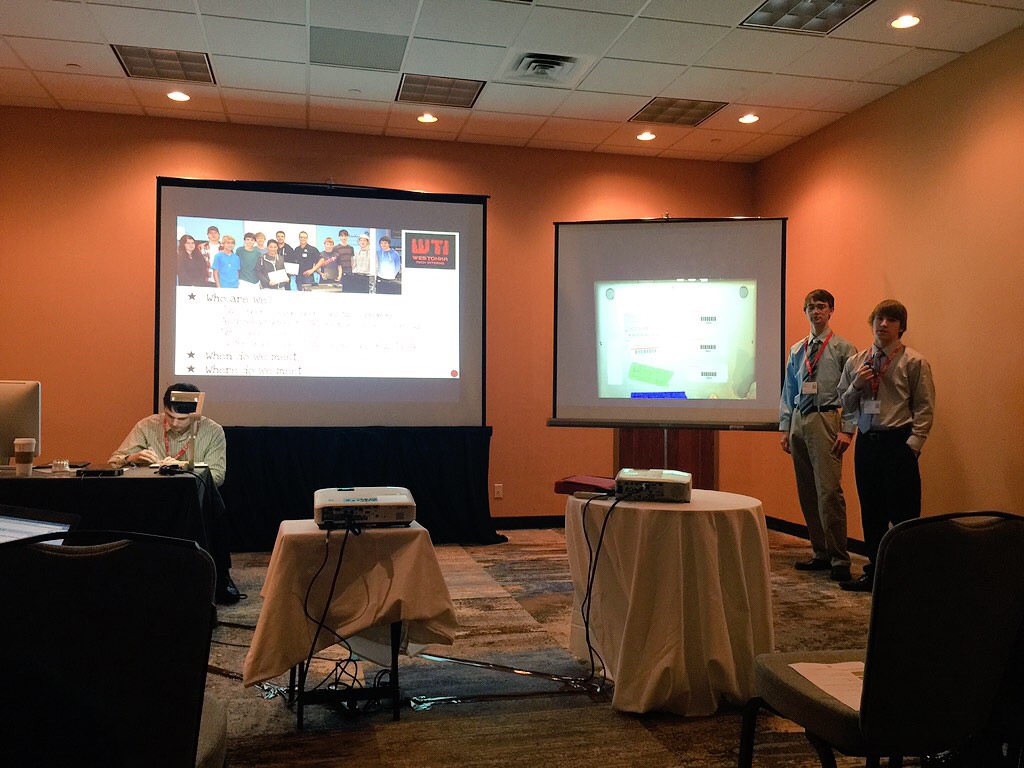
To start off my two-day learning spree I attended a session presented by Sue Simonson, a Business & Technology Teacher at my alma mater, Mound Westonka High School (MWHS). The session was titled, “Tech Interns: Student Led Chromebook Repair”, and Sue modeled what guide on the side can look like as she had her students present the majority of the session. Many schools have tech interns as clubs that serve in this role as an extra curricular, Sue proposed an elective course that would give students credit for this effort modeled after Leyden High Schools in North Lake, IL. After some convincing of administration, Sue launched this course with 11 students in their junior and senior year (10 male/1 female) in the fall of 2014.
To give some background on the school district, students grades 5-12 each have a Chromebook. In the past, students paid insurance to an external provider, which posed many challenges: costly, long turnaround, lots of staff time managing repairs. To alleviate these issues the students in Sue’s “Westonka Tech Interns” (WTI) course were trained on al things Chromebook, from an external contractor, training included both software and hardware issues. Each student in the district pays $40 for insurance that is handled internally through the district rather than through a third party. The WTI students are the second line of repair after a quick troubleshooting or repair documentation with staff in the media center.
Results:
In the first semester alone, students in WTI fixed 90 Chromebooks, majority of which took two days or less (3rd party insurance can take up to 6 weeks).
It is estimated that students in this course spent 40% of their time repairing devices.
The other 60% is spent working closely with the IT Director with network, server, and software issues. Students also spend time focusing on Google Time Projects such as app development, learning to code, social meda, and certification.
With approximately 900 student devices self-insured at $40 a piece of the year. The district has only spent 10% of the funds thus far on parts and shipping. The district has not yet decided what the remaining funds will be use for at the end of the year.
Sue is hoping at add another section of this course next semester to have a morning and afternoon crew.
*While two of the students presented on the results of the project during the workshop, another student fixed a cracked LCD screen in 20 minutes.
Next I was off to the keynote, Yong Zhao is a researcher whom I cite a lot in my papers on technology integration. I was blown away by his stage presence; he connected with the audience and was hilarious. Not taking in depth notes, I will refer to Michael Walker’s blog on his presentation: http://edinatech.blogspot.com/2014/12/ties-14-notes-yong-zhao.html?spref=tw
TIES 14 Notes: Yong Zhao : What Is Right About American Education… http://t.co/EfZFrb0MXP#TIES14 My notes from @YongZhaoUO's keynote.
Zhao told a lot of jokes and shared many points that made you want to stand up and clap. The one that stuck out to me most is when he connected some of our current economic issues with the need to create “out-of-the-basement readiness” for our high school and college graduates. I encourage anyone reading this to check out Zhao’s webpage and review his research.
After the energizing keynote, I attended Cory Klinge’s session titled “BYOD with Limited Money and Resources” because I am working with a school that is looking to go BYOD and in fact has limited money and resources… Cory modeled the use of Nearpod in his session, an interactive presentation platform, engaging the crowd in questions throughout the workshop. Most of the sessions at TIES are presented in essence as case studies; here is what happened at my school, with my students, my leadership, (the list of variables go on). Here is what I found and here are some suggestions that may or may not work for you depending on your setting. It is important for attendees to think conceptually about the information, remembering there will likely be some tweaks to implementing in their setting. Cory’s session was packed full of resources and suggestions, a few that stood out to me:
If students have an issue connecting to the Wifi, they may use their own network which many cause an issue if they are using too much of their families data.
The biggest reason Cory wanted BYOD in his classroom is to support formative assessments.
BYOD supported a homework free class: formative assessment, quick lecture, activity, video or reading assignment in class, skill check.
Do not ask students to bring extra devices they may have because they may not consistently bring them and what happens if another student damages the device?
Cory does not recommend that you accept PC’s due to the liabilities.
After lunch I treated myself to one of my favorite educational speakers on the face of the earth. George Couros is an experienced educator, administrator, now Division Principal for Parkland School Division in Stony Plain, Alberta, Canada. Some things I have observed from Couros’ workshops: 1) Very engaging, the man is a talented story teller 2) You will most likely laugh, cry, and settle on an ugly laugh/cry by the end (that might just be me) 3) He leverages digital content in a way all presenters should 4) I don’t believe he takes a breath the whole time he speaks (nor would I want him to because he has a lot to say).
The session he led was on the power of relationships, he threaded the life of his grandfather through the presentation beautifully, using childhood home videos. I can’t imagine that any presentation he gives is the same but I would encourage you to check out his past work:
I took my face full of runny mascara upstairs to an IGNITE session, a new offering at TIES that utilizes a PechaKucha style of presenting, 20 slides with only 20 seconds a slide. The slides advance automatically and you as the presenter really need to practice in order to get the timing just right. I have done this style of presenting in the past, I will admit I learned less from the presenters as I did the presenting…
Given the time you present is so short, narrow your focus vs. giving a broad overview. Seven minutes hardly provides enough time, too broad of a topic leaves you wanting more.
You should not be reading off your slides. This applies always but to perfectly time whatever content you have on a slide to take exactly 20 seconds is very difficult. The slide should merely be a visual that supports the 7-minute story you tell.
Slide design is important… again this always applies. Just because you have limited time to get the point across does not mean slide design should suffer.
Three cheers for Sean Beaverson, Secondary Technology Coordinator at Bloomington Public Schools, MN. His slides were beautiful and his presentation was poetic, I wished I were listening to him for hours vs. seven minutes.
I closed out the day with a session titled “Data-Driven Technology Promotes Student Learning” presented by Lisa deRoy and Mark Garrison. This session was on BrightBytes a research platform that gathers school district level data and supports decision-making. I have yet to fully dive in and explore the software and questions but I do know this is being widely used in school districts across the state of Minnesota and nation.
Day one, over and out… lots of new connections and learning. To see reflections on this day of TIES from attendees get on Twitter and follow the hashtag #TIES14 for September 8th.
This blog post represents a turning point for my final project and me. For my final project I proposed, hired, and managed the integration of an online badging system and project planning tool within the professional development website. What has been two years of exploring, learning, and planning is now coming alive with real web developers and an extra title behind my name. As I entered the next stage I must give some shout-outs to people who supported me the past two years.
First and foremost my husband Erik who has more patience than I thought humanly possible. He has been beyond supportive of me following my dreams and using most of my “free time” for school, turning our house into my office, and has allowed me to neglect cleaning anything for some time now.
Big thanks Joel Donna, Nesrin Bakir, and Angel Pazurek for being awesome advisers during this process. All three have encouraged me to follow my passions and interests and make this process my own. Angel has truly made what could have been a very stressful semester a fun journey.
The instructors and professors who gave me their all throughout the two years: Diane Laufenberg, Nesrin Bakir, Robert Tennyson, Suzan Koseoglu, Sarah North, Aaron Doering, Luke Lecheler, and Matti Koivula. All of your courses were relevant and well executed. You all modeled for me that online courses can be engaging, constructive, and meaningful for learners.
All my LT peers, what started off as a group of classmates are now my friends and represent my professional learning network. I cannot wait to continue to learn and grow with you all and I imagine our paths will cross many times in the future.
To Aaron Doering who inspired me to apply for the Ph.D. program, I am not quite sure what I just got myself into but I am very excited for the journey and the opportunity to work with you.
To my coworkers, I work with a very encouraging and supportive group of people who have done everything in their power to help me with school. Especially thank you to my boss Kelita Bak for believing in my vision and my cube-mate Elizabeth Koenig.
And last but not least my friends and family who have put up with my absence and having to say no in order to focus on school. Unfortunately that fact may not change but knowing you will love me anyways makes it better.
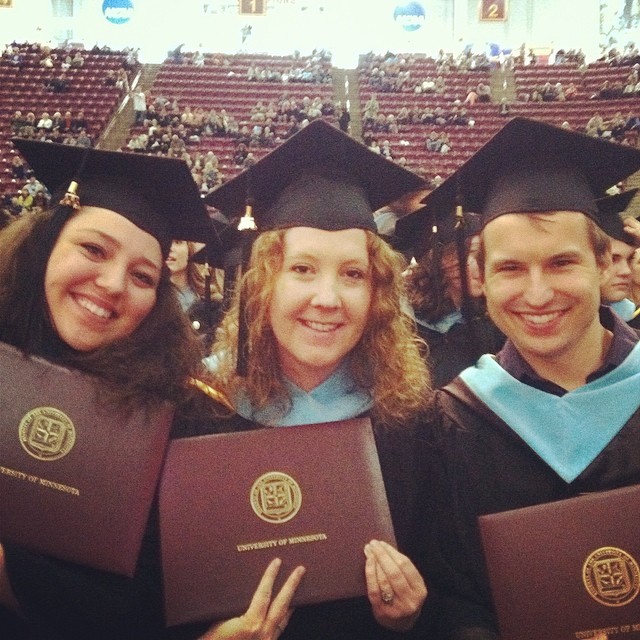
I love the Learning Technologies Program at the University of Minnesota. Every course is relevant, well designed, and has immediate application to a wide-range of professions. It has already opened many doors for me in the for-profit, non-profit, and educational sectors. Here is to the next chapter in my LT journey!
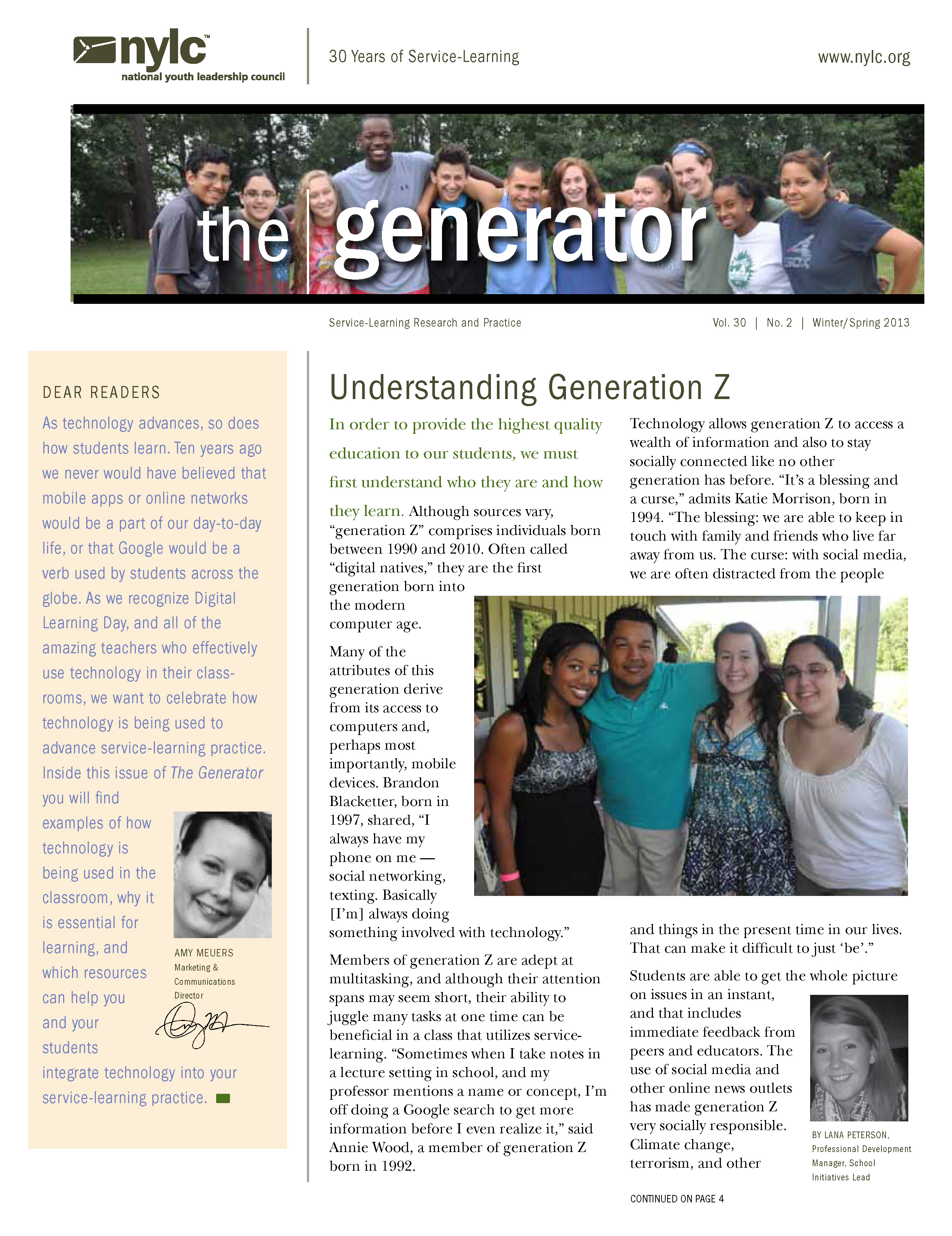
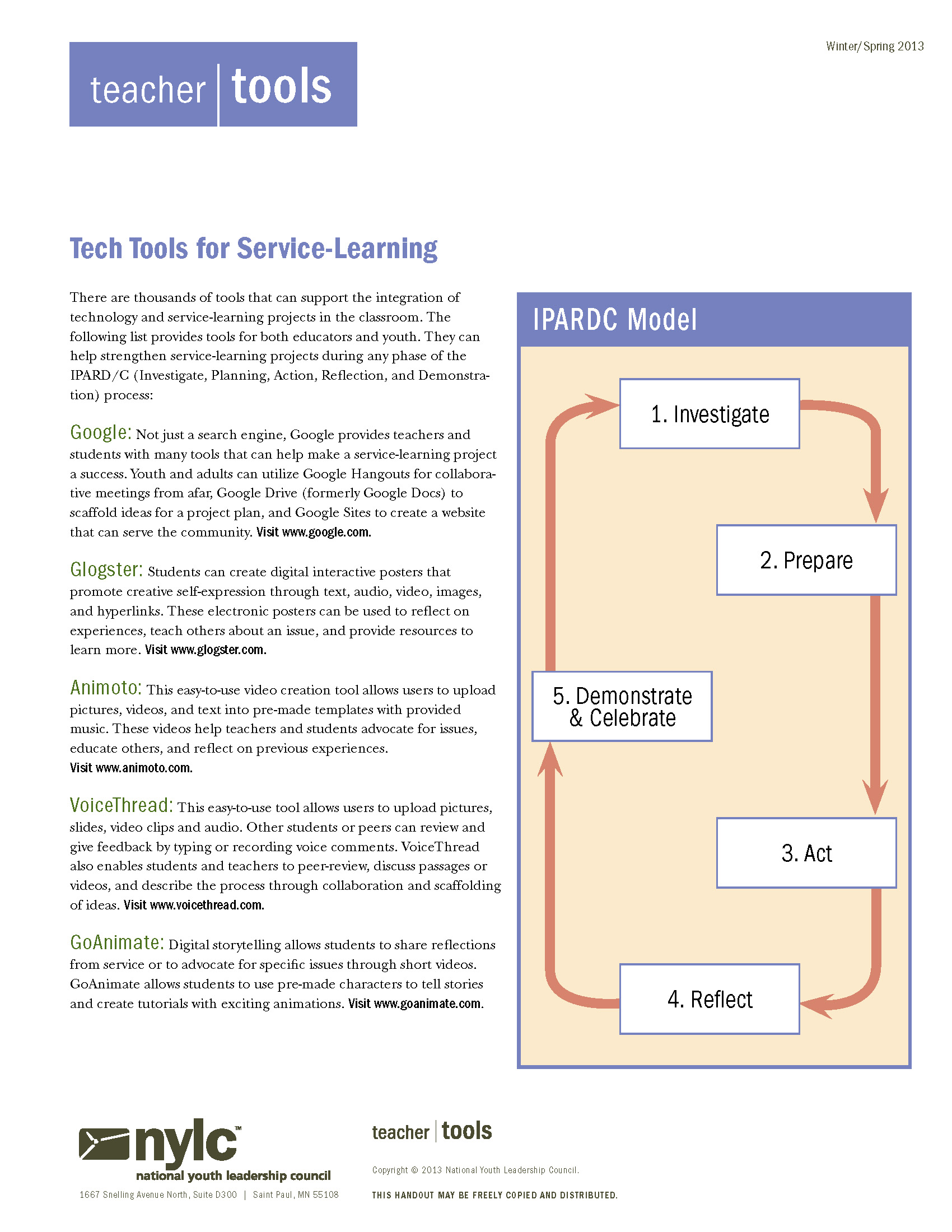
With this issue of The Generator we explore the expanding role of technology in the classroom and how it can improve service-learning work. Read about how the school-age students in Generation Z see and use technology in their lives and how that changes their approach to learning. Get a list of online resources that can enhance your classroom work and student engagement. Learn how New Foundations Charter School has integrated technology into their service-learning work in many different projects. This issue includes a Teacher Tools tipsheet with even more great technology resources.
February 21st, 2014 was a rough day for Minnesota, there was a lot of snow and it was very cold; school was canceled and a lot of employers told their staff to stay home. This winter, we were used to it and while working from home sounded WONDERFUL… it was Dr. Elisabeth Soep’s presentation was at the U of M that morning. Titled Youth Productions in Digital-age Civics, there was truly no way I could miss that as it combines my love for technology and service-learning.
So after getting my car stuck, getting it pushed back in by the garbage men, learning the bus schedule real quick, I was there! I am so glad I didn’t let the bad weather stop me from going to the presentation. After an inspiring or knowledgeable speaker, meaningful experience, or life-changing event do you ever physically feel your perspective shift? Your mind starts racing with new ideas and you feel like your blinders have at least been opened up a bit more? That is how I felt after listening to Dr. Soep.
To listen to her full presentation, visit the LT Media Lab’s Livestream. For me what I particularly appreciated about Dr. Soep’s presentation is that she can speak from both a current practitioner and researcher’s perspective. I think sometimes the barrier between these two areas can cause progress to be stifled. Seeing that Dr. Soep has grounding in both areas makes her work very authentic and interesting.
As a practitioner, Dr. Soep is the Senior Producer for Youth Radio, “an award-winning media production company that trains diverse young people in digital media and technology”. If you listen to NPR you most likely have heard of Youth Radio as they serve as NPR’s official youth news desk. In this role she supports young people in creating and telling their news stories. She also worked with a young person to co-found the App Lab. As an evaluator, Dr. Soep is the Research Director for Youth Radio, “we are a youth driven organization with a research agenda”. Her 20+ years of research experience studying ‘what works’ in supporting young people through media creation and participatory politics is a resource to us all.
Throughout the presentation Dr. Soep shares mistakes and successes she has had in both of her roles and then shares concrete tactics based on research around participatory politics. As a practitioner, I found her the tactics helpful in bringing best practices to life in our programming at NYLC. After the presentation she published, Participatory Politics: Next-Generation Tactics to Remake Public Spheres. After hearing her presentation, I started reading publications and watching webinars from the Youth Participatory Politics Research Network. It is a goldmine of resources for youth workers and youth organizations whose goal is to support their youth in being active citizens.
What does this mean for my work?
The research coming from the YPP Research Network, such as Dr. Soep’s will be essential for designing and defining my organization’s programming at a national level. Educational technology and project-based learning are on the mind’s of educators and administrators everywhere. Dr. Soep’s tactics clearly explain what that can actually look like in practice and what are some of the risks.
It is our programming that defines what will we offer badges for in both face-to-face and online settings. That being said, using Dr. Soep’s and other researchers framework for designing our online network will ideally create an environment and supporting activities that allow young people create and share meaningful media. Meaningful media that is connected to real world issues that young people feel passionate about to educate and mobilize others. There are a lot of opportunities to teach digital literacies in both youth and adults so that media is not abused and calls to action are just.
As a professional in the service-learning field this research needs to be more broadly shared and I hope to bring it to our National Service-Learning Conference in April, 2014- stay tuned on a update on that.
At the heart of Digital Learning Day is quality teaching and learning from educators and students around the world. The day itself is really a celebration of the innovative lessons and projects that we know happen everyday in and out of classrooms. It is an opportunity to highlight some of the best tech-forward districts, organizations, and corporations from around the country. In order to make such a large international observance, the Alliance for Excellent Education calls upon the support of schools, nonprofits, and for-profits who believe that digital learning is a key component of a strong education.
The National Youth Leadership Council shares in that belief and is honored to support Digital Learning Day as a core partner annually. As a core partner, we encourage our networks of educators and young people to participate in Digital Learning Day. To further support this initiative, partner organizations also share their quality resources for the digital learning toolkits that can be found on digitallearningday.org. One of the best benefits of being a partner for this initiative is attending the national event in-person. And one of the biggest benefits of being the “ED tech” specialist at work is getting to be that representative to attend the in-person celebration.
The celebration started the night before at a beautiful reception held at the Alliance for Excellent Education’s office. It was nice to have a few hours to meet professionals who have mutual interests in educational technology, youth leadership, and access to quality teaching and learning tools. I left the celebration buzzing from all the wonderful conversations and new connections I had made. My excitement for the next day was growing by the second.
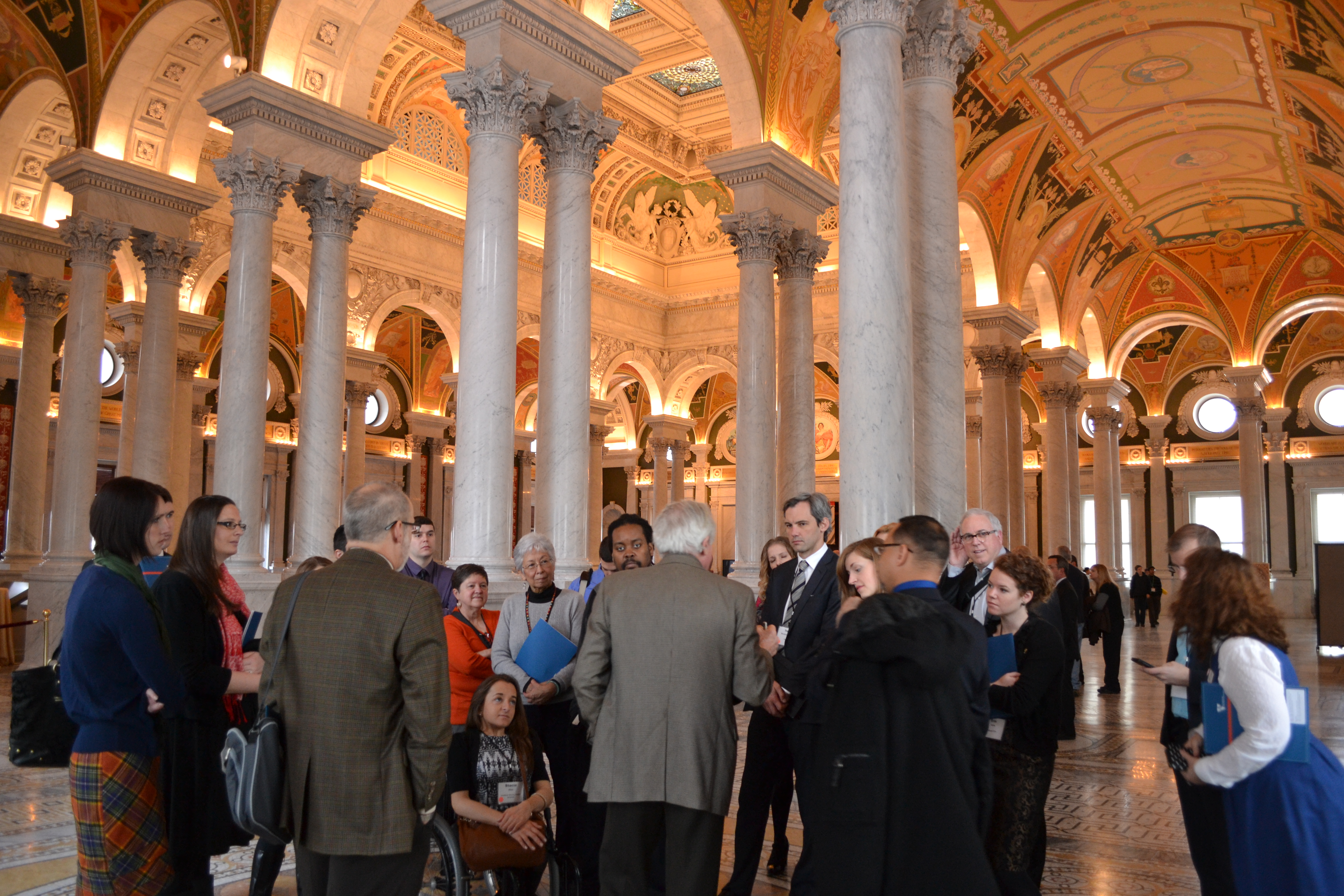
Climbing up the steps to the Library of Congress in Washington D.C., butterflies started fluttering as I knew the day would be dynamic both in-person and online. A large group gathered to take a tour of the building that is covered in beautiful detail and symbolism. Libraries are the foundational setting for digital learning and media, which made the Library of Congress a perfect location for the celebration. And that location has also been the setting for many historical political decisions related to educational technology.
After the tour we piled into the Coolidge Auditorium where we were welcomed by Dr. James Billington to the library. While the day of amazing examples of digital learning was just beginning, Tom Wheeler, the Chairman of the FCC reminded us that many educators do not have the access to the internet they need in their classroom. He shared that his goal was to have the first Erate updates completed before fall of 2014. Roberto Rodriguez, Special Assistant to the President for Education Policy, echoed Wheeler’s concern for internet access and added that this is really an issue of equity within education.
The day became an exhibit of some of the best digital learning from around the country. Participants had the opportunity to talk with youth, educators, and administrators that were eager to share their replicable programs and projects. In the midst of the live celebration, many of us were also trying to keep up through Twitter and the Google Hangouts throughout the day. These digital and in-person opportunities to connect expanded personal learning networks and added new resources to our ED tech tool belts.
The live event culminated with a panel of district staff, state administrators, federal employees, and leaders from national organizations. The most dynamic panelist was a student, Amber Garrett from Talladega County, who shared the youth perspective from before and after the personalized learning initiative was implemented in her district. She cited that technology helped her develop 21st century skills and gave her opportunities to use those skills in the real world.
Digital Learning Day 2014 taught me that while at the core of this issue is teaching and learning, everyone should have a vested interest and role in educational technology. If we don’t provide our young people with the best education possible our society, economy, and future is at risk. The use and access to technology and media, quality teaching methods, and excellent curriculum must be supported by students, educators, administrators, policy makers, IT professionals, community-based organizations, and corporate partners. The Alliance for Excellent Education does an amazing job organizing Digital Learning Day. NYLC is honored to be a core partner.
If you missed the excitement from the day, check out #DLDay on Twitter or digitallearningday.org
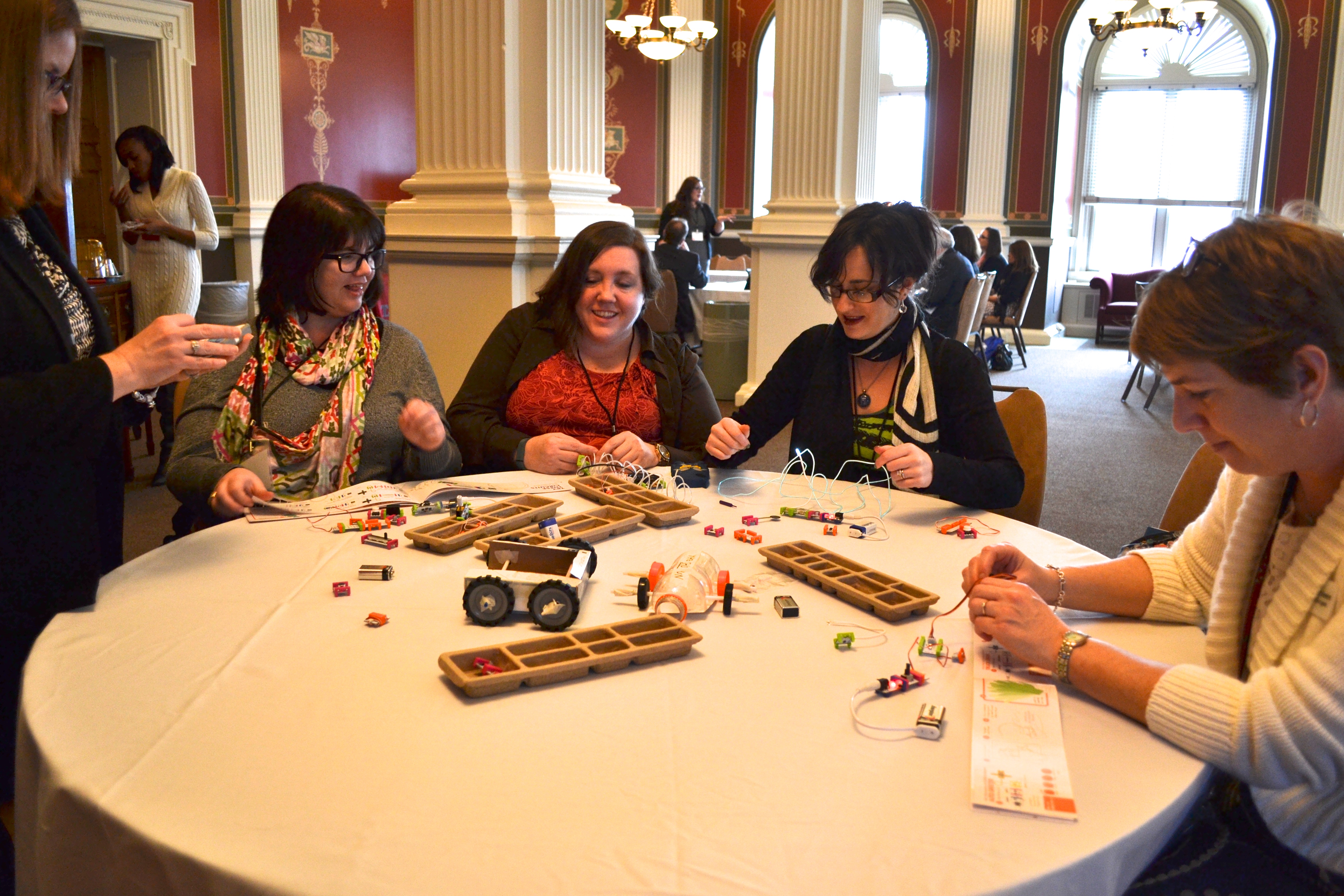
My view at lunch : )
The young scholar on the right and the older scholar on the left represent life-long learning.






















 Savor Every Byte